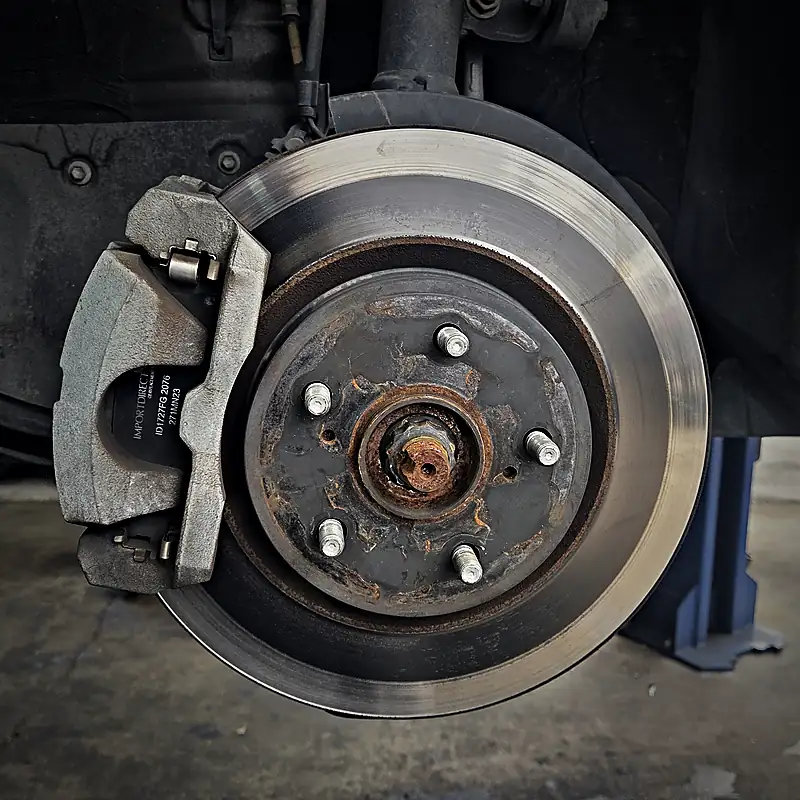
When we take the wheels off a car for a brake inspection, the pads tell a story. Healthy pads wear evenly across both sides of the caliper and both front wheels. When one pad is much thinner than the other, or a pad is worn into a wedge, something in the brake system is not moving freely. Finding that cause is the difference between a brake job that lasts and one you repeat in a few months.
Reading the wear pattern
| Pattern | What it looks like | Most likely cause |
|---|---|---|
| Inner pad thinner than outer | Inside pad worn much more | Sticking slide pins or a slow-returning piston |
| Outer pad thinner than inner | Outside pad worn more | Seized slide pin or a caliper not floating |
| Tapered pad | Wedge shape, thicker at one end | Worn bracket, sticking pad in its clips or a bent mounting |
| One wheel worn more than the other | Left and right differ | A sticking caliper on one side or a hydraulic issue |
| Glazed, shiny pad surface | Hard, glassy face | Overheating from dragging brakes or hard use |
Sticking slide pins
On a floating caliper, the caliper body slides on two guide pins so it can press both pads evenly. Those pins sit in rubber boots with special grease. If a boot tears, moisture gets in, the grease washes out and the pin starts to rust and bind. The inner pad keeps doing the work while the outer pad barely touches the rotor.
The fix is to remove, clean and inspect the pins, replace boots or pins as needed and lubricate them with the correct high-temperature grease.
Seized or slow caliper pistons
Pistons push the pads against the rotor and should retract slightly when you release the pedal. Corrosion behind the piston seal, often from old, moisture-laden brake fluid, can make a piston stick. The pad drags, overheats and wears fast. You may notice a hot wheel, a burning smell or a pull to one side.
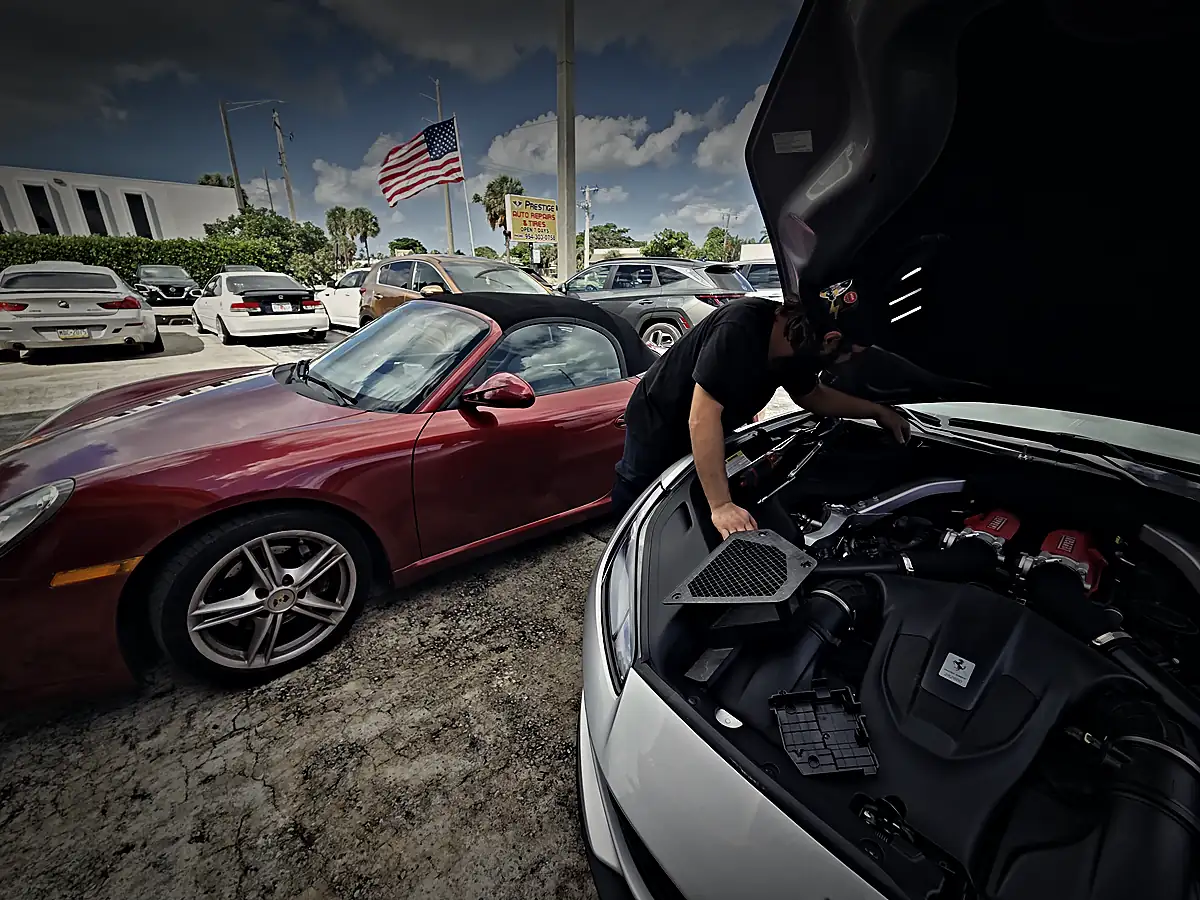
Many high-performance European brakes use fixed calipers with four or six pistons, such as Brembo setups on Porsche, AMG and many exotics. One sticking piston in such a caliper produces a tapered pad.
Uneven rotor thickness
Rotors can develop thickness variation from uneven pad deposits or from lug nuts tightened unevenly. That creates a pulsing pedal and can wear pads in patches. We measure rotor thickness and runout and replace or machine rotors when they fall outside spec.
Worn hardware and clips
Pads ride in stainless clips on the caliper bracket. Rust builds up under the clips and makes the pads tight in their slots. They cannot slide back, so they drag on the rotor. Replacing the hardware and cleaning the bracket is part of a proper brake job.
How Oakland Park weather affects your brakes
South Florida is tough on brake hardware:
- Humidity speeds up corrosion on pins, pistons and brackets.
- Salt air near the coast, from Lauderdale-by-the-Sea to Pompano Beach, adds to that corrosion.
- Heavy summer rain soaks brakes, then hot days dry them unevenly.
- Cars that sit, like seasonal vehicles, weekend exotics and EVs that rely on regenerative braking, collect rust because their brakes are rarely used hard.
Can alignment and suspension affect pad wear
Indirectly, yes. Worn control arm bushings or a bent component can let the wheel shift under braking, which changes how the pads meet the rotor. Alignment itself does not wear pads, but a car that pulls under braking may have both a brake and a suspension problem. We check both when the symptoms suggest it.
Spotting uneven wear early
- A pull to one side when braking
- One wheel much dirtier with brake dust than the others
- A burning smell after a normal drive
- A squeal from one corner only
- Wheel warmth that differs side to side after driving
Get your brakes checked in Oakland Park
At Prestige Auto Repairs & Tires, we photograph both pads at each caliper so you can see the wear for yourself, and we fix the cause along with the pads. Visit us at 250 NE 44th St in Oakland Park or 930 NE 4th Ave in Fort Lauderdale, 7 days a week. Learn more about our brake repair service, or request an estimate.