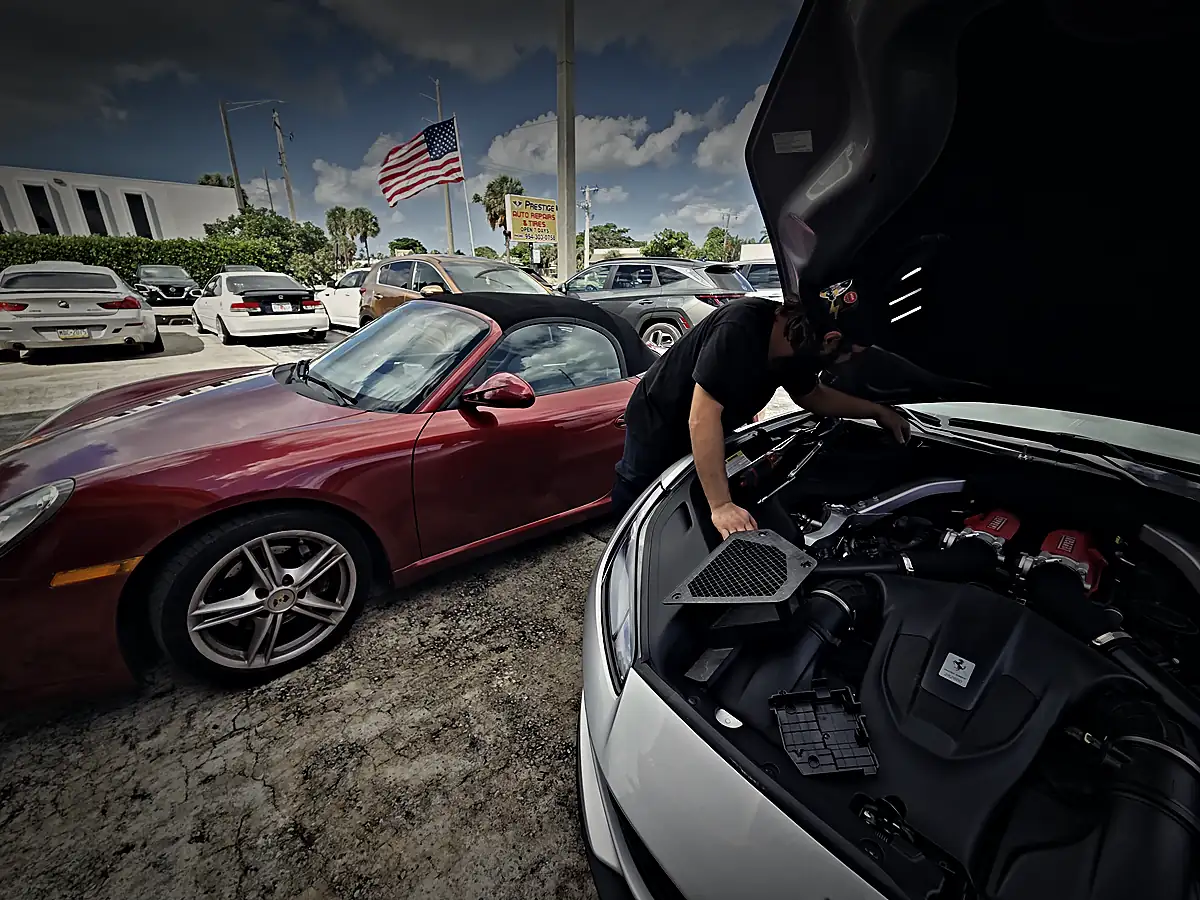

Fuel pump replacement in Fort Lauderdale usually starts with a car that cranks longer than it used to, sputters on the highway, or dies in a parking lot and restarts after it cools. Those same symptoms also come from a weak relay, a corroded connector, a clogged filter or a faulty sensor. Prestige Auto Repairs & Tires measures what the fuel system is delivering before recommending a pump, on European, Japanese, Korean and American cars, trucks and hybrids.
Signs of a failing fuel pump or fuel system
| What you notice | Possible fuel system cause | How urgent |
|---|---|---|
| Long crank before the engine catches | Pump losing pressure after shut-off, leaking check valve or injector | Book an inspection soon |
| Sputter or surge at highway speed | Pump cannot keep up with demand, clogged filter or strainer | Repair soon |
| Loss of power under load or with the A/C on | Low fuel volume when demand is highest | Repair soon |
| Stalls when hot, restarts after cooling | Pump motor overheating or failing | Repair promptly; avoid long trips |
| Whine or hum from under the rear seat | Worn pump motor or a restricted strainer | Have it tested |
| Cranks but will not start | No pump power, dead pump, failed relay or control module | Diagnose before replacing parts |
| Fuel smell around the car | Leaking line, seal or injector | Stop driving; fire risk |
| Check engine light with lean or pressure codes | Low pressure, vacuum leak or sensor fault | Diagnose soon |
How a modern fuel system works
Most cars built in the last decade or so use one of two layouts. A port-injected engine has an electric pump in the tank that feeds the injectors directly. A direct-injection engine adds a second, high-pressure pump on the engine, driven by the camshaft, which raises fuel to the much higher pressure needed to spray straight into the cylinder. Many engines now use both port and direct injectors.
That second pump matters for diagnosis. A direct-injection car with a weak in-tank pump and a car with a failing high-pressure pump can feel alike, but the parts, labor and location are completely different. On VW and Audi 2.0T FSI engines, for example, we also inspect the cam follower that drives the high-pressure pump, because a worn follower can damage the pump and the camshaft lobe. On BMW turbo engines, high-pressure pump faults show up as long starts and rail pressure codes.
Many pumps are no longer simply switched on and off. A fuel pump control module varies pump speed, and on some Ford trucks and SUVs that module sits near the frame, where corrosion can cut power to a healthy pump.
How we diagnose fuel delivery
- Scan the car for codes, freeze-frame data, fuel trims and, on direct-injection engines, commanded versus actual rail pressure.
- Pressure test. On port-injected engines we connect a gauge at the fuel rail and check pressure at key-on, idle and under load, then watch how well it holds after shut-off.
- Volume test. A pump can make pressure at idle and still run short at full throttle, so we measure how much fuel it delivers.
- Electrical checks. We test voltage at the pump connector, the relay, the fuse and the control module, and check the ground, because a voltage drop can mimic a weak pump.
- Rule out look-alikes. Vacuum leaks, a dirty mass airflow sensor or a bad crank sensor can cause stalling and lean codes. Those are traced through our check engine light diagnostics.
- Photos and a written estimate before any repair.
Repair options
In-tank fuel pump module
Most pumps come as a module with the sending unit, strainer and pressure regulator. On many cars we reach it through an access panel under the rear seat; on trucks and some SUVs the tank comes down. We fit an OEM or OE-equivalent module, a new lock ring seal and strainer, and check the fuel level reading afterward. We avoid low-cost pumps with unknown flow ratings, since a pump that falls short under load brings the same symptoms back.
High-pressure pump and fuel lines
High-pressure pumps are replaced with the correct seals and new high-pressure lines where the manufacturer requires them, because those fittings are often single use. Leaking or rubbed-through fuel lines are replaced rather than patched.
Fuel injector cleaning, testing and replacement
Injectors can be cleaned on the car with a solvent fed through the rail, or removed for off-car ultrasonic cleaning and flow testing, which shows whether each injector sprays evenly. Injectors that leak, stick or have failed coils are replaced, and on some engines the new injectors are coded to the engine computer with the scan tool. Carbon on direct-injection intake valves is a separate problem covered under engine repair.
South Florida and fuel systems
- Cars that sit. Seasonal residents often leave cars for months. Fuel ages, varnish builds in the pump and injectors, and the car struggles to start in the fall. A fuel stabilizer and a full tank before leaving help.
- Humidity and ethanol. Most pump gas here contains ethanol, which attracts moisture. Water at the bottom of a tank corrodes strainers and sending units.
- Floodwater. Driving through flooded streets after a summer storm can push water past a worn filler cap or vent. If the car started running poorly after high water, see our flood-damaged car repair page.
- Heat. Long idles in traffic with the A/C on keep the tank and lines hot, which is hard on a pump that is already weak.
Visiting either shop
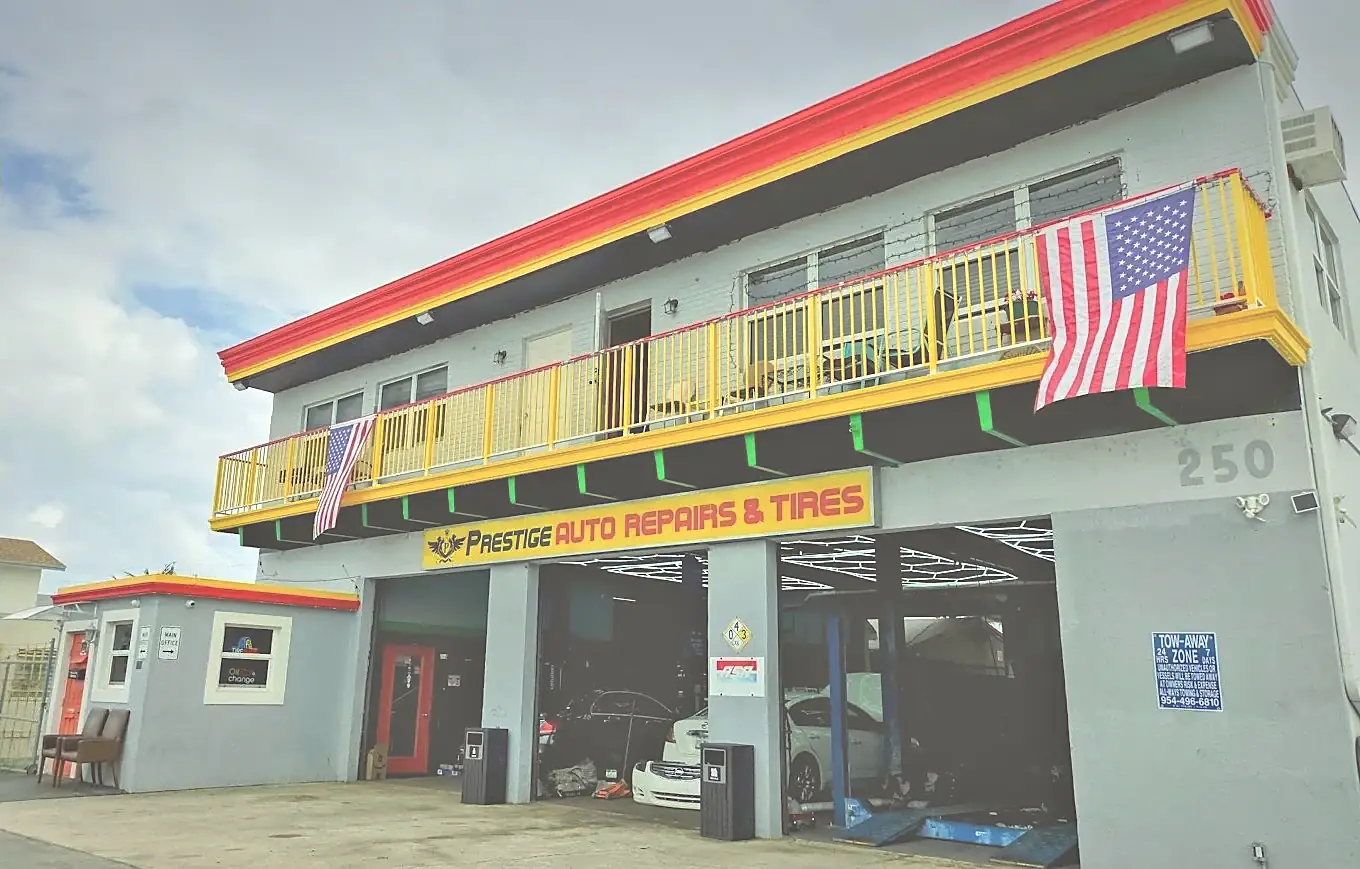
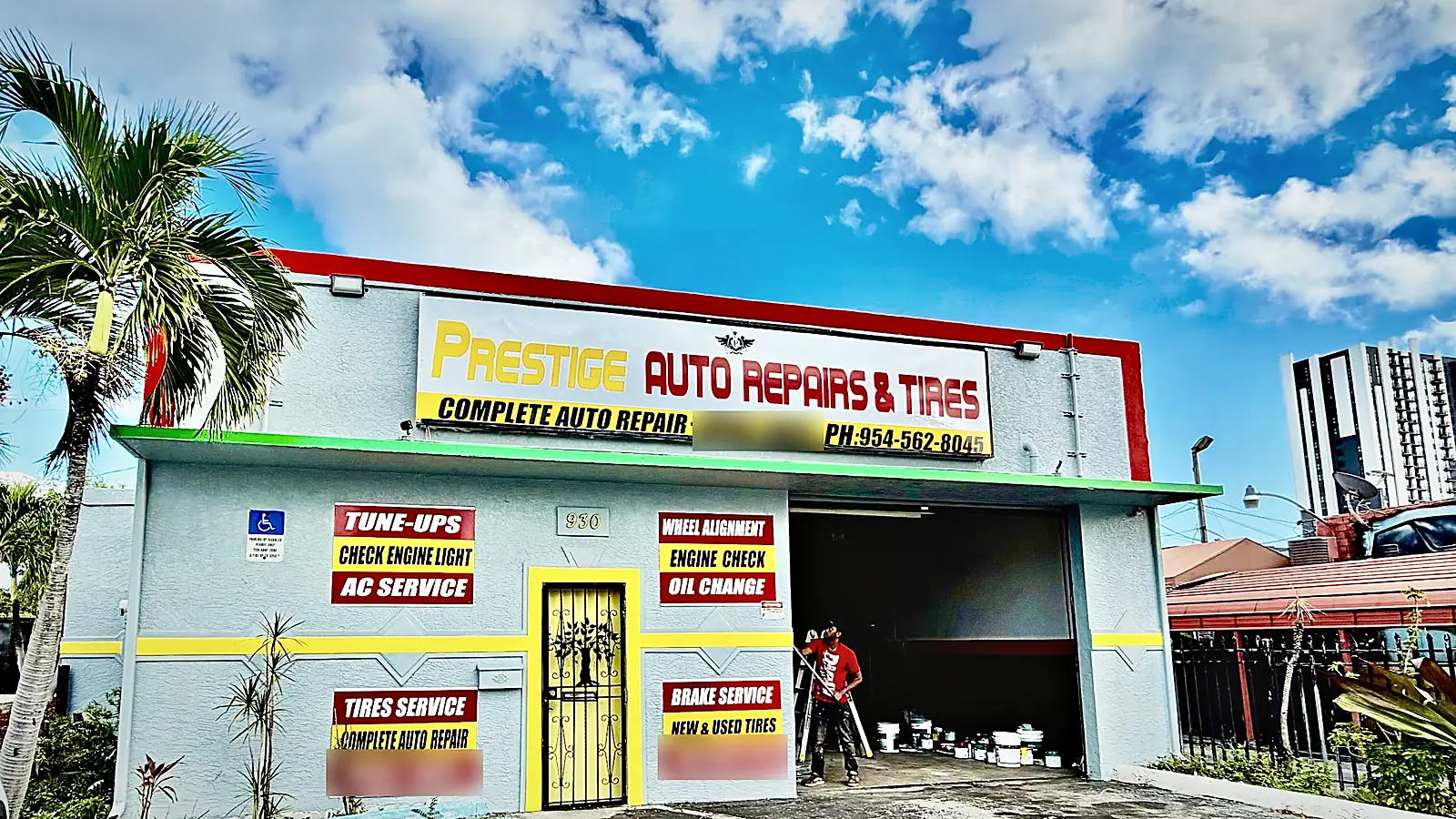
Oakland Park, at 250 NE 44th St, is open 7 days from 8 AM to 7 PM and has 24-hour key drop-off. Fort Lauderdale, at 930 NE 4th Ave, is open Monday to Saturday from 8 AM to 7 PM. If you smell fuel, do not drive the car; call us first. Our ASE-certified technicians repair every make, including European, exotic and hybrid models, and we speak Spanish. Fuel system repairs carry our 2-year / 24,000-mile warranty.
Part of our engine and drivetrain guide: Engine repair in Fort Lauderdale