Signs of a worn wheel bearing
- A humming, growling or roaring noise that rises with speed
- Noise that changes when you turn one way or the other
- Vibration or looseness in the steering wheel or the floor
- Uneven tire wear on one corner
- An ABS or traction control light, since many hub assemblies carry the wheel speed sensor
How we replace a wheel bearing
- Road test to hear when the noise starts and how it changes in turns.
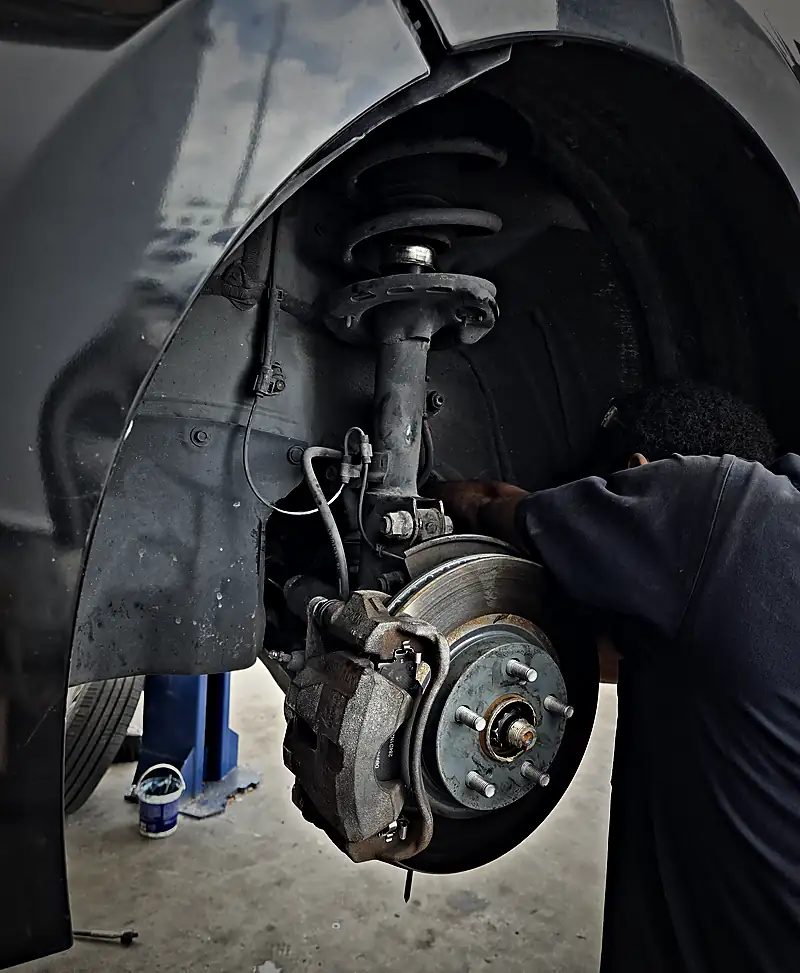
- Check on the lift for play, roughness and heat at each wheel, and rule out tires and CV joints.
- Photos and a written estimate before any work.
- Replace the bearing or hub assembly with OEM or OE-equivalent parts, torqued to the manufacturer’s specification.
- Check the ABS sensor, brakes and alignment, clear any codes and road test again.
Pressed bearings and hub assemblies
Some cars use a bolt-on hub assembly that comes with the bearing already installed; others use a bearing that is pressed into the steering knuckle. Pressed bearings take more time and the right press tools, because the knuckle comes off the car and the old bearing is pressed out and the new one pressed in. We tell you which type your car uses and what the job involves in the written estimate, and we use a new axle nut where the manufacturer calls for one.
On European cars, trucks and SUVs the hub often carries the wheel speed sensor for the ABS and stability control, so we check the sensor and its wiring at the same time.
Why bearings wear out in South Florida
Flooded streets after summer storms push water past bearing seals, potholes and curbs load the bearings, and heavy SUVs and trucks work them hard. Lowered and large-wheel cars wear them faster too. When we replace a bearing we also look at the parts around it: brakes, steering and suspension and CV axles, and we recommend a wheel alignment when the job affects it.
Part of our brakes, suspension and tires guide: Suspension repair in Fort Lauderdale