What the tire pressure light is telling you
Every car sold new in the US for well over a decade has a tire pressure monitoring system (TPMS), and many older imports have one too. A small sensor inside each wheel reports the tire’s pressure to the car. The warning light comes on when a tire is about 25% low, or when the system itself has a fault.
- Solid light: at least one tire is low. Check the pressures cold, using the numbers on the driver’s door sticker.
- Flashing, then solid: a sensor is not reporting. Usually a dead sensor battery, a damaged sensor or a sensor that was never programmed after a tire or wheel change.
- Light after new tires or wheels: the sensors may need a relearn, or a sensor was damaged during mounting.
How we fix it
- Check and set the pressures on all four tires, and the spare if it has a sensor.
- Scan every sensor with a TPMS tool to read its ID, pressure and battery status.
- Replace the failed sensor with an OE or OE-equivalent sensor and a new valve seal.
- Program and relearn the sensor to the car, by scan tool or the factory drive-cycle procedure.
- Confirm the light is off and every wheel reports correctly before you leave.
Why sensors fail in South Florida
Heat shortens sensor battery life, salt air near the beach corrodes valve stems, and potholes and curbs crack sensors. Many cars here are also on their second or third set of tires, and every tire change is a chance for a sensor to be damaged. We check TPMS operation with every tire and wheel alignment job, and fix warning lights from other systems through check engine light diagnostics and auto electrical repair.
Sensors for every make
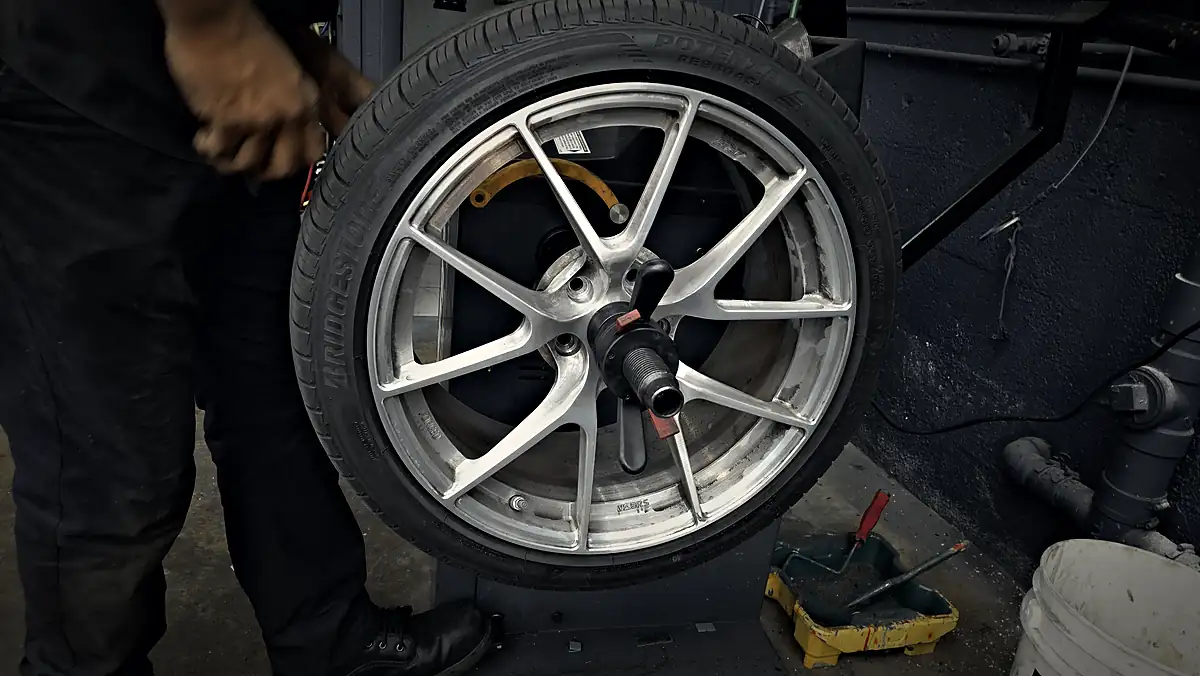
We stock and program sensors for European, Japanese, Korean and American cars, trucks and SUVs, and we can clone the ID of an original sensor on many models so no relearn is needed. If you are fitting new wheels, we transfer or replace the sensors at the same time.
Part of our brakes, suspension and tires guide: Suspension repair in Fort Lauderdale