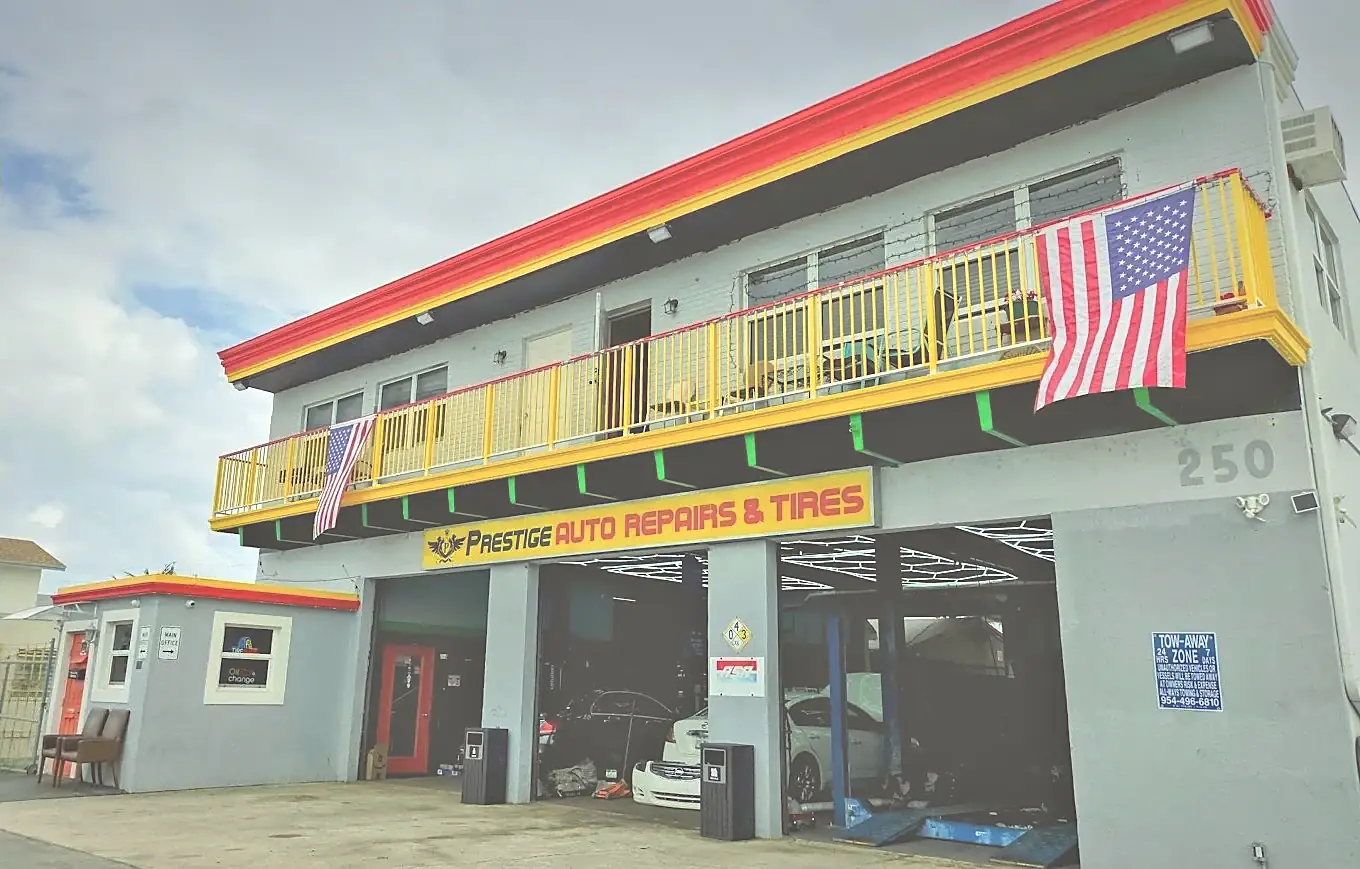
A good auto repair visit in Oakland Park follows the same order every time: you describe the problem, a technician inspects the car and photographs what they find, you receive a written estimate that separates what the car needs now from what can wait, and nothing is done until you approve it. That is how auto repair in Oakland Park works at Prestige Auto Repairs & Tires, 250 NE 44th St, open 7 days from 8 AM to 7 PM with a 24-hour key drop, with ASE-certified, factory-trained technicians and a 2-year / 24,000-mile warranty on the work.
This guide explains what each step should look like, so you know what to expect and what to ask for.
Step 1: What to bring
A repair visit goes faster and ends more accurately when the shop has the right information at check-in. Bring:
- The car with the warning on. If a light is lit, do not clear it or disconnect the battery first. The stored fault codes and the data the computer saved with them are the strongest evidence we get.
- A note or a phone video of the symptom. A noise that only happens on cold start, a vibration at one speed or a smell after a highway drive is easier to find when we know exactly when it appears.
- Your service history, even a folder of receipts. Knowing when the oil was last changed or that the brakes were done elsewhere last year changes what we look at first.
- The wheel lock key, if your car has one.
Step 2: Check-in and the first conversation
A service advisor writes down your concern in your words, confirms the vehicle details and mileage and asks how long the problem has been happening, whether it is getting worse and what has already been tried. That becomes the first line on your repair order, and it is what the technician reads before touching the car. If you have a budget ceiling, say so here; it shapes how the estimate is written.
At our Oakland Park shop check-in works the same way at 8 AM on a Tuesday or 4 PM on a Sunday. Hablamos español.
Step 3: The photo inspection
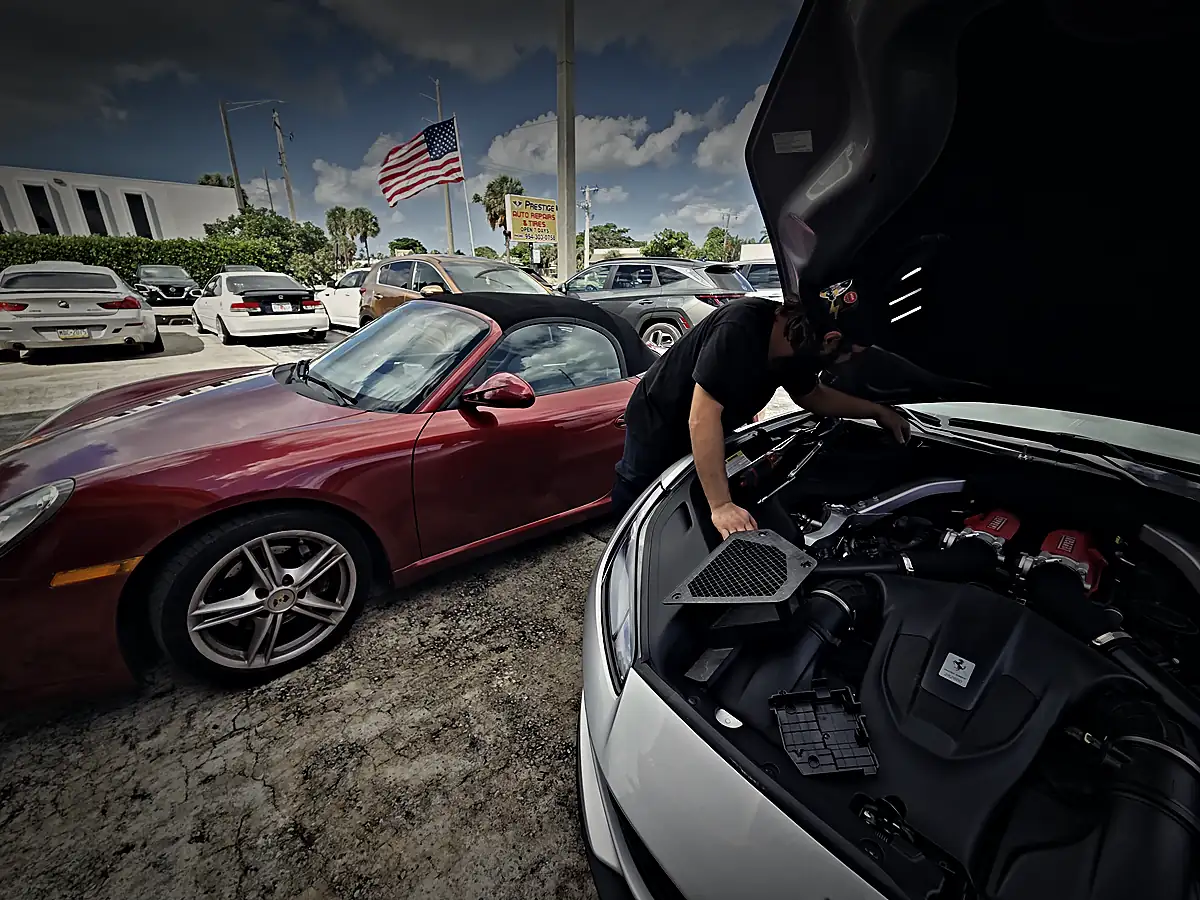
The car goes on a lift and the technician does two things. First, they chase your complaint: a scan of every control module with the factory-level software for your make, a road test where the symptom calls for one and a hands-on check of the suspect area. Second, they inspect the whole car: brake pad and rotor thickness, tire tread and wear pattern, fluids, belts, hoses, leaks, bushings, battery and lights.
Everything they find is photographed. A cracked belt, a weeping gasket, a pad down to the backing plate, the readout on the battery tester. The photos are attached to your estimate so you can see what the technician saw rather than taking a description on trust. Our scheduled maintenance and inspection page describes what the full inspection covers point by point.
Step 4: How the written estimate is built
The estimate is the center of the visit, and it is worth understanding how one is put together.
Parts. Each line names the part, the brand or source and the quantity. On a European car the estimate will say whether a part is OEM, in the carmaker’s box, or OE-equivalent, made by the same supplier under its own label. We use whichever makes sense for the job and tell you which it is.
Labor. Labor is quoted from a published time guide for your exact year, model and engine, not a guess. If a job overlaps with another, the time is shared rather than charged twice.
Priority. The most useful part of the estimate is the grouping. Items that affect safety or will cause more damage if left, such as a brake line seeping fluid or an oil leak reaching a belt, are marked as needing attention now. Items that are wearing but still within limits, such as pads with a few thousand miles left, are marked as able to wait, with a note on when to recheck. You decide what to approve, and you can approve part of the list.
If something is found partway through a repair that was not visible before, the work stops and a revised estimate is sent for approval. That is the rule, not a courtesy.
Your rights under Florida’s Motor Vehicle Repair Act
Florida law protects you at this step. Under the Motor Vehicle Repair Act, when a repair is expected to exceed the statutory threshold, you have the right to request a written estimate before work begins, and the shop must honor your choice on the repair order: a written estimate, no estimate, or a call if the cost will go above a figure you set. Once a written estimate is given, the shop may not charge more than it without your authorization. You also have the right to inspect or ask for the return of replaced parts, with exceptions for parts that must go back to a supplier for warranty or core credit, and the shop must give you a detailed invoice that lists parts and labor.
We write every estimate down, with photos, no matter how small the job, so the question of whether you were entitled to one never comes up.
Step 5: Approving by text
The estimate is sent to your phone as a link. Each line shows the finding and the photo, and you tap to approve or decline individual items. Your approval is time-stamped and stored with the repair order, so there is a record of exactly what was authorized and when. If you prefer to talk it through, the advisor calls you first and then sends the link for the record.
Step 6: The repair
Approved work goes back to the technician who did the inspection whenever possible. Parts are checked against the vehicle before installation and fasteners are torqued to specification, which matters on aluminum engines and on wheels. On jobs that touch a computer-controlled system, such as a battery, a brake service on a car with electronic parking brakes or a brake repair that needs the ABS module bled, the factory software is used to complete the procedure rather than leaving the car to sort it out.
After the repair, the car is road tested where the job calls for it, the fault memory is scanned again to confirm the original codes have not returned, and photos of the finished work go on the invoice.
What common jobs involve
Rather than promise how long a job takes, which depends on parts availability and what the inspection turns up, here is what each one involves.
- Oil change and inspection. Drain, new filter and seals, fill to the maker’s specification, service reminder reset with the proper tool, and the full photo inspection. See our oil change in Oakland Park page for what the service includes.
- Engine and cabin air filters. Often done alongside the oil service; the old filters are photographed so you can see why they were replaced. See the air filter replacement page.
- Brakes. Measurement of pads and rotors, replacement of the worn components, cleaning and lubrication of the caliper slides, a brake fluid test and, where needed, a flush and electronic bleed.
- A/C diagnosis and repair. Pressure and temperature readings, a UV dye or electronic leak test, repair of the leaking component, evacuation and a measured recharge to the exact weight the car specifies. Our A/C repair page explains why a top-up without a leak test rarely lasts in Broward heat.
- Check engine light. Full module scan, review of freeze-frame data, verification of the suspect part with live data or a physical test, repair, then a drive cycle to confirm the monitors reset.
Some repairs need a part that is not on the shelf. When that happens we tell you before you approve, and you decide whether the car waits here or goes home with you where it is safe to drive.
Step 7: Pick-up, warranty and what comes next
At pick-up the advisor walks you through the invoice: what was done, which parts were used, what was declined and when to look at it again. The work carries our 2-year / 24,000-mile warranty on parts and labor, honored at both shops, and the terms are on our warranty page.
Hours, Sunday and the key drop
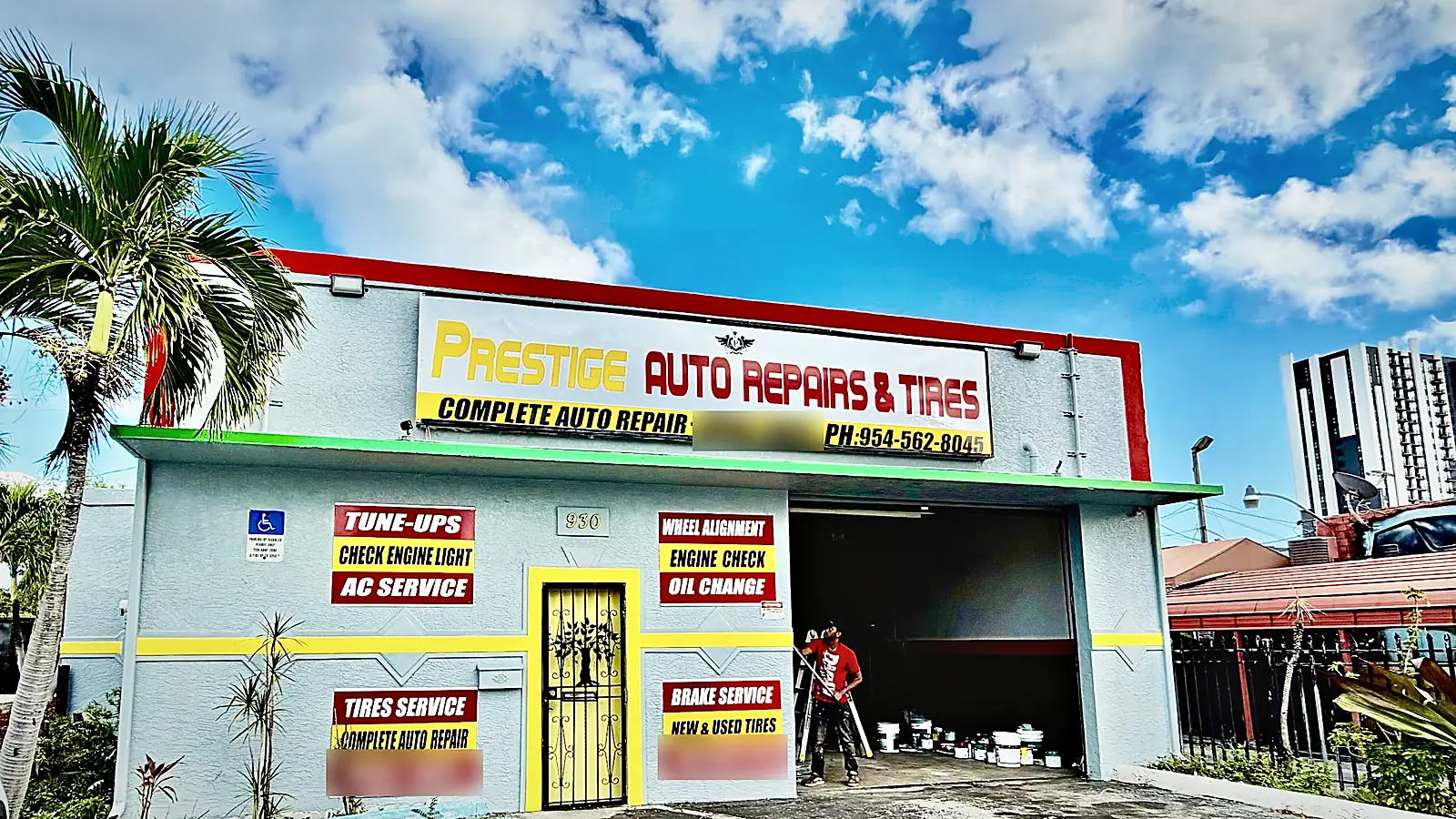
The Oakland Park shop at 250 NE 44th St is open 7 days, 8 AM to 7 PM. It is the one to use on a Sunday; our Fort Lauderdale shop at 930 NE 4th Ave is open Monday to Saturday and closed that day.
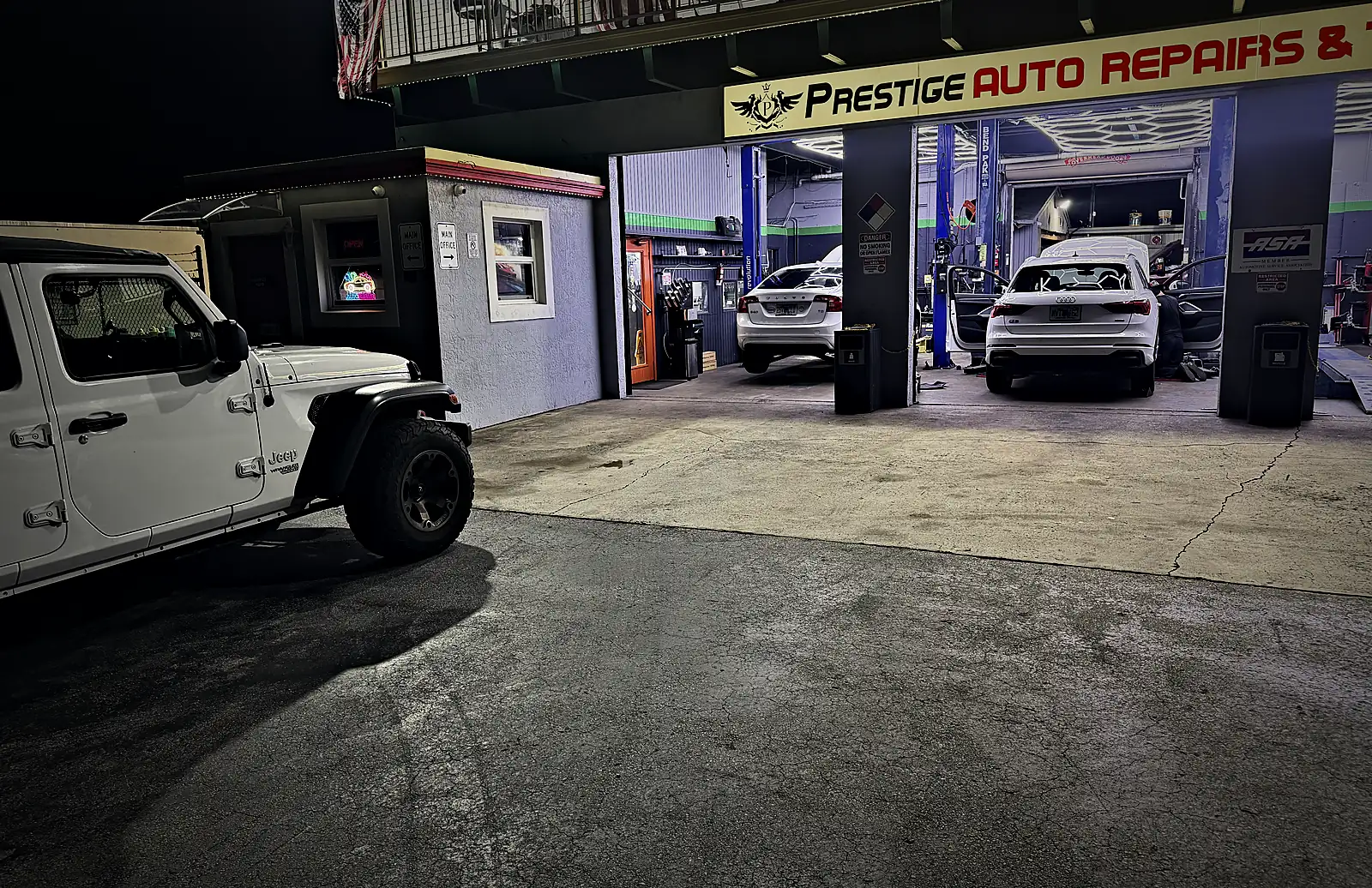
If your schedule does not fit ours, the Oakland Park lot has a 24-hour key drop at the front door. Park the car, drop the key in an envelope with your name, phone number and a short description of the problem, and an advisor calls you in the morning. The inspection and estimate then follow as described above; nothing is done on a dropped car without your approval.
Before you come in
You can shorten the first conversation by sending the year, make, model, mileage and a description of the symptom through our estimate request form, or by calling the shop at (954) 303-0758. Either way, your visit to our Oakland Park shop will follow the steps above: inspection with photos, written estimate, your approval, the repair and a warranty you can rely on.