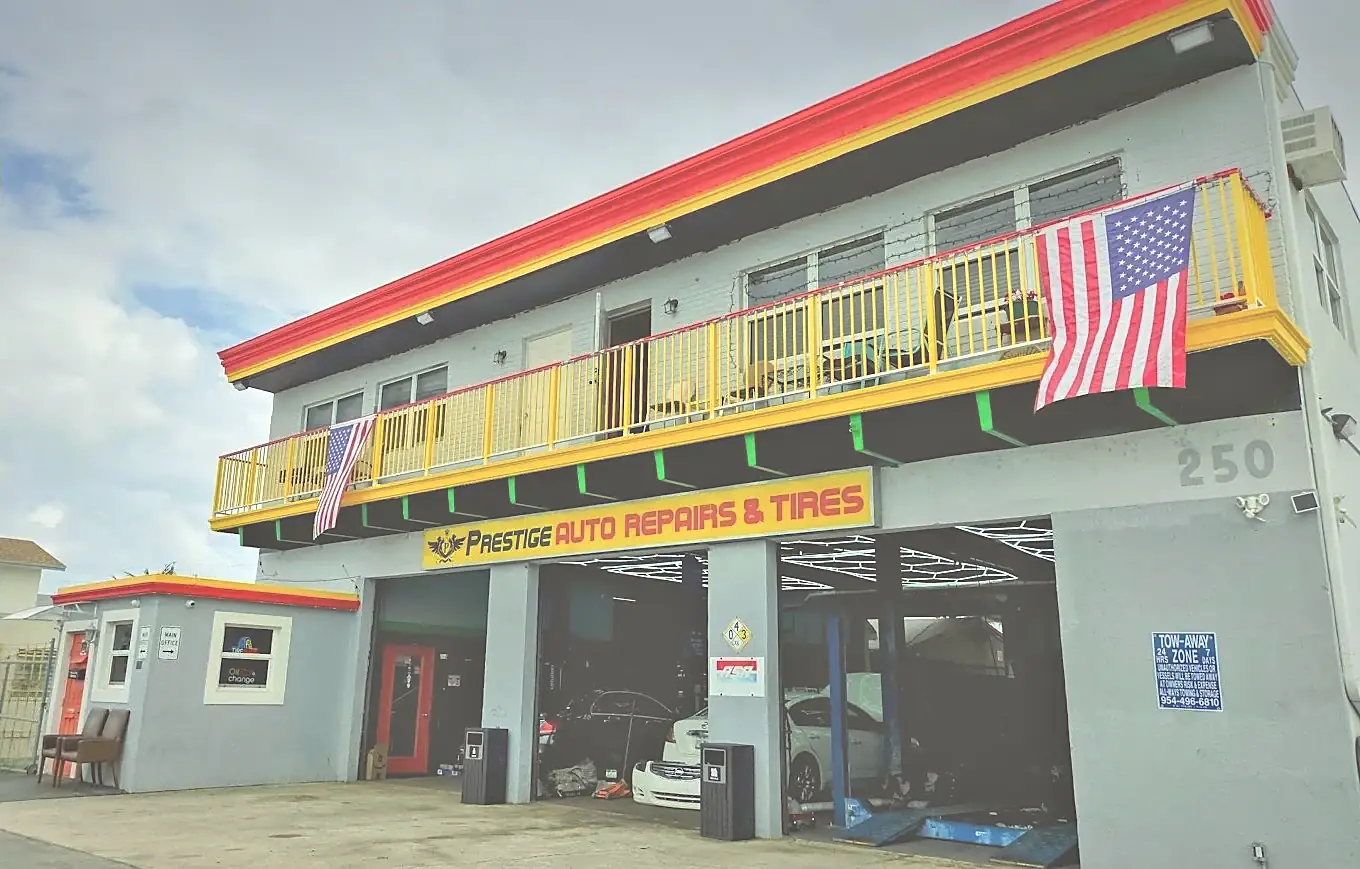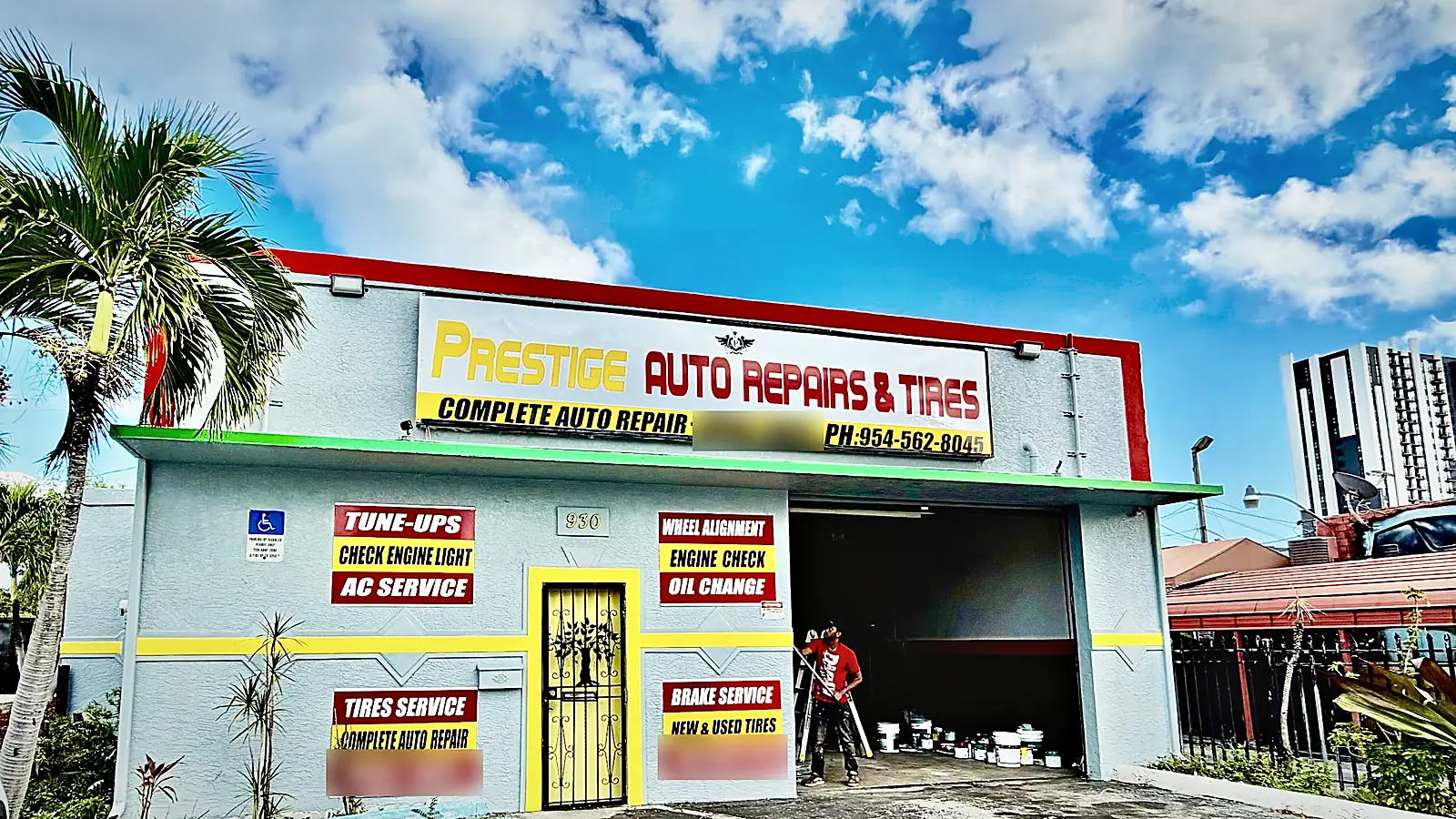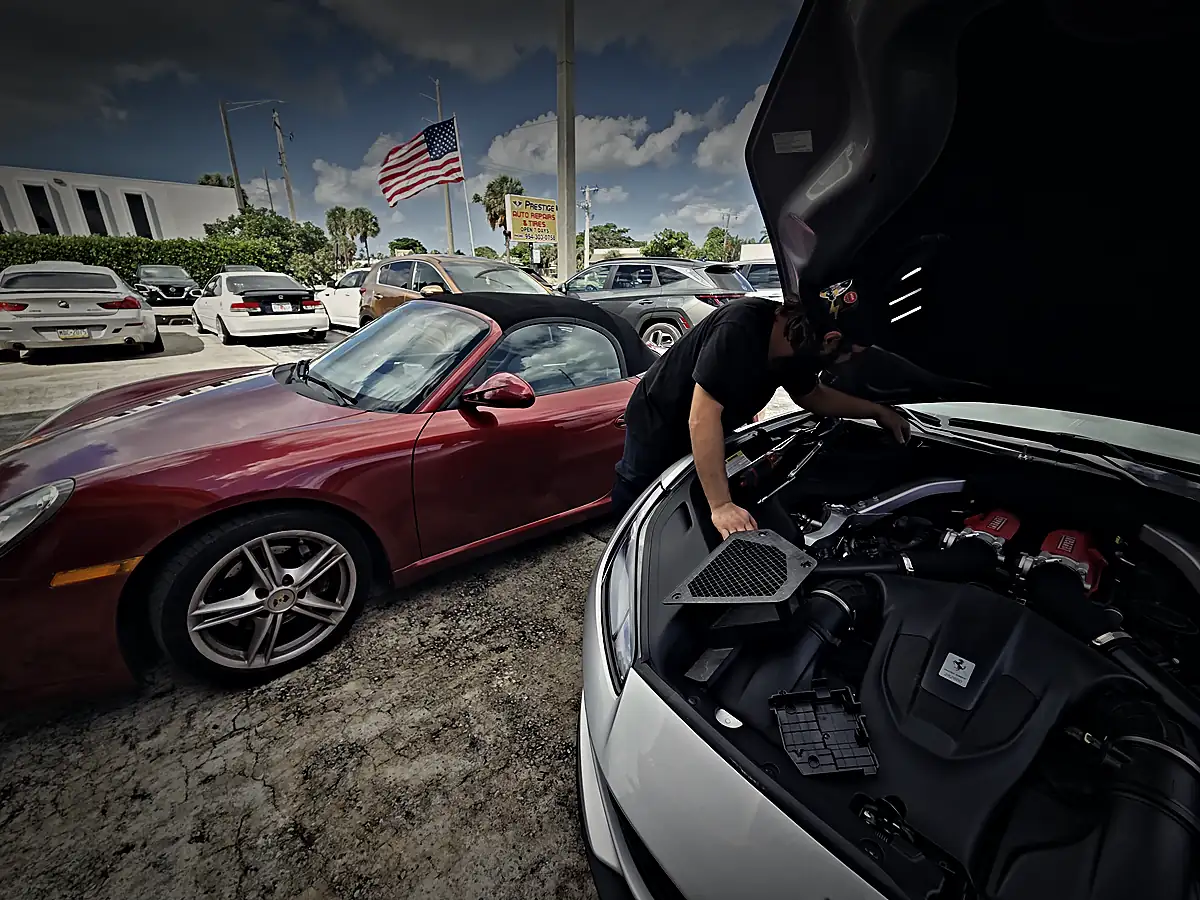
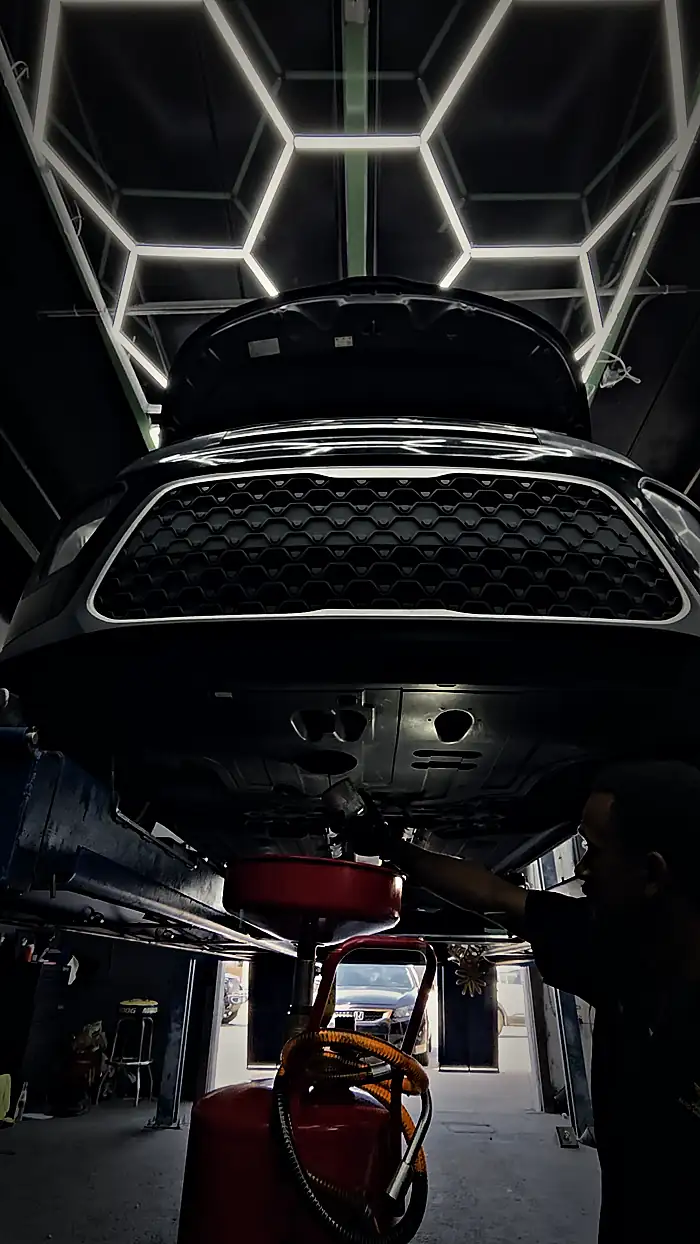
An oil change in Fort Lauderdale on a European car should start with the approval code, not the viscosity. Prestige Auto Repairs & Tires uses the exact BMW, Mercedes-Benz, VW, Audi and Porsche oil approval your engine lists, an OEM or OE-equivalent filter, a new drain plug washer and a factory-software service reset, with a photo inspection and a written estimate before any extra work. Oakland Park is open 7 days and Fort Lauderdale Monday to Saturday, and walk-ins are welcome at both.
Here is why the approval matters more than the brand, how South Florida changes the interval, and how to tell when the wrong oil was used.
An approval is a test, a viscosity is a measurement
5W-30 describes how thick an oil is cold and hot. It says nothing about how the additive package behaves against a turbocharger bearing at 400°F, how much ash it leaves in a particulate filter, or whether its detergents keep variable valve timing solenoids clean. That is what the maker’s approval covers. The carmaker publishes a test sequence, oil companies submit candidates, and only passing oils may print the code on the label.
Two 5W-30 oils from the same shelf can carry different approvals. Modern European engines run tighter timing chain tensioners, finer oil passages for VANOS, camshaft adjusters and multi-stage oil pumps, and very long drain intervals. They are far less tolerant of an off-spec oil than an older engine was.
The approvals you will see and what they protect
| Approval | Used by | What it is for |
|---|---|---|
| BMW Longlife-01 | N20, N26, N52, N55 gasoline engines | Long-drain full synthetic, usually 5W-30 |
| BMW Longlife-01 FE / Longlife-17 FE+ | B46, B48, B58 and most 2016+ gasoline engines | Low-viscosity 0W-20 for fuel economy, with the same wear protection |
| BMW Longlife-04 | Diesels, and gasoline engines in some markets | Low-ash oil that protects particulate filters |
| MB 229.5 | Most Mercedes gasoline engines through the mid-2010s | Long-life, high-performance synthetic, 5W-40 or 5W-30 |
| MB 229.52 | BlueTEC diesels and 2016+ gasoline engines with particulate filters | Low-ash, low-sulfur version of 229.5 |
| MB 229.71 | Newer Mercedes four and six cylinders | 0W-20 low-viscosity approval |
| VW 502 00 / 505 00 | Older VW and Audi gasoline and diesel engines | Fixed-interval synthetic |
| VW 504 00 / 507 00 | 2.0T TSI and TFSI, TDI, most 2010+ VW and Audi | Low-ash long-life oil for engines with particulate filters and variable intervals |
| VW 508 00 / 509 00 | Newer EA888 Gen 3B and Gen 4 engines | 0W-20 low-viscosity oil, not backward compatible |
| Porsche A40 | Most Porsche gasoline engines, 911, Cayenne, Macan, Panamera | High-temperature, high-shear protection for flat-six and turbo V6/V8 engines |
| Porsche C20 / C30 | Newer Porsche engines with particulate filters | Low-ash versions |
The pattern across all of them: the newer the engine, the more likely it needs a low-ash oil because of a gasoline particulate filter, and the more likely it needs a thin 0W-20 that still protects at high temperature. An old-school 5W-40 is not an upgrade in a B58 or an EA888 Gen 4. It is the wrong oil.
Why Florida heat and short trips shorten the interval
Oil breaks down from heat, time and contamination. South Florida delivers all three.
- Heat. Ambient temperatures in the 90s for half the year, radiant heat off the pavement on I-95 and an A/C compressor running flat out raise oil temperature. Turbocharger bearings run hot enough to coke oil when the engine is shut off after a hard drive.
- Short trips. A five-minute run to Publix never gets the oil past 200°F, so the water that condenses in the crankcase overnight and the fuel that washes past the rings on cold start never boil off. The oil turns milky in the filler cap and loses its protection.
- Idle hours. Stop-and-go on Oakland Park Boulevard adds engine hours without adding miles. The dashboard oil life monitor on most European cars counts miles and fuel, not hours.
BMW allows up to 10,000 miles, Mercedes up to 10,000 on Service A and B, VW and Audi 10,000, Porsche 10,000 or 12 months on most models. Those numbers assume European highway driving. For the cars we service we recommend 5,000 to 7,500 miles or twelve months, whichever is first. Turbocharged direct-injection engines, cars that sit in a garage for weeks between short drives, and anything driven hard belong at the short end.
What a proper European oil service includes
An oil change is simple. Doing it correctly on a European car takes a few steps that a quick-lube bay often skips.
- The right oil and the right amount. A B58 takes about 6.9 quarts; an M157 AMG V8 takes over 9. Underfilling a turbo engine starves the turbo on a hot restart. We fill to spec, run the engine, and check again at operating temperature using the electronic level reading or dipstick.
- An OEM or OE-equivalent filter with new O-rings. Most German engines use a cartridge filter in a housing. The housing cap O-rings harden in the heat and are the most common source of the “oil smell after a drive” complaint. New rings go on every time.
- A new drain plug washer and a torque wrench. Aluminum oil pans on BMW, Mercedes and Audi strip easily. An overtightened plug on an aluminum pan is a pan replacement later.
- Service reminder reset with factory software. On BMW the CBS reset goes through ISTA, on Mercedes the ASSYST Plus reset through XENTRY, on VW and Audi through ODIS-level software. The reset should match the oil spec in the car’s record so the next shop knows what is in the engine.
- A photo inspection. While the car is on the lift we photograph the underside: oil filter housing, valve cover edges, the oil pan gasket, coolant hoses, control arm bushings, brake pads and tire wear. The photos come with the invoice. If anything needs attention you get a written estimate first, and nothing beyond the oil service happens until you approve it.
- A fault memory scan. Stored engine codes often show a problem before a warning light does.
That is the process on our European oil change page, and it is the same at our Oakland Park oil change bay.
Signs the wrong oil was used
- Timing chain rattle on cold start on a BMW N20 or a VW/Audi 2.0T. The hydraulic tensioner depends on the right viscosity at startup.
- Camshaft or variable valve timing codes (P0010 to P0025 range, VANOS or camshaft adjuster faults). Sticky solenoids are often an oil quality problem first.
- Milky residue on the oil cap or oil that smells of fuel soon after a change, pointing to short-trip use with a long interval.
- Higher oil consumption than before after a switch to a thinner or off-spec oil on an older engine.
- A particulate filter or “ash loading” warning on a diesel or a newer gasoline car after a non-low-ash oil was used.
- An oil life display that still shows the old number because nobody reset it with the proper tool, which makes the next service date a guess.
If you see any of these after a cheap oil change, have the oil replaced with the correct approval and the engine scanned. One off-spec fill rarely does lasting harm; repeated ones do. Leaks found during the inspection are covered on our oil leak repair page.
Brand notes
Mercedes-Benz. The oil service is part of Service A and Service B, which also include the brake fluid, filters and inspections the car’s ASSYST Plus system calls for. See our Mercedes A and B service page for what each includes.
Audi and VW. The 2.0T and 3.0T engines are sensitive to oil quality because of carbon buildup on the intake valves and chain tensioner wear. VW 504 00 / 507 00 is the minimum for most; the newest engines require 508 00. Details on our Audi repair and Volkswagen repair pages.
BMW and MINI. Longlife-01 FE or Longlife-17 FE+ on 2016 and newer engines; reset through ISTA. Our BMW repair page lists the full service schedule.
Porsche. A40 on most flat-six and turbo engines; the IMS-bearing era 996 and 997 cars belong at the short end of the interval.
Book an oil change in Fort Lauderdale or Oakland Park
Walk-ins are welcome. Fort Lauderdale at 930 NE 4th Ave is open Monday to Saturday, 8 AM to 7 PM. Oakland Park at 250 NE 44th St is open 7 days with a 24-hour key drop. Tell us your year, model and engine, or send the VIN through our estimate form, and we will confirm the exact approval and capacity before you arrive.
Related repair services
- Oil change in Fort Lauderdale
- Scheduled car maintenance in Fort Lauderdale
- Spark plug replacement in Fort Lauderdale
- Mercedes a service in Fort Lauderdale
- Pre-purchase inspection in Fort Lauderdale
- Car pickup delivery in Fort Lauderdale