Engine oil is the lifeblood of your engine. It keeps metal parts apart, carries heat away and holds dirt in suspension until the filter can catch it. On modern European engines, with turbochargers, timing chains and oil-controlled variable valve timing, oil quality matters even more. Changing it on time with the right oil is one of the cheapest ways to protect one of the most expensive parts of your car.
What engine oil actually does
- Lubricates bearings, pistons, cams and timing chains so metal does not touch metal
- Cools parts the coolant cannot reach, such as pistons and turbocharger bearings
- Cleans by carrying soot, fuel and debris to the filter
- Seals the small gap between piston rings and cylinder walls
- Protects against corrosion with additives
- Operates hydraulics for systems like BMW VANOS and other variable valve timing systems
As oil ages, heat breaks it down and its additives get used up. It thickens, collects sludge and protects less, even if the level is still full.
Why European engines are particular about oil
European carmakers test and approve oils for their own engines. The approval code is printed on the bottle:
| Brand | Common oil approvals |
|---|---|
| BMW / MINI | Longlife-01, LL-04, LL-17 FE+ |
| Mercedes-Benz | MB 229.5, 229.51, 229.52, 229.71 |
| VW / Audi | VW 502 00, 504 00, 508 00 |
| Porsche | Porsche A40, C30, C40 |
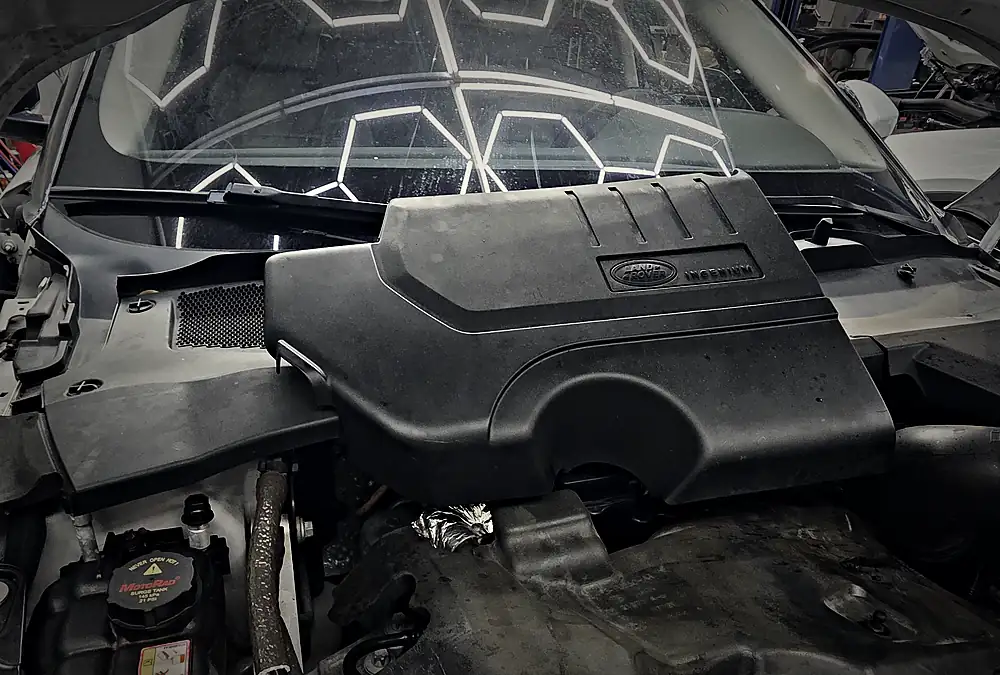
| Land Rover / Jaguar | JLR-specific approvals |
The right approval depends on the engine and model year. Using a generic oil of the same viscosity is not the same as using an approved oil, especially on engines with diesel particulate filters, gasoline particulate filters or long service intervals.
Two trends matter for newer cars. First, the latest approvals (BMW LL-17 FE+, MB 229.71, VW 508 00, Porsche C20) are thin 0W-20 oils developed for fuel economy, and they are not interchangeable with the older LL-01, 229.5 or 502 00 grades the same badge used a few years earlier. Second, cars sold with a gasoline particulate filter need a low-ash (“low SAPS”) oil, because the ash from an ordinary oil slowly plugs the filter. The oil cap or the service booklet names the approval; we match it rather than the viscosity on the shelf.
Turbos, timing chains and variable valve timing
Most modern European engines are turbocharged. The turbo spins at very high speed and its bearings rely on a steady film of clean oil. Old or broken-down oil can coke in the turbo bearings, leading to smoke, noise and failure.
Timing chains are oiled and tensioned by oil pressure. Old oil and sludge speed up chain stretch, a known issue on some engines, and can starve the tensioner. Variable valve timing systems, including BMW VANOS, need clean oil at the right pressure to work. Dirty oil can trigger cam timing fault codes and rough running.
The oil filter matters too
The filter catches the particles your oil collects. Many European cars use cartridge filters inside a housing with O-rings that should be replaced with each change. The housing gasket itself is a well-known leak point on many BMW engines. A careful oil service includes checking that area, because leaking oil can drip onto belts and the exhaust.
The leaks an oil service should catch
An oil change is also the one time a month or two that someone looks at the engine from below with the belly pan off. On BMW engines the valve cover gasket and oil filter housing gasket are the usual weep points, and a filter housing leak drips onto the serpentine belt; our BMW oil leak and cooling system page explains the order we check. On Audi and VW 2.0T engines the rear main seal and the PCV valve show up first, and a stretched timing chain announces itself as a cold-start rattle; see Audi timing chain repair. On Mercedes-Benz the oil cooler seals and the cam adjuster solenoids are the common ones, listed by engine in our common Mercedes problems guide. Catching a seep at oil-change time costs a gasket; catching it when the belt is soaked costs a belt, a tensioner and sometimes the alternator under it.
Why Florida counts as severe service
Owner’s manuals usually list a severe-service schedule. South Florida driving often fits it:
- High heat most of the year
- Stop-and-go traffic on I-95, US-1 and Sunrise Blvd
- Short trips that never fully warm the oil and burn off moisture
- Long idling with the A/C running
Oil life monitors account for some of this, but many owners choose to change oil sooner than the maximum interval for extra protection.
Synthetic vs conventional oil
Nearly every European engine today requires full synthetic oil. Synthetic oils resist heat breakdown, flow better on start-up and keep turbo bearings cleaner. The key point is still the approval: a full synthetic without the right approval may not meet your engine’s needs.
Signs your oil needs attention
- Oil service reminder or low oil warning
- Oil level dropping between changes
- Dark, gritty oil or a burnt smell
- Ticking or rattling on cold start
- Oil spots under the car
Some European engines use a small amount of oil by design. Checking the level between services is a good habit.
What a proper oil service includes at Prestige
- Approved synthetic oil for your exact engine
- A new filter and new housing seals
- A leak check around the filter housing, valve cover and oil pan
- Service indicator reset with the correct tool
- A quick inspection of brakes, tires, fluids and belts, with photos of anything that needs attention
Book your oil change
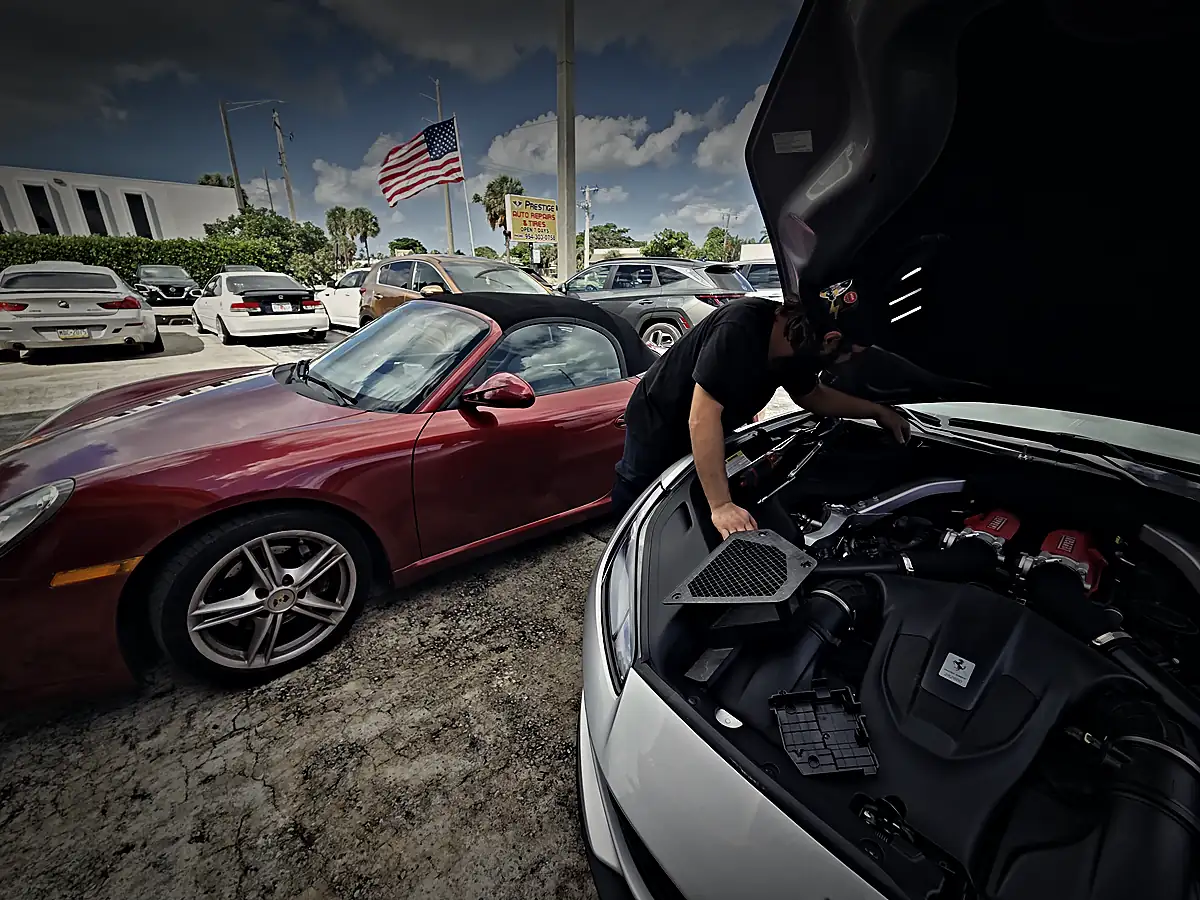
Prestige Auto Repairs & Tires services European, exotic and domestic engines at our Oakland Park and Fort Lauderdale shops, 8 AM – 7 PM (Oakland Park 7 days a week, Fort Lauderdale Monday to Saturday), with walk-ins welcome. Learn more about our European oil change service, or request an estimate.
At 250 NE 44th St, open 7 days, see oil change in Oakland Park for oil specs by make, air filters and tune-ups.
Related repair services
- Oil change in Fort Lauderdale
- Scheduled car maintenance in Fort Lauderdale
- Spark plug replacement in Fort Lauderdale
More car care guides on this topic
- Pre-Purchase Inspection on a Used Porsche: What We Check, by Model, and What Should Change the Price
- Audi oil level sensor warning: what it means and what to do
- Oil Change Intervals for Synthetic Oil: What Your Car Actually Needs
- European Car Maintenance Schedules Decoded: BMW, Mercedes-Benz, Audi and Porsche
- Buying a Used Luxury Car in South Florida: What a Pre-Purchase Inspection Catches
- Salt Air and Your Car: What Corrodes First When You Live Near the Beach