Serpentine belt replacement in Fort Lauderdale is a small job that protects several expensive parts at once. One long ribbed belt takes power from the crankshaft pulley and turns the alternator, the A/C compressor and, on many engines, the water pump and a hydraulic power steering pump. When the belt slips, all of them work at reduced output. When it breaks, all of them stop.
What the serpentine belt does
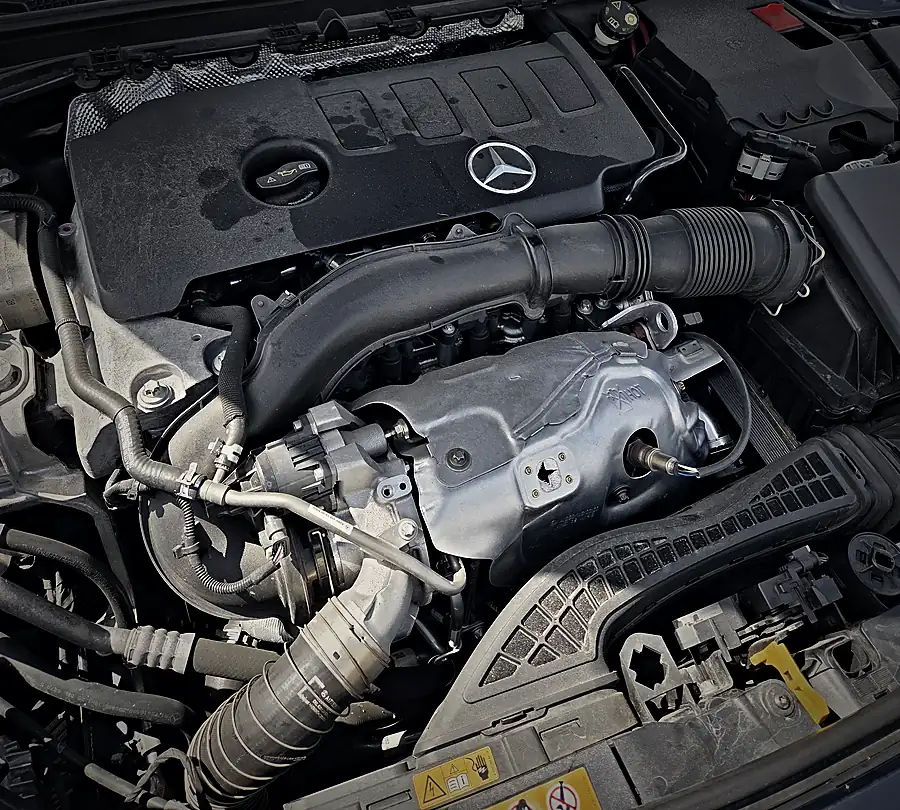
The belt is also called the drive belt or accessory belt. A spring-loaded automatic tensioner keeps it tight, and one or more idler pulleys guide it around the engine. The belt, the tensioner and the pulleys work as one system, and they wear together.
What the belt drives depends on the engine:
| Part | What you notice if the belt slips or fails |
|---|---|
| Alternator | Battery light, dim lights, a battery that goes flat |
| A/C compressor | Weaker cooling, mostly at idle |
| Water pump, where belt driven | Temperature gauge climbs |
| Hydraulic power steering pump | Heavy steering, mostly at parking speed |
Many newer cars have electric power steering, and some engines use an electric water pump. BMW six-cylinder engines such as the N54 and N55 are examples. On those cars the belt drives fewer parts, but it still drives the alternator and the A/C compressor. Battery-electric cars have no serpentine belt, and some hybrids drive the A/C compressor electrically. We confirm what your engine has on inspection.
Signs a serpentine belt or tensioner is worn
- Squeal at start-up or when the A/C switches on. The belt is slipping because it has lost rib material or the tensioner has lost spring force.
- Chirping that follows engine speed. Often a pulley that is slightly out of line, or a worn bearing in an idler.
- Cracks, fraying edges or missing chunks of rib.
- Shiny, glazed ribs. A belt that has been slipping hardens from the heat and grips even less.
- A rattle or a bouncing tensioner arm with the engine idling. The damper inside the tensioner is worn.
- Battery light, weak A/C or a rising temperature gauge with no other fault found. Belt makers list all three as results of belt slip.
- Oil or coolant on the belt. A belt soaked in oil has to be replaced, and the leak above it has to be fixed first.
- A burning-rubber smell after a drive.
A squeal can also come from a part the belt drives. A seizing A/C compressor or a failing alternator bearing drags on the belt and makes the same noise. We test for that before recommending a belt.
Why a belt can look fine and still be worn
Older belts were made of neoprene and cracked as they aged, so a quick look told you most of what you needed. Most modern belts are made of EPDM rubber, which resists cracking. Belt makers describe EPDM wear as closer to tire wear: the ribs slowly lose material, the grooves change from a V shape to a U shape, and the belt sits deeper in the pulleys with less grip.
That wear is hard to see and easy to measure. We press a belt wear gauge into the grooves. If the gauge sits tight, the belt has life left. If it rocks from side to side or the ribs sit below the gauge bar, the belt is worn, even with no cracks.
What we inspect
- Belt condition and rib depth, with the wear gauge, along the full length of the belt.
- Tensioner. We watch the arm with the engine idling, then take the belt off and move the arm through its travel. It should move smoothly, with no sticking, no metal-to-metal contact and no rust weeping from the pivot.
- Idler and tensioner pulleys. Each is spun by hand with the belt off. Roughness, noise or side play means the bearing is on its way out.
- Alternator pulley. Many newer alternators use an overrunning pulley or decoupler. A worn one chirps at start-up or shut-down and makes the tensioner jump at idle.
- Every driven part. We check the A/C compressor, the water pump and the power steering pump for bearing play, noise and leaks.
- Pulley alignment and belt tracking, since a belt that runs off-center points to a worn tensioner bushing or a bent bracket.
- Leaks above the belt, such as valve cover and oil filter housing gaskets.
You get photos of the belt, the gauge reading and anything else we find, with a written estimate.
What we replace
- The serpentine belt, in the correct length and rib count for your engine and options.
- The tensioner when the arm bounces, sticks or has lost tension.
- Idler pulleys with rough or noisy bearings.
- The alternator pulley when it has failed. The replacement has to be the same type the car was built with, because solid pulleys, one-way clutch pulleys and decouplers are not interchangeable.
- Any leaking gasket above the belt that would soak the new one. See oil leak repair.
Some engines use a stretch-fit belt with no automatic tensioner, and some have a second belt for the A/C compressor or a supercharger. We confirm the layout and the fitting procedure for your engine before the job. After fitting, we run the engine with the A/C on, check tracking and tensioner movement, and confirm charging voltage.
If the belt has to come off for another repair, such as an alternator, an A/C compressor or a water pump, that is a sensible time to measure it and replace it if it is worn, because the labor overlaps.
Why belts wear faster in South Florida
Under-hood temperatures here stay high for most of the year, and the A/C compressor runs on almost every drive. That keeps a steady load on the belt and the tensioner. Stop-and-go traffic on I-95, Federal Highway and Sunrise Boulevard means long periods at idle, where a marginal belt slips most. Belt makers also list road grit, salt and water as things that wear the rubber ribs, and cars parked near the beach see plenty of salt.
When to have it checked
We look at belts and hoses on every scheduled maintenance visit and photograph them. Ask for a belt check between services if you hear a new squeal, see the battery light flicker or notice the A/C fading at red lights. Our car noises guide can help you describe the sound before you come in.
What to expect on your visit
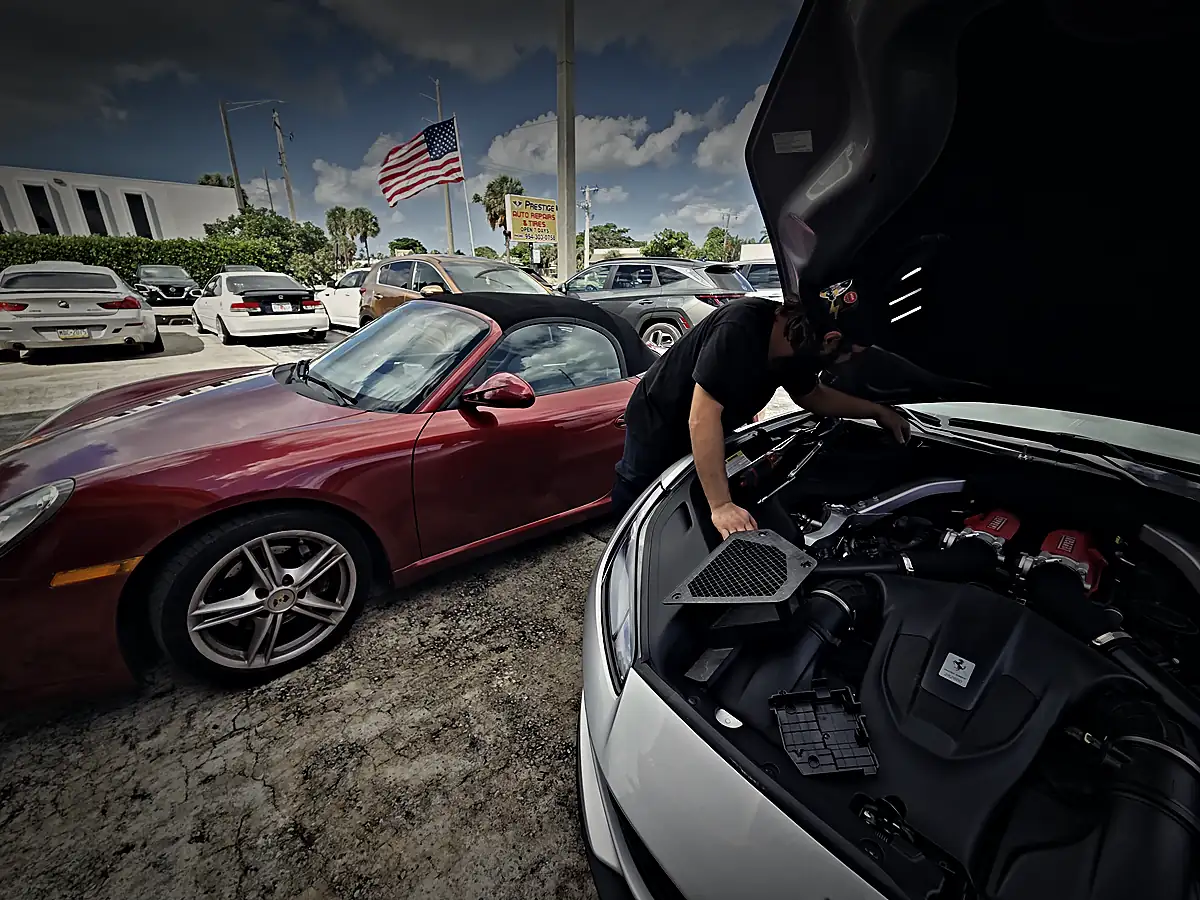
Walk in at either shop or request an estimate. We measure the belt, test the tensioner and pulleys and send photos with a written estimate before any work. Service is performed by ASE-certified technicians, and repairs carry a 2-year / 24,000-mile warranty.
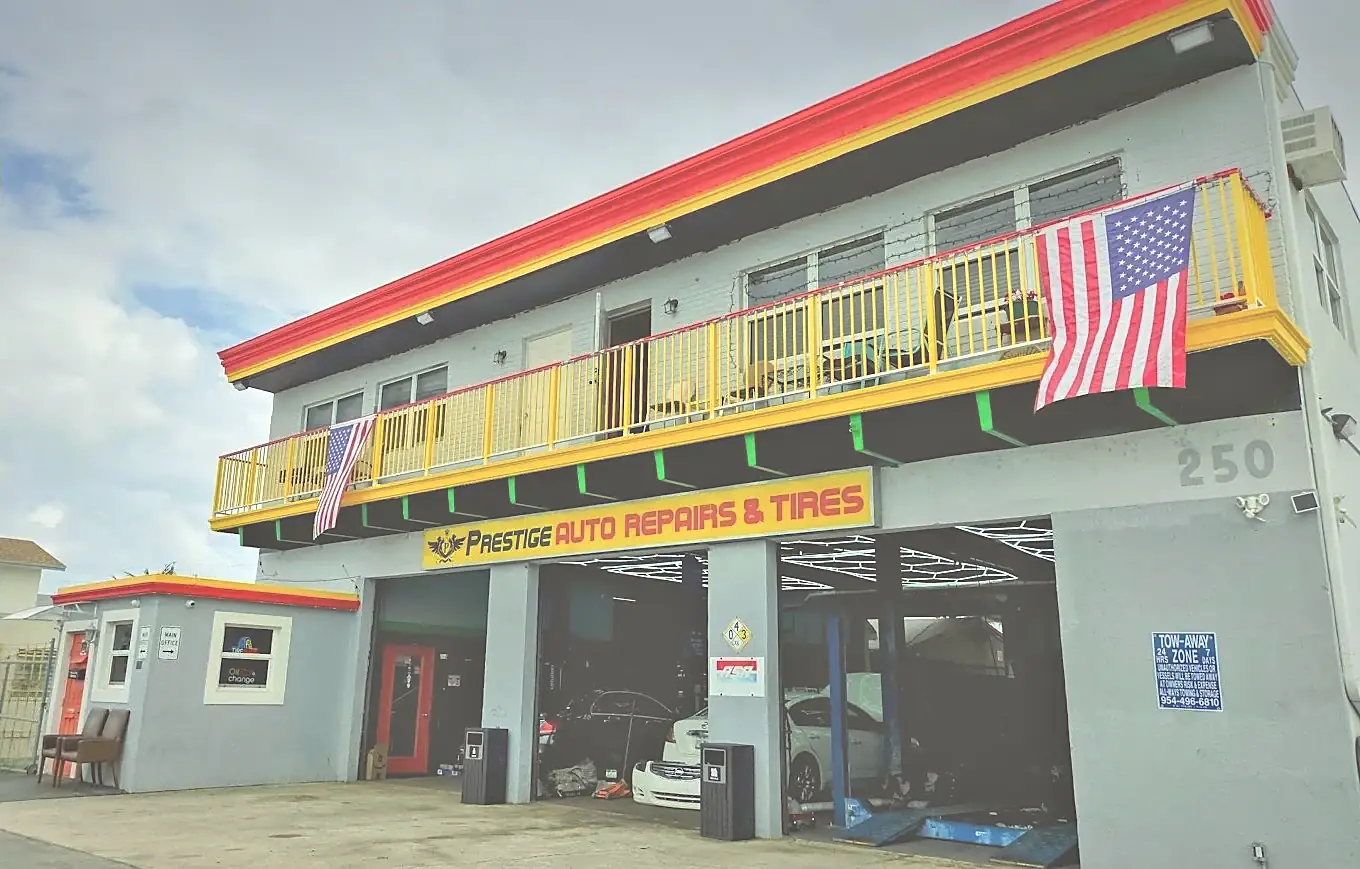
- Oakland Park: 250 NE 44th St, open 7 days, 8 AM to 7 PM, with a 24-hour key drop box at the front door. Call (954) 303-0758.
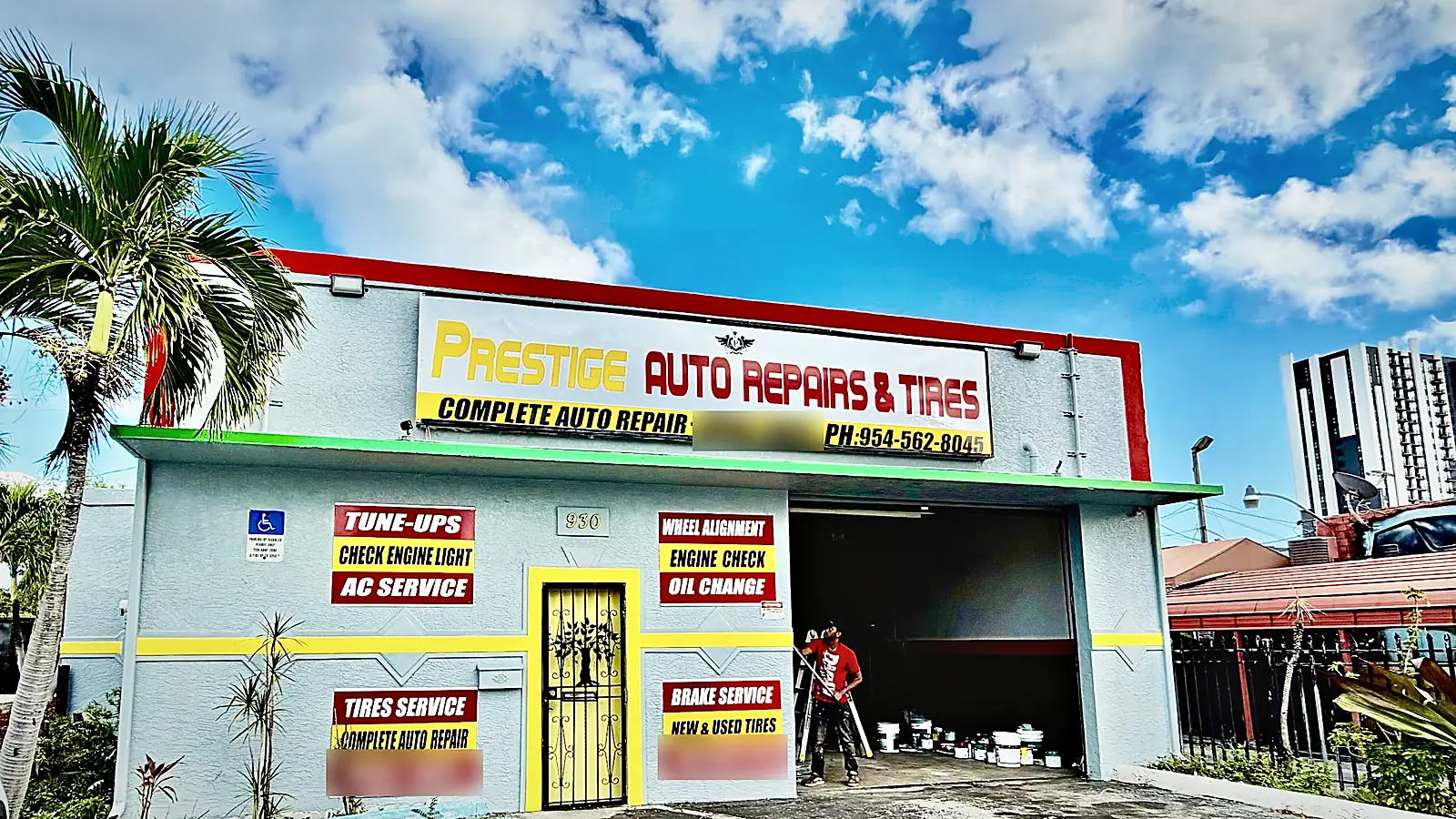
- Fort Lauderdale: 930 NE 4th Ave, open Monday to Saturday, 8 AM to 7 PM, closed Sunday. Call (954) 562-8045.
We speak English and Spanish at both shops.
Part of our engine and drivetrain guide: Engine repair in Fort Lauderdale
Also in this topic
- Oil leak repair in Fort Lauderdale
- Timing chain replacement in Fort Lauderdale
- Audi timing chain replacement in Fort Lauderdale
- Transmission repair in Fort Lauderdale
- Mercedes transmission repair in Fort Lauderdale
- Clutch replacement in Fort Lauderdale
- Fuel pump replacement in Fort Lauderdale
- Engine mount replacement in Fort Lauderdale
- Cv axle replacement in Fort Lauderdale
- Exhaust repair in Fort Lauderdale
- Porsche PDK service in Fort Lauderdale