Mercedes transmission repair in Fort Lauderdale often turns out to be smaller than owners fear. A Mercedes-Benz that is stuck in one gear, bangs into drive or flares between shifts frequently has an electronic or fluid fault inside the transmission, and many of those are fixed through the oil pan without removing the unit. The key is testing with the right software before anyone quotes a replacement transmission.
Symptoms and what they usually point to
| What you notice | Common causes we test for |
|---|---|
| Stuck in one gear, will not upshift (limp mode) | Speed sensor fault on the conductor plate, control unit fault, low system voltage |
| Harsh engagement into Drive or Reverse | Old fluid, lost adaptations, worn engine or transmission mounts |
| Slow or flared shifts, engine revs rise between gears | Low fluid level, worn valve body, internal clutch wear |
| Shudder at light throttle, like driving over rumble strips | Torque converter lock-up clutch, degraded fluid |
| Will not move, or no gear shown on the dash | Shift module fault, wiring, low fluid, internal failure |
| Red fluid on the ground | Pan gasket, electrical connector seal, cooler lines |
| Whine that changes with road speed on 4MATIC cars | Transfer case or differential, not always the transmission |
A weak battery causes more transmission complaints than most owners expect. Mercedes control units are sensitive to voltage, so we test the battery and charging system as part of every transmission diagnosis.
How we diagnose a Mercedes transmission
- XENTRY scan of the transmission control unit and the modules that talk to it, with freeze-frame data for each fault.
- Live data. We watch the internal speed sensors, solenoid currents, fluid temperature and slip while driving.
- Adaptation values, which show how far the control unit has had to adjust each shift to compensate for wear.
- Fluid level and condition at the correct fluid temperature. Most of these transmissions have no dipstick, and the level is only right within a narrow temperature window.
- Leak check at the pan, the electrical connector and the cooler lines.
- Road test with a technician, before and after.
- Photos and a written estimate, with the scan report attached.
5G-Tronic (722.6)
The five-speed 722.6 is found in Mercedes models from the late 1990s through the 2000s and in some later vehicles. It is a durable transmission with two well-known weak points.
- The electrical connector. Where the wiring plugs into the transmission case, the connector’s O-rings harden and leak. Fluid can then travel up inside the wiring harness to the transmission control unit. We replace the connector and check the control unit plug for fluid.
- The conductor plate. It carries the speed sensors. When one fails, the transmission drops into limp mode. The plate is replaced through the pan, with a new filter and fluid.
7G-Tronic (722.9)
The seven-speed 722.9 was fitted to most rear-drive and 4MATIC models from the mid-2000s to the mid-2010s.
- Conductor plate and control unit. Here the control unit is built onto the conductor plate inside the transmission. Speed sensor faults are the classic failure and cause limp mode or a refusal to shift. The replacement unit must be coded to the car with XENTRY.
- Valve body. Worn valves and solenoids cause flares and harsh shifts once the electronics check out.
- Torque converter shudder, which we confirm on a road test with live slip data before recommending anything.
- Shift module. Models with the column-mounted selector use an electric module to engage Park, Reverse, Neutral and Drive. A fault there can leave the car unable to select a gear even though the transmission itself is healthy.
- Fluid type. Earlier and later 7G-Tronic units use different Mercedes-approved fluids. We identify the correct one from the transmission’s data and do not mix them.
9G-Tronic (725.0)
The nine-speed 725.0 arrived in the mid-2010s and is now used across most of the range.
- Software and adaptations. Many shift-quality complaints, such as a bump on a slow downshift, improve with a control unit software update and an adaptation reset.
- Fluid service. The 9G-Tronic uses its own low-viscosity fluid, and the oil pan has the filter built in, so the pan is replaced as part of the service. The level is set with XENTRY at a specific fluid temperature.
- Integrated control unit. The electronics sit inside the transmission, so accurate diagnosis comes before any decision about parts.
Dual-clutch and AMG transmissions
- 7G-DCT and 8G-DCT in the A-Class, CLA, GLA and GLB are dual-clutch transmissions. Judder when pulling away, hesitation and clutch faults are diagnosed with clutch adaptation data, and many are improved with a software update and a clutch relearn.
- AMG Speedshift MCT in many 63-series models replaces the torque converter with a wet start-up clutch. Fluid condition matters a great deal on these.
- AMG Speedshift DCT in the SLS AMG and AMG GT is a dual-clutch transaxle at the rear of the car.
For these units we confirm parts availability and the exact repair path after inspection.
Repair, service or replace
| Finding | Typical path |
|---|---|
| Fluid overdue, shifts slightly harsh, no faults | Fluid and filter service, adaptation reset, road test |
| Speed sensor or control unit fault | Conductor plate or control unit replacement through the pan, coding with XENTRY |
| Leak at connector or pan | New connector or gasket, fluid top-up to the correct level |
| Software-related shift complaints | Update and adaptation reset |
| Valve body wear | Valve body repair or replacement |
| Burnt fluid, metal in the pan, slipping in several gears | Internal damage. We show you the evidence and price a rebuilt or replacement unit |
We send photos of the fluid, the pan and any failed parts, so you can see why we recommend what we do. If another shop has already quoted a replacement transmission, a second opinion with a proper scan is worth having first.
Why South Florida is hard on Mercedes transmissions
Transmission fluid ages with heat. Stop-and-go traffic on I-95, Federal Highway and Las Olas with the A/C running keeps fluid temperatures high for long periods, and there is no cool season to offset it. Street flooding is the other local risk: water can enter through the transmission vent or soak the electrical connector if a car is driven through deep water. After any flood exposure, have the fluid checked before driving further. Our flood-damaged car repair page explains the full inspection.
Related Mercedes service
Transmission work is one part of looking after the car. See Mercedes repair in Fort Lauderdale for engines, electrical and A/C, Mercedes A and B service for scheduled maintenance, and transmission repair in Fort Lauderdale for other makes. Sprinter vans have a page of their own: Sprinter van repair.
What to expect on your visit
Walk in at either shop or request an estimate. Diagnosis comes first, and you approve the written estimate before any work. Work is done by ASE-certified, factory-trained technicians.
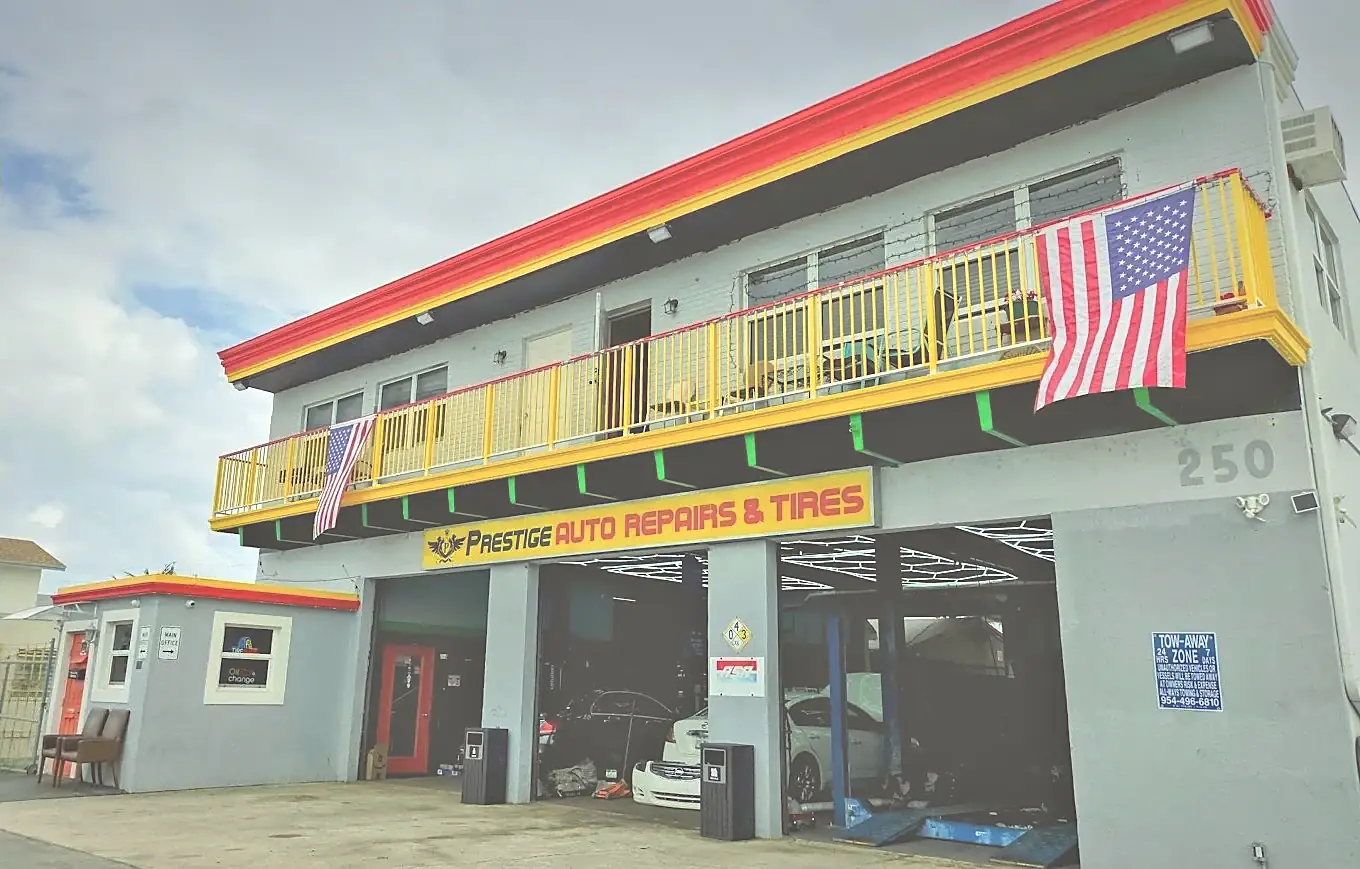
- Oakland Park: 250 NE 44th St, open 7 days, 8 AM to 7 PM, with a 24-hour key drop box at the front door. Call (954) 303-0758.
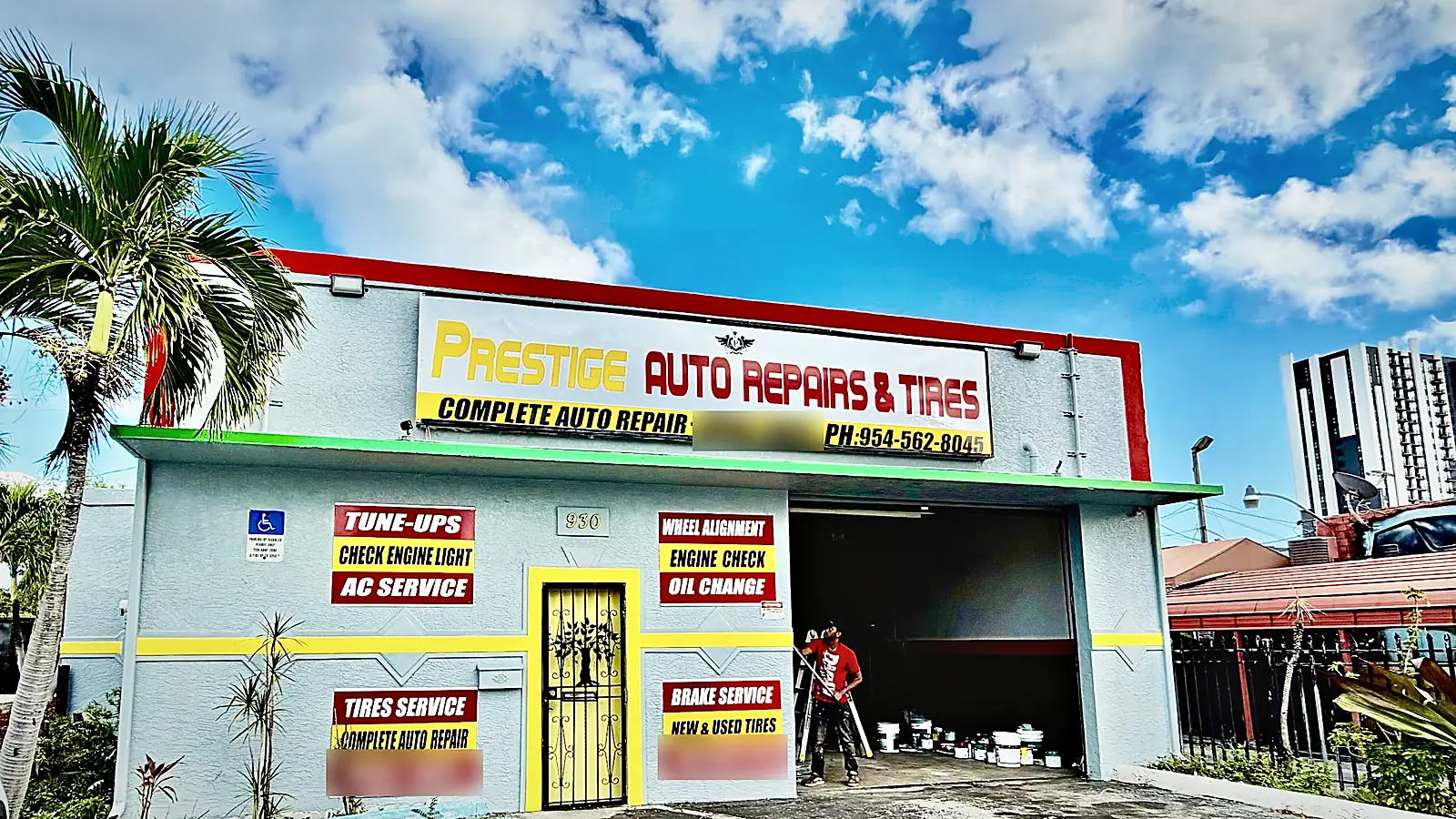
- Fort Lauderdale: 930 NE 4th Ave, open Monday to Saturday, 8 AM to 7 PM, closed Sunday. Call (954) 562-8045.
We speak English and Spanish at both shops.
Part of our engine and drivetrain guide: Engine repair in Fort Lauderdale
Also in this topic
- Oil leak repair in Fort Lauderdale
- Timing chain replacement in Fort Lauderdale
- Audi timing chain replacement in Fort Lauderdale
- Transmission repair in Fort Lauderdale
- Clutch replacement in Fort Lauderdale
- Fuel pump replacement in Fort Lauderdale
- Serpentine belt replacement in Fort Lauderdale
- Engine mount replacement in Fort Lauderdale
- Cv axle replacement in Fort Lauderdale
- Exhaust repair in Fort Lauderdale
- Porsche PDK service in Fort Lauderdale