Water pump replacement in Fort Lauderdale is one of the repairs that keeps a small coolant leak from becoming an overheated engine. The water pump, also called the coolant pump, moves coolant through the engine block, the cylinder head, the radiator and the heater. When it leaks, loses its bearing or stops turning, the engine has no way to shed heat.
How a water pump works and how it fails
A mechanical pump has a shaft with a pulley on one end and an impeller on the other. A bearing supports the shaft, and a mechanical seal keeps coolant away from the bearing. A small weep hole in the housing lets any coolant that gets past the seal drain out instead of reaching the bearing.
The usual failures are:
- Seal leak. Coolant drips or leaves a trail from the weep hole. Pump makers name contaminated coolant as the main cause.
- Bearing wear. The shaft develops play and the pump rumbles or screeches. A belt that is too tight or out of line speeds this up.
- Impeller damage. Corrosion from old coolant eats the impeller, so the pump turns but moves little coolant.
- Housing or gasket leak at the surface where the pump meets the engine.
- Electrical failure on electric pumps, covered below.
Signs your water pump is failing
- Coolant on the ground under the front of the engine, or a sweet smell after a drive
- Pink, green, blue or white crust below the pump or on the belt cover
- Low coolant warning that returns after topping up
- Rumbling, grinding or screeching from the front of the engine that rises with engine speed
- A wobbling pump pulley
- Temperature gauge climbing, in traffic or under load
- Weak cabin heat at idle that improves when you rev the engine
- An overheating message with no visible leak, common on cars with electric pumps
Several other faults look the same from the driver’s seat. A cracked expansion tank, a leaking hose, a stuck thermostat or a failed radiator fan can all cause coolant loss or a hot engine. Our coolant leak repair and overheating repair pages cover those causes.
Belt-driven, timing-driven and electric pumps
How the pump is driven decides how big the job is.
| Pump type | How it is driven | What that means for the repair |
|---|---|---|
| Accessory-belt pump | The serpentine belt | Usually reached from the front of the engine. We check the belt and tensioner at the same time |
| Timing-driven pump | The timing belt or timing chain | The timing covers come off, so the pump, belt, tensioner and idlers are normally done together |
| Electric pump | Its own motor, controlled by the engine computer | Bolted to the engine or nearby. Diagnosed with a scan tool, and bled with the maker’s procedure |
Two examples we see often:
- BMW. Six-cylinder engines such as the N54 and N55 use an electric pump that runs independently of engine speed. It can stop without leaking, and the dash shows an engine temperature warning. See BMW oil leak and cooling system repair.
- VW and Audi. On EA888 four-cylinder engines the water pump and the thermostat housing are mounted together. Audi’s service bulletin has the technician find which of the two is leaking before replacing either, and we follow the same approach with a pressure test and photos.
Hybrids and electric cars also use electric coolant pumps for the battery and power electronics loops. We confirm the pump type and the procedure for your car on inspection.
What we inspect before quoting a pump
- Coolant level and condition with the engine cold.
- Pressure test of the system and the cap. With the system under pressure we look at the weep hole, the pump gasket, the thermostat housing, hoses, the radiator and the expansion tank.
- UV dye when a leak is slow or burns off on hot parts before it reaches the ground.
- Pump bearing. With the belt off, we check the pulley for play and roughness.
- Belt and tensioner, since a worn or over-tight belt shortens pump life. See serpentine belt replacement.
- Scan and live data on cars with electric pumps: pump speed, fault codes and coolant temperature history.
- Combustion gas test if the engine has already overheated, to check the head gasket before money is spent on a pump.
If the pump is sound and the leak is somewhere else, the estimate says so.
What we replace
- The water pump, with an OEM or OE-equivalent part
- New gasket, seal or O-ring, fitted the way the maker specifies
- The thermostat where it is part of the same housing or shows a fault
- Timing belt, tensioner and idlers on engines where the timing belt drives the pump
- The accessory belt if it is worn or has been soaked in coolant
- Coolant, after a flush, in the type your manufacturer specifies
Then we vacuum fill the system, run the maker’s bleed procedure, warm the engine up, check fan operation and heater output, pressure test again and road test. A new pump can show a trace of moisture at the weep hole while the seal beds in. Steady dripping is a fault, and we recheck for it before the car leaves.
Why water pumps fail early in South Florida
Cooling systems here work near the top of their range for most of the year. Long idles on I-95, Sunrise Boulevard and Oakland Park Boulevard with the A/C on leave the pump and the fans to do all the work. Heat ages coolant additives faster, and worn-out coolant is what attacks pump seals and impellers. Plastic pump housings on some European engines can also crack with age and heat.
Keeping the coolant fresh is the simplest protection. A coolant flush on your maker’s schedule costs far less than a pump, and far less than an engine.
Warranty and claims
Repairs carry our 2-year / 24,000-mile warranty. Water pumps are often covered by extended warranties, and we document the failure with photos and test results to support your claim. See extended warranty repair.
What to expect on your visit
Walk in at either shop or request an estimate. If the engine is running hot, let it cool before you drive and keep an eye on the gauge. We test first and send photos with a written estimate before any work, performed by ASE-certified technicians.
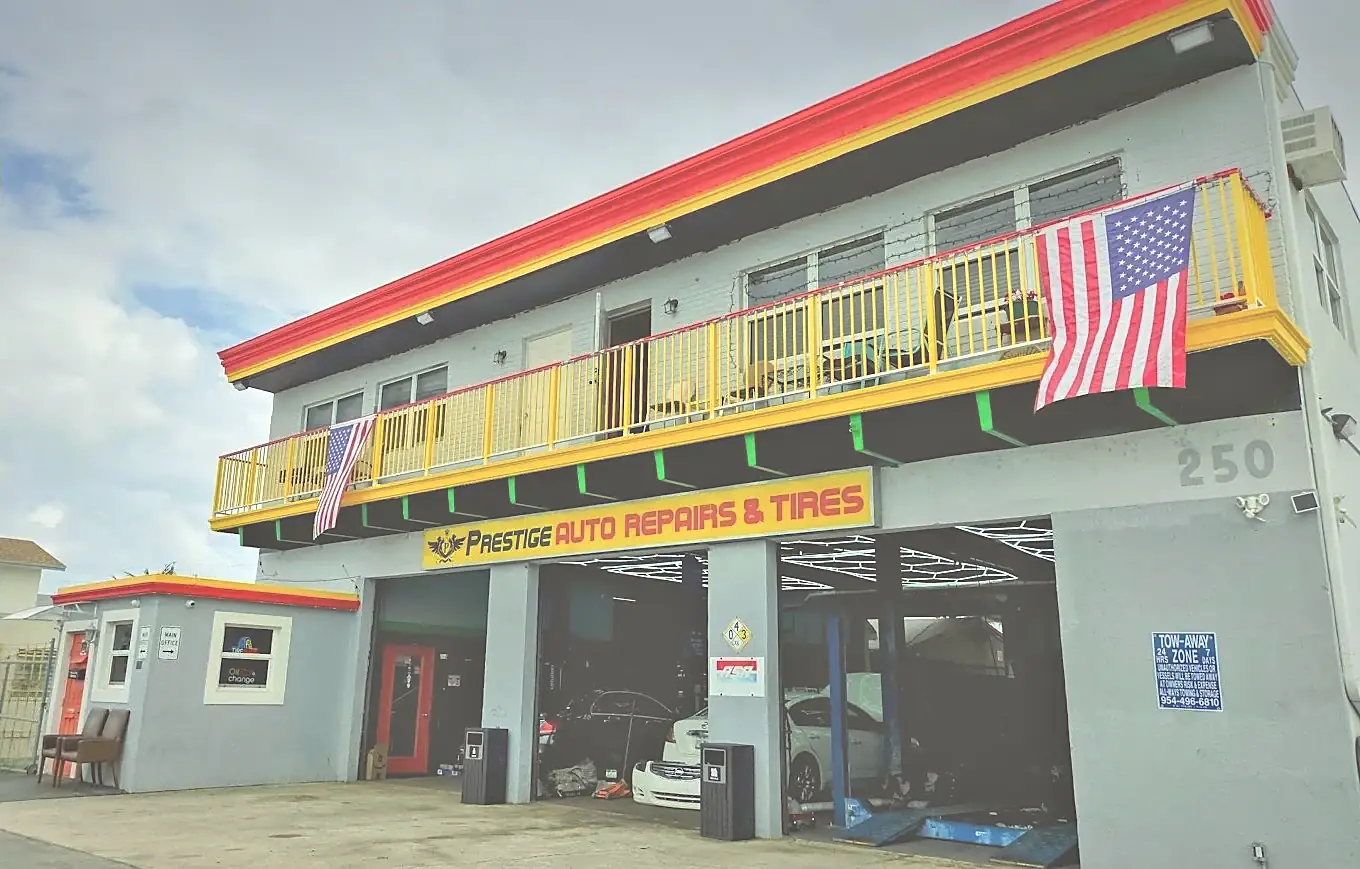
- Oakland Park: 250 NE 44th St, open 7 days, 8 AM to 7 PM, with a 24-hour key drop box at the front door. Call (954) 303-0758.
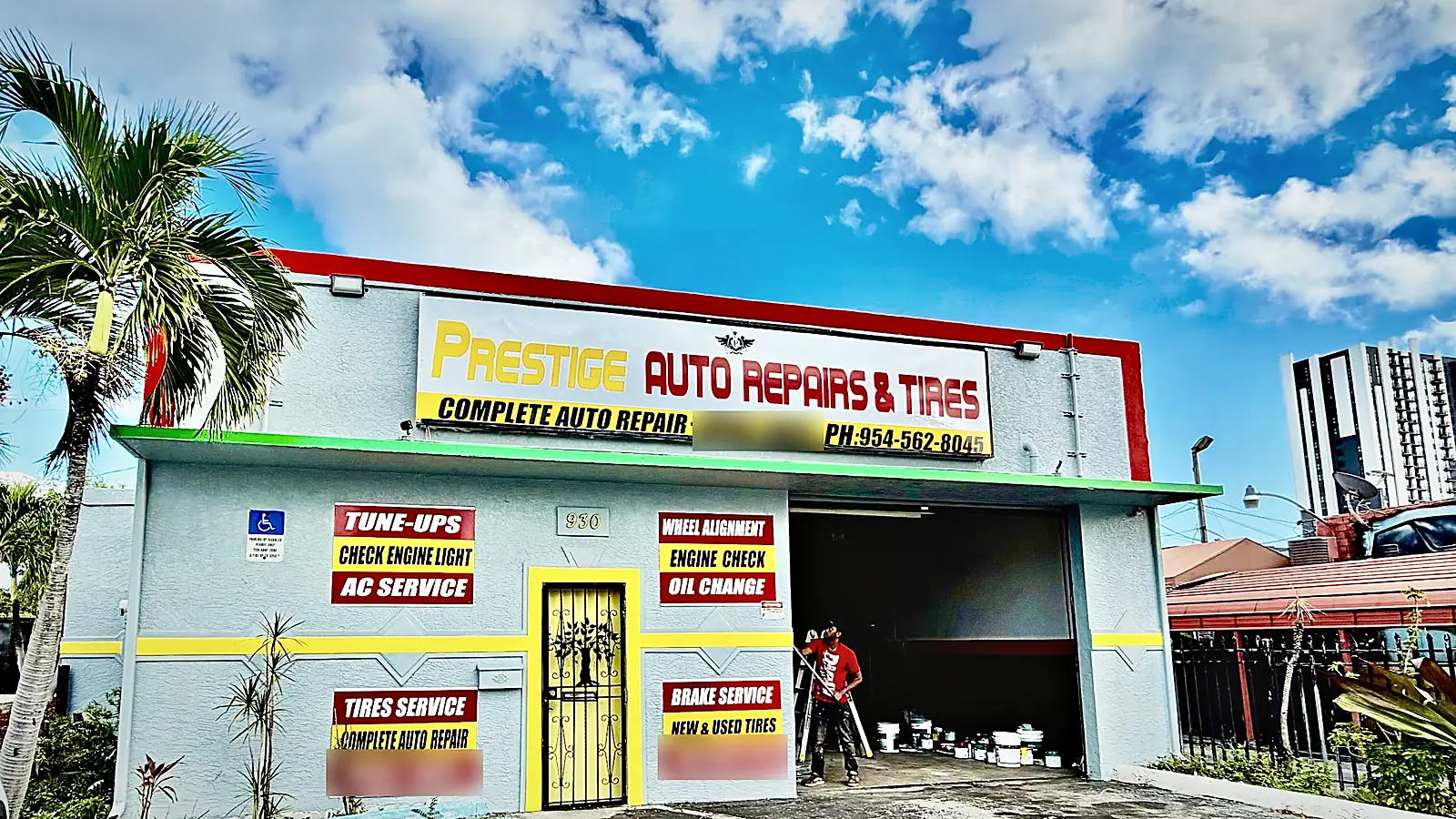
- Fort Lauderdale: 930 NE 4th Ave, open Monday to Saturday, 8 AM to 7 PM, closed Sunday. Call (954) 562-8045.
We speak English and Spanish at both shops.
Part of our A/C and cooling guide: Car A/C repair in Fort Lauderdale