An Audi oil level sensor warning means the car can no longer measure how much oil is in the engine. It is a fault in the measuring system, and it does not by itself mean the oil is low. Common causes include a failed sensor in the oil pan, a damaged connector or wiring, and low battery voltage. Until it is repaired the car cannot warn you about a falling oil level, so have the level confirmed by hand and book a diagnosis.
The wording depends on the model and year. Some cars show “Oil level! Sensor defective”. Others show an oil level system malfunction message, or simply say the oil level reading is not available. All of them point to the same system.
What the oil level sensor does
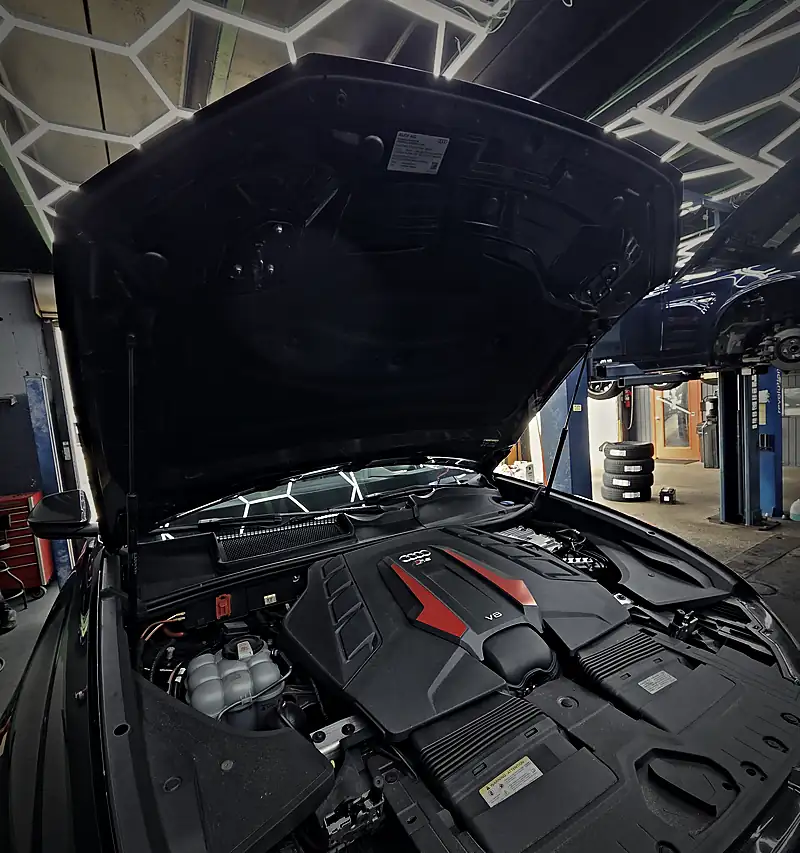
Many current Audi engines have no traditional dipstick. An electronic sensor fitted to the bottom of the oil pan measures the oil level, and on most engines the oil temperature as well. The instrument cluster or the MMI turns that signal into the level bar you see on the screen and into the yellow “add oil” message when the level reaches the minimum.
The sensor only gives a valid reading under certain conditions. The engine has to be warm, the car has to be on level ground, and the oil needs a short time to drain back into the pan after the engine stops. A reading that is briefly unavailable after a fill-up or on a slope is normal. A sensor fault message is different: the car has decided that the signal itself is missing or cannot be trusted.
Common causes of an Audi oil level sensor warning
| What you notice | What it usually is | What we check |
|---|---|---|
| Message appears and stays on, level display blank | Failed sensor | Fault codes, sensor signal in live data, sensor supply and ground |
| Message comes and goes, often after rain or a car wash | Connector or wiring fault at the oil pan | Connector pins, seal, harness routing along the underside |
| Oil around the sensor or on the undertray | Leaking sensor seal, or oil from a leak above running into the connector | Source of the oil, sensor seal, connector for oil inside |
| Message arrived with several unrelated warnings | Low battery voltage | Battery test, charging voltage, undervoltage codes |
| Message right after an oil change | Reading not yet valid, connector left loose, or the wrong oil quantity | Actual level, connector, service reset |
Less common causes include damage to the oil pan or sensor from road debris, heavy sludge from overdue oil changes, and a software fault in the instrument cluster. On some models the car also uses the hood switch to recognise that oil has been added, so a faulty hood switch can upset the display. The shop confirms which one applies on inspection.
A failed sensor
This is the most frequent finding. The sensor sits in hot oil for the whole life of the engine, and its electronics go through a heat cycle on every drive. South Florida traffic keeps oil temperatures high for long periods. When the sensor stops sending a plausible signal, the car stores a fault and shows the message.
Connector and wiring faults
The sensor’s connector faces the road. Water, salt air near the beach and road grit reach it, and the pins corrode. A harness that has rubbed through on an undertray edge gives the same result. These faults are often intermittent, which is why the message may disappear for days and then return.
Oil in the connector
An oil leak higher on the engine can run down and collect at the lowest point, which is where the sensor is. Oil inside a connector changes the signal. In that case the sensor may be fine, and the repair that matters is the leak. Our oil leak repair page explains how we trace a leak to its source with dye before recommending parts.
Low battery voltage
A weak battery makes control units log faults that have nothing to do with the part they name. If the oil level message arrived together with other warnings on a cold start, we test the battery and charging system before looking at the sensor.
Can I keep driving?
The sensor fault does not harm the engine. What matters is that the low-oil warning has stopped working. Several Audi turbocharged engines use some oil between services, so a car that cannot report its level needs the level checked another way.
Usually fine for normal driving over a short period:
- The oil level has been confirmed by hand as correct.
- Only the yellow oil level or sensor message is showing.
- The engine sounds normal and there is no oil under the car.
Stop the engine somewhere safe and call the shop:
- A red oil can symbol or a low oil pressure message appears.
- The engine develops a ticking or rattling noise.
- You see fresh oil on the ground or smell burning oil.
- The level cannot be confirmed and you do not know when oil was last added.
Low oil is hard on timing chain tensioners and turbochargers. The Audi timing chain replacement page describes what a chain rattle sounds like and why it should not be ignored.
How to check the oil in the meantime
- If the engine has a dipstick, park on level ground, wait a few minutes after switching off and read it the usual way.
- If there is no dipstick and the display is not working, do not guess. Adding oil without a reading risks overfilling, which causes its own problems.
- Bring the car in. On engines with a capped dipstick tube, we measure with a service dipstick and tell you the actual level.
If oil is needed, it has to carry the VW approval listed for your engine. Our guide to why the oil spec matters on European cars explains the approval codes.
What the shop checks
At Prestige Auto Repairs & Tires we work through it in this order:
- Confirm the real oil level by hand, and correct it if needed.
- Read every module with ODIS-level diagnostic tools and save the stored faults with the conditions when each one set.
- Test the battery and charging system, because voltage faults change how the other codes are read.
- Inspect the sensor, its connector and the harness from underneath, with the undertray off, and look for oil leaks above it.
- Check the sensor signal and its power and ground before condemning the part.
- Send photos and a written estimate that names the cause before any repair starts.
Because the sensor is fitted to the bottom of the pan, replacing it usually means draining the oil. If a European oil change is close to due, doing both in one visit avoids paying for oil twice. After the repair we confirm that the level display reads correctly.
What to do next
- Write down the exact wording on the screen and whether any other warnings came with it.
- Check the level with the dipstick if your engine has one.
- Look under the car for oil.
- Request an estimate and include the message, or bring the car to either shop.
See Audi repair in Fort Lauderdale for the engines and systems we work on, and common Audi problems in South Florida for the faults we see most. Bring the car to 250 NE 44th St in Oakland Park, open 7 days from 8 AM to 7 PM, (954) 303-0758, or to 930 NE 4th Ave in Fort Lauderdale, Monday to Saturday from 8 AM to 7 PM, (954) 562-8045.
Related repair services
- Oil change in Fort Lauderdale
- Scheduled car maintenance in Fort Lauderdale
- Spark plug replacement in Fort Lauderdale
More car care guides on this topic
- Oil Change Intervals for Synthetic Oil: What Your Car Actually Needs
- European Car Maintenance Schedules Decoded: BMW, Mercedes-Benz, Audi and Porsche
- Buying a Used Luxury Car in South Florida: What a Pre-Purchase Inspection Catches
- Salt Air and Your Car: What Corrodes First When You Live Near the Beach
- Oil Change in Fort Lauderdale: Why the Oil Spec Matters on European Cars
- How a Brake Flush and Radiator Coolant Flush Prevent Major Breakdowns