Salt air corrodes a car from the parts you never look at: the brake hardware, the A/C condenser behind the grille, the bead seats inside alloy wheels, the exhaust hangers and the bolts that hold the suspension to the body. Prestige Auto Repairs & Tires sees it every week on cars from Lauderdale-by-the-Sea, Sunny Isles Beach and the barrier-island streets between them, at our shops in Oakland Park and Fort Lauderdale. This guide lists what corrodes first, the early signs you can spot in a driveway, and what we check when a beach-area car comes in.
Why the beach is harder on a car than the rest of Broward
Sea spray carries salt a surprising distance inland. Within about a mile of the ocean, a thin salt film settles on every surface each night, and humidity keeps it wet. Salt plus water plus bare metal is a battery: iron turns to rust, aluminum oxidizes into white powder, and dissimilar metals that touch, such as a steel bolt in an aluminum subframe or a steel clamp on an aluminum A/C line, corrode faster still. A car that is garaged and rinsed often does fine. A car that sits in an open lot on A1A, is washed only on top and is driven short distances so nothing fully dries is the one we see with problems.
The eight parts that corrode first
First: brake rotors, pads and caliper hardware
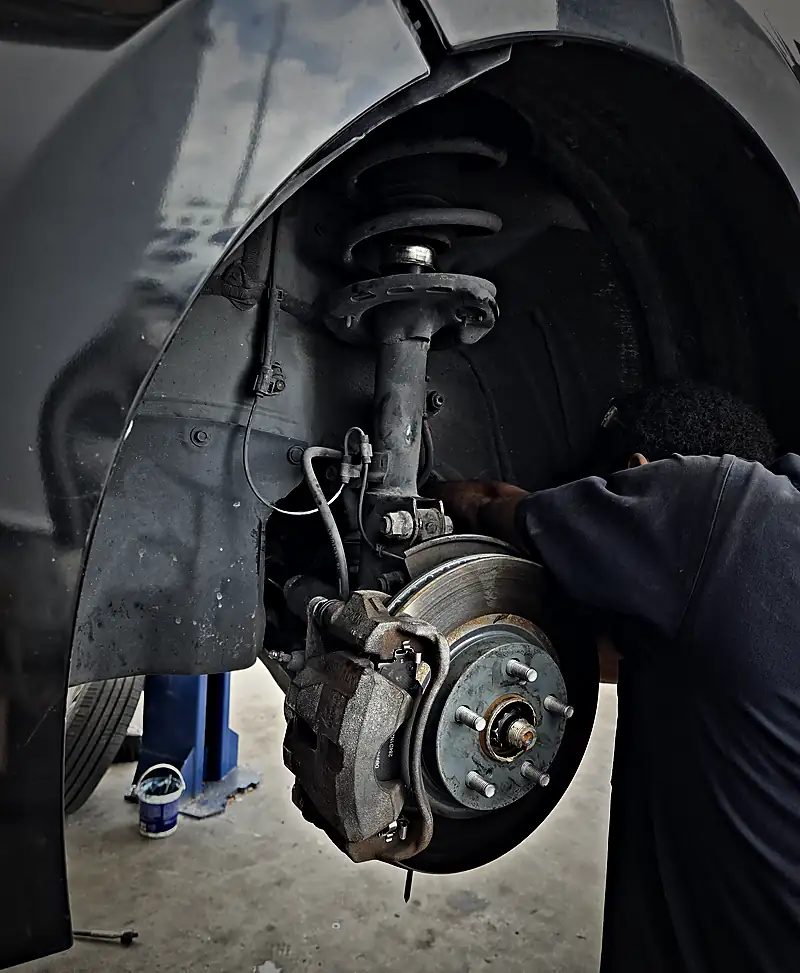
A light orange film on the rotor face after a damp night is normal and wipes off with the first stop. The problem is the parts that do not get wiped: the rotor hat and edges, the pad backing plates, the caliper slide pins and the anti-rattle clips. Rust builds up behind the pad ears, the pad cannot slide freely, and one wheel starts braking harder or dragging. The signs are a grinding or scraping noise on the first few stops of the day that fades, a pull under braking, uneven pad wear between the inner and outer pads, or a hot wheel after a drive. Caught early it is a clean-and-lubricate job on the hardware during a brake service; caught late it is a seized caliper and a rotor worn on one side.
Second: the A/C condenser
The condenser sits in front of the radiator, directly in the path of salt air at highway speed. Its aluminum fins corrode into a crumbly gray powder and the tube joints develop pinhole leaks. The first sign is an A/C that cools a little less each summer rather than failing all at once. We leak-test with dye and an electronic sniffer before recommending anything, because a condenser leak and a low charge from an old service port cap look the same from the driver’s seat. More on our car A/C repair page.
Third: alloy wheel bead seats and TPMS sensors
Salt gets between the tire bead and the aluminum rim and lifts the metal in small flakes. The result is a tire that loses a few psi a week with no nail in it. The aluminum TPMS valve stems used on many European cars corrode at the nut and can snap when a tire is changed. If you are adding air to the same wheel every couple of weeks, the fix is to dismount the tire, clean and seal the bead seat, and replace the stem if it is pitted, which we do as part of tire and alignment work.
Fourth: battery terminals and ground straps
Salt air turns a battery terminal into a green-and-white crust in a season. The car starts slowly on humid mornings, the dash flickers at start-up, and on a modern car the battery sensor reports a weak battery that is actually fine. Ground straps between the engine, body and battery corrode under their bolts and cause the odd electrical faults that no code quite explains. Cleaning and protecting the terminals is a small job; we check them with every battery test.
Fifth: exhaust hangers, clamps and heat shields
The exhaust itself is usually stainless on a European car, but the rubber-and-steel hangers, the clamps and the thin heat shields are not. A rattle over bumps, a new exhaust note or a clank at idle is often a shield that has rusted at its bolts, not a broken exhaust. These are quick to secure or replace on the lift, and ignoring them lets the exhaust drop onto the next part down.
Sixth: underbody bolts, subframes and suspension arms
Steel bolts threaded into aluminum subframes and knuckles, which Audi, BMW, Jaguar, Land Rover, Porsche and Tesla all use, seize as the two metals corrode together. Nothing feels wrong until a control arm or alignment adjustment is needed, and then the bolt will not turn. On the lift we look for the white bloom around each bolt head and the brown weep below a steel-on-steel joint. An alignment on a beach-area car sometimes starts with freeing seized adjusters, which is why we photograph them before quoting.
Seventh: paint, clear coat and chrome
Salt film under the sun is what makes clear coat fail early on roofs, hoods and trunk lids, and it pits chrome trim and polished wheels. Aluminum hoods and doors on Audi, Jaguar, Land Rover and some BMW and Mercedes models can bubble at the edges where the paint seals the metal. The cure is prevention: rinse the car, including the underside, after beach days, and keep the paint sealed. Our detailing and ceramic coating page explains what a coating does and does not protect.
Eighth: convertible frames, door seams and tailgate hinges
Older convertibles and classic cars show it first in the top frame and the lower door seams, where water sits. Tailgate and liftgate hinges on SUVs corrode at the pivot and start to squeak and sag. These are cosmetic until the latch stops aligning, so we note them on inspection photos rather than selling a repair.
What a beach-area inspection includes at Prestige
Every car on our lift gets a look underneath, and for a car that lives near the water we spend longer on it. We photograph the brake hardware, rotor edges and caliper slides, the condenser face, the wheel bead seats when a tire is off, battery terminals and ground straps, the exhaust hangers and shields, and the subframe and suspension bolts, then send you the photos with a written estimate and say plainly which items are cosmetic and which are repairs. That is the same approach on every visit, and it is why beach-area drivers tend to come to us before a problem rather than after.
A simple routine that prevents most of it
- Rinse after beach days, including a pass under the car with a hose. Fresh water dissolves salt; wax and coatings make it rinse off faster.
- Drive long enough to dry. A twenty-minute drive heats the brakes and exhaust and dries the underbody; a two-block errand does not.
- Garage or cover the car at night when you can. Most salt film is laid down overnight.
- Have the underside looked at once a year, and the brakes and condenser checked as part of a scheduled maintenance visit.
Which shop is closer
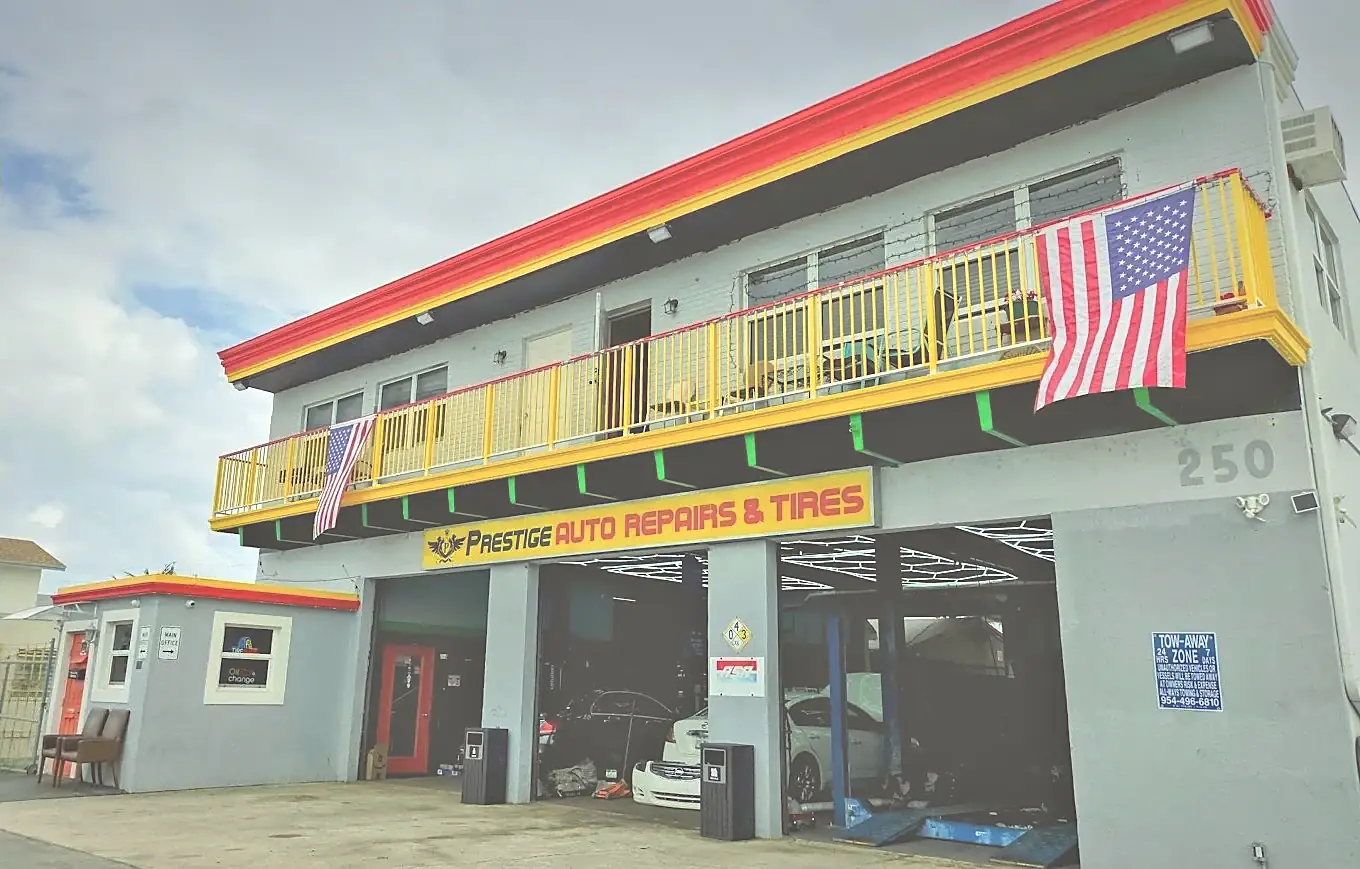
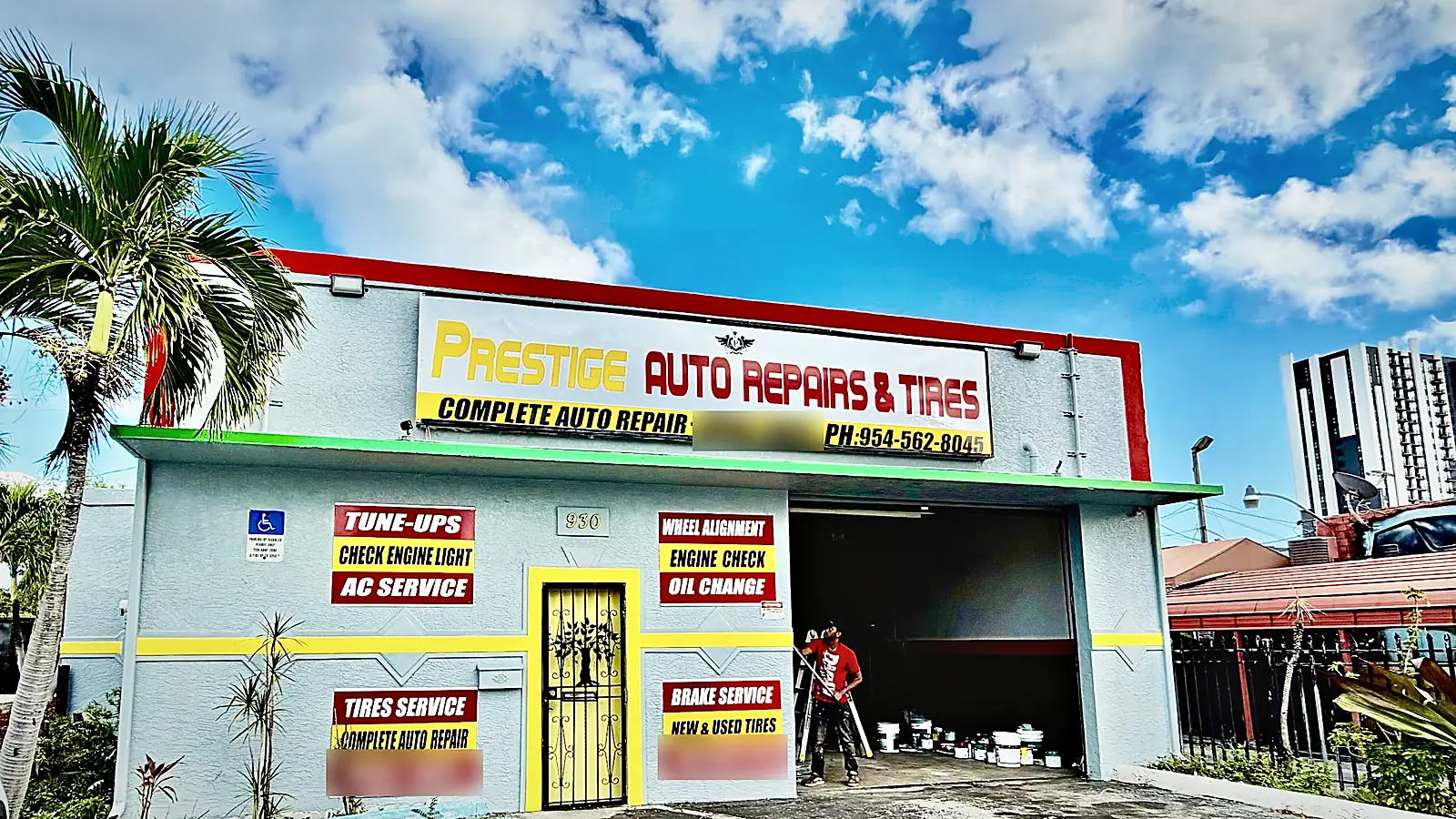
From Lauderdale-by-the-Sea, our Oakland Park shop at 250 NE 44th St is about 3 to 4 miles west on Commercial Boulevard and is open 7 days, 8 AM to 7 PM, with a 24-hour key drop. From Sunny Isles Beach, the Fort Lauderdale shop at 930 NE 4th Ave is the closer one, open Monday to Saturday. Repairs at either shop carry a 2-year / 24,000-mile warranty, and current offers are on our specials page.
Related repair services
- Scheduled car maintenance in Fort Lauderdale
- Oil change in Fort Lauderdale
- Spark plug replacement in Fort Lauderdale
- Mercedes a service in Fort Lauderdale
- Pre-purchase inspection in Fort Lauderdale