Oil change intervals for synthetic oil are set by your carmaker, not by the oil bottle or a number on a windshield sticker. The right interval for your car is the one in its maintenance schedule, shortened if your driving matches the maker’s severe-service list, and always capped by a time limit. Drivers in Coconut Creek and Margate can look up their car in our car maintenance schedule tool and have the service done at Prestige Auto Repairs & Tires in Oakland Park, with oil that carries the approval the engine calls for.
Maker interval or oil-life monitor: which one do you follow?
Cars tell you when to change the oil in one of two ways.
A fixed schedule. The manual gives a distance and a time, usually with two columns: normal and severe. You choose the column that matches how you drive.
An oil-life monitor. The car works it out for you. Most monitors do not test the oil. They count things the engine computer already knows, such as cold starts, engine temperature, revolutions, load and idle time, and estimate how much life is left. Some makers add a sensor in the oil pan that measures level and oil condition.
If your car has a monitor, follow it, with three conditions:
- It only works if the oil in the engine is the oil the maker specified.
- It has to be reset at every oil change. A monitor that was not reset is counting from the wrong starting point.
- The time limit in the manual still applies, even if the monitor shows plenty of life left.
Intervals differ a great deal between makers and between engines from the same maker. That is why this guide does not give you one mileage figure; the figure belongs to your engine.
Why ordinary driving here often counts as severe service
Many maintenance schedules list a set of conditions that call for shorter intervals. The exact list is in your manual, but these appear again and again:
| Condition in many schedules | What it does to the oil | Where it happens locally |
|---|---|---|
| Repeated short trips | The oil never gets hot enough to drive off moisture and fuel | School runs and errands around Coconut Creek and Margate |
| Stop-and-go traffic | Engine hours pile up while the odometer barely moves | State Road 7, Atlantic Boulevard, Sample Road at rush hour |
| Long idling | Heat with little airflow, and fuel washing into the oil | Pickup lines and drive-throughs with the A/C on |
| High outside temperatures | Oil oxidizes and thickens sooner | Most of the South Florida year |
| Dusty or sandy roads | More dirt reaches the oil if the air filter is neglected | Construction zones and unpaved lots |
You do not need to haul a trailer to be a severe-service driver. A car that makes several short trips a day in summer traffic can fit the description better than one that covers long highway distances.
Time limits for cars that are barely driven
Oil does not only wear out by distance. Every cold start puts a little fuel and water vapor into the crankcase. On a long drive the oil gets hot enough for both to evaporate and be drawn back through the engine. On a short one they stay in the oil. Meanwhile the additives that neutralize acids and hold dirt in suspension are being used up.
Maker schedules deal with this by giving a time limit next to the mileage. If you drive very little, work from home, or keep a second car that sits for weeks, the calendar will come up before the odometer does. Follow whichever comes first.
European approvals: the interval depends on the oil
European makers tie their intervals to their own oil approvals. An approval is a set of engine tests an oil has to pass, and it is printed on the back label as a code:
- BMW Longlife approvals
- Mercedes-Benz 229.x approvals
- Volkswagen and Audi 5xx standards, such as the 502, 504 and 508 families
Within each family, different engines need different approvals, and a newer one is not always suitable for an older engine or the other way round. The long intervals these makers publish only hold when the oil in the engine carries the right code. We cover the individual approvals in our guide on why the oil spec matters on European cars, and the service itself on our European oil change page.
Turbo direct-injection engines and oil dilution
Many current engines are small, turbocharged and direct-injected. They are efficient, and they are harder on oil in two ways.
Fuel dilution. Direct injection sprays fuel straight into the cylinder. When the engine is cold, some of it reaches the cylinder wall and slips past the piston rings into the oil. On a car that mostly makes short trips, the fuel builds up faster than it can evaporate. Diluted oil is thinner than it should be and protects less, and the level on the dipstick can rise instead of fall.
Heat. A turbocharger spins on a shaft lubricated and cooled by engine oil. Oil that is old or thinned by fuel copes with that heat less well and leaves deposits.
For these engines the oil’s rating matters as much as the interval. Current gasoline oil standards include tests for low-speed pre-ignition, an abnormal combustion event that turbo direct-injection engines are prone to, so an older-specification oil is the wrong choice even at the right thickness.
What an oil service should include
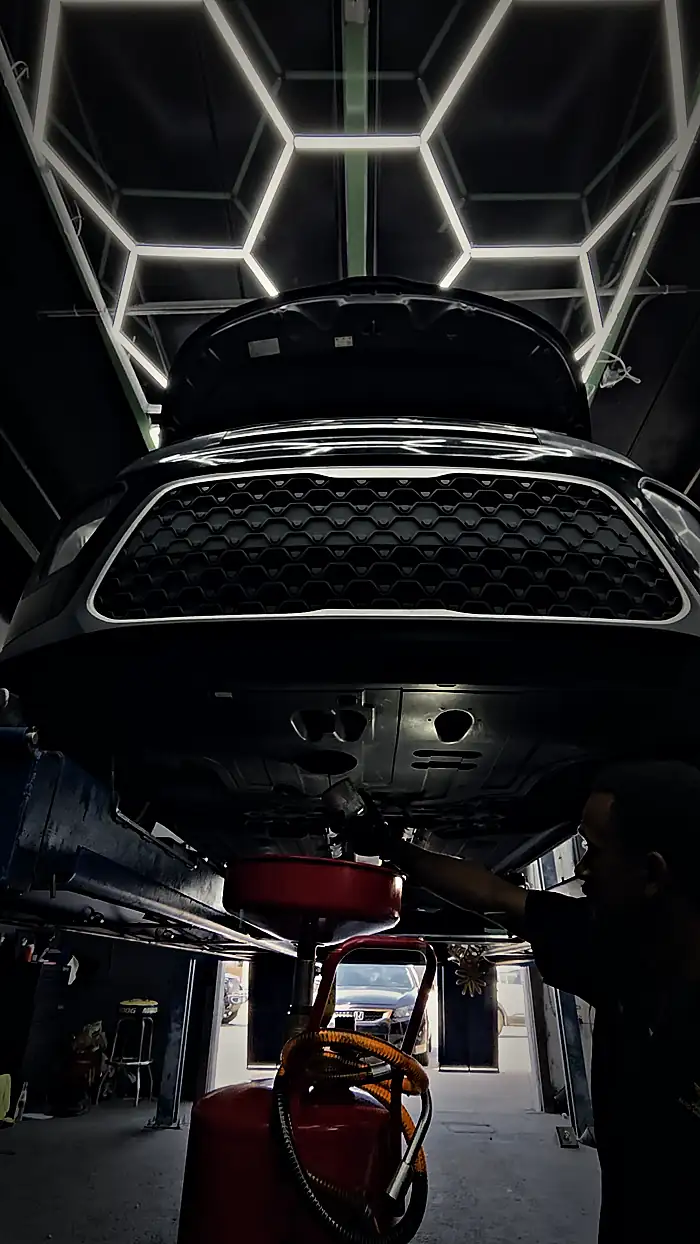
- Oil with the approval or specification your engine requires, in the quantity the maker lists
- A new filter of the correct type, with new seals on cartridge housings
- A new drain plug washer where the design uses one
- An oil level check after the engine has run
- The service reminder or oil-life monitor reset
- A look underneath for leaks, and a check of the other fluids, tires, belts and brakes
- A record of the date, mileage and oil used, for your service history
At our shops the inspection comes with photos sent to your phone and a written estimate for anything else we find. You decide what is done. See oil change in Oakland Park for how the visit works.
Signs you waited too long
- The service reminder has been on for a while, or the oil-life display reads zero
- A low oil level warning, or an oil pressure warning; with a red oil pressure light, stop the engine
- Oil on the dipstick that smells of fuel or feels gritty between your fingers
- The oil level going up between changes
- Ticking or rattling for a few seconds after a cold start
- A check engine light with camshaft timing faults, which sludge in the variable valve timing system can cause
Dark oil is not a sign on its own. Detergent oil darkens as it does its job.
Coming from Coconut Creek or Margate
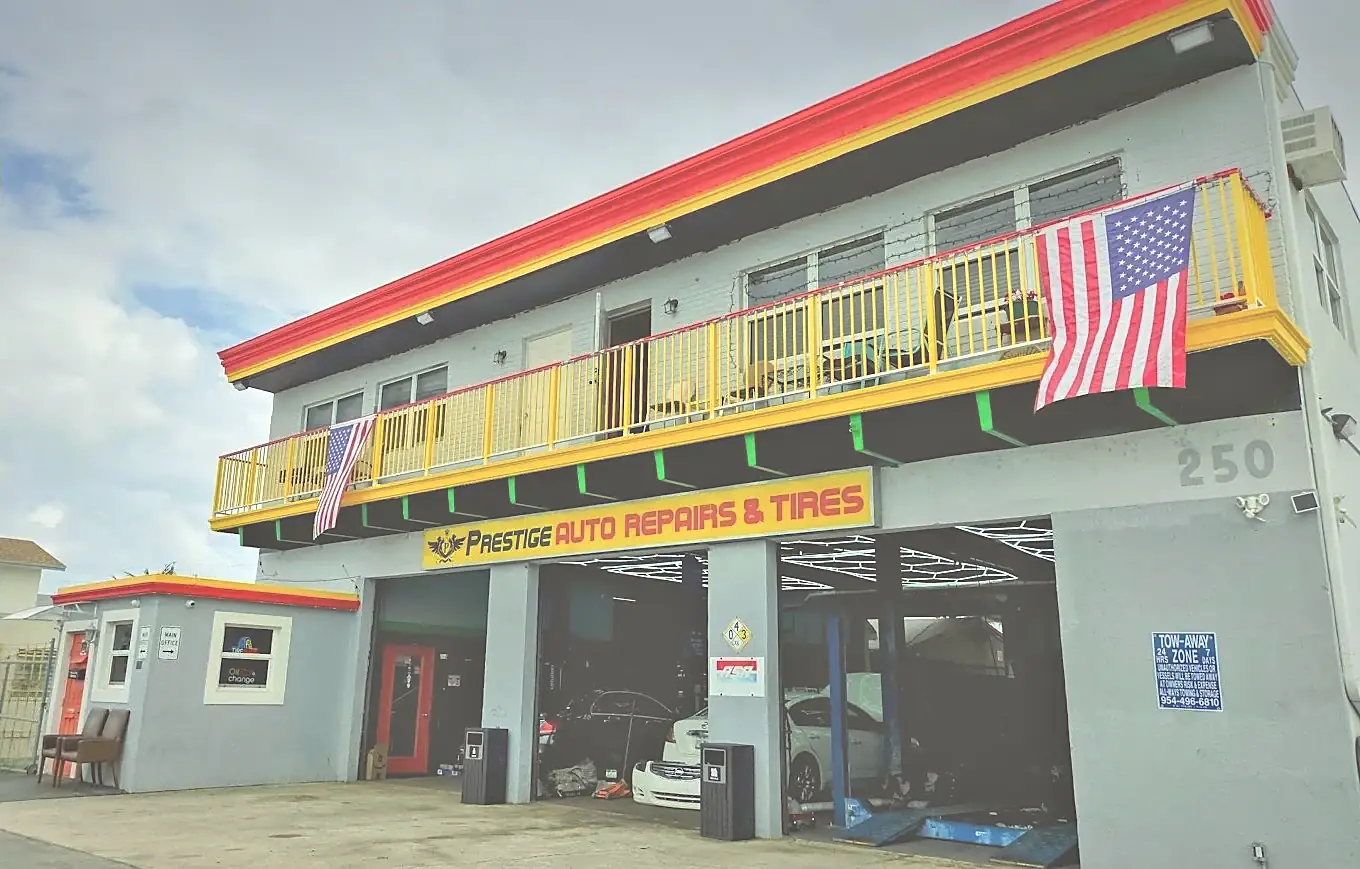
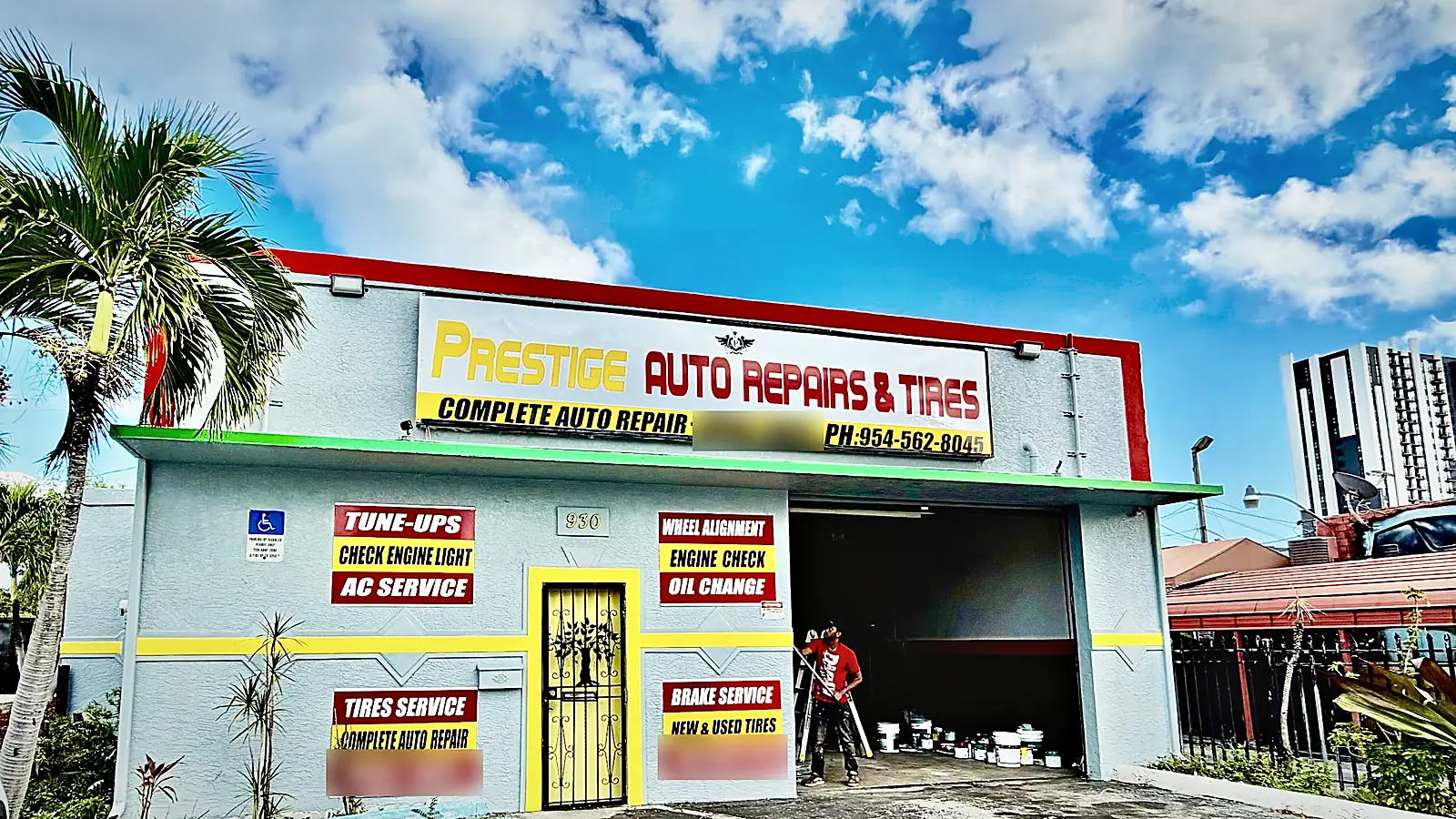
We do not have a shop in either city. Drivers from Coconut Creek and Margate use the Oakland Park shop at 250 NE 44th St, open 7 days, 8 AM to 7 PM, (954) 303-0758. Our Fort Lauderdale shop at 930 NE 4th Ave is open Monday to Saturday, 8 AM to 7 PM, (954) 562-8045. Bring your owner’s manual or service booklet if you have it, and we will match the oil and the interval to your engine. Other items due at the same mileage are listed under scheduled maintenance.
Related repair services
- Oil change in Fort Lauderdale
- Scheduled car maintenance in Fort Lauderdale
- Spark plug replacement in Fort Lauderdale
More car care guides on this topic
- European Car Maintenance Schedules Decoded: BMW, Mercedes-Benz, Audi and Porsche
- Buying a Used Luxury Car in South Florida: What a Pre-Purchase Inspection Catches
- Salt Air and Your Car: What Corrodes First When You Live Near the Beach
- Oil Change in Fort Lauderdale: Why the Oil Spec Matters on European Cars
- How a Brake Flush and Radiator Coolant Flush Prevent Major Breakdowns
- Why Regular Oil Change Services Are Important for Engine Health