A BMW that asks for coolant every few weeks, with no puddle on the driveway, is almost always leaking from a plastic part that sits on top of a hot engine, so the coolant evaporates before it can drip. Prestige Auto Repairs & Tires sees this on BMWs from Pompano Beach and Deerfield Beach every week at our Oakland Park and Fort Lauderdale shops, and the source is rarely a mystery once the system is pressure-tested with dye. This guide explains why Florida heat speeds the problem up, the seven places the coolant usually goes, what the low-coolant warning means, and what to do today.
Why BMWs lose coolant faster in South Florida
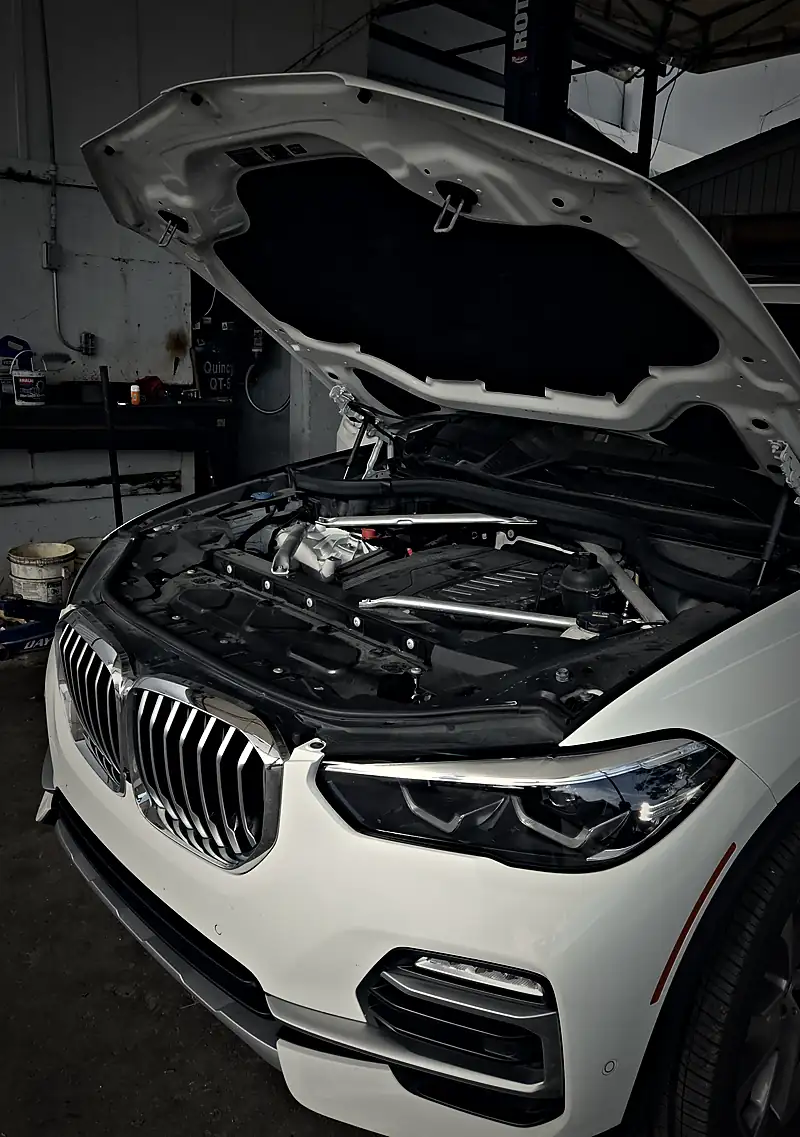
BMW builds much of the cooling system from plastic: the expansion tank, the thermostat housing, the pipes that run behind the cylinder head and under the intake, and the connectors on the radiator. Plastic ages by heat cycles, and a BMW here goes through more extreme cycles than the same car in a cooler state. The engine bay runs hotter in stop-and-go traffic on I-95 and Dixie Highway, the air conditioning compressor loads the engine from the first mile, and the car sits in a parking lot at 140°F inside the hood all afternoon. The rubber O-rings that seal each plastic joint harden, the plastic itself gets brittle, and the first symptom is a slow weep that leaves a white or orange crust around a seam rather than a wet spot on the ground.
The second Florida factor is short trips. A car that drives ten minutes to the grocery store and back never fully cycles the cooling system, so small leaks get noticed late, and a weak electric water pump has no chance to show its intermittent fault code.
The seven places BMW coolant usually goes
Expansion tank
The translucent plastic tank on the passenger side of most BMW engines develops a hairline crack along its molded seam or at the level sensor at the bottom. When the engine is hot and the system is under pressure, coolant mists out of the crack onto the hot engine and disappears. Look for a chalky residue around the seam and on the parts below it.
Thermostat housing and the coolant pipe behind the head
On the N52, N54 and N55 inline-six engines, and on the N20 and B48 four-cylinders, the thermostat sits in a plastic housing with an O-ring, and a plastic coolant pipe runs along the back of the cylinder head toward the firewall. Both are hidden, both are hot, and both are common sources of a leak you cannot see from above. A mechanic needs a mirror or an inspection camera to confirm them.
Electric water pump
BMW’s six-cylinder engines from the N52 onward and the B58 use an electric water pump rather than a belt-driven one. The pump’s housing can weep from its seal, and the pump itself can fail electrically, which triggers a reduced-power warning and a rising temperature gauge rather than a visible leak. When we replace the pump, the thermostat goes with it, because the two share the job and the labor overlaps.
Oil filter housing and oil cooler gaskets
On many BMW engines, the oil filter housing bolts to the head over both oil and coolant passages. When its gasket fails, oil can leak outward, or coolant and oil can cross over internally. A milky residue under the oil cap or a sweet smell at the oil filler is the sign. Our BMW oil leak and cooling system repair page explains why the belt and front crank seal are checked at the same time.
Radiator end tanks and hose connectors
BMW radiators have plastic end tanks crimped to an aluminum core, and the hoses attach with plastic quick-connect fittings and O-rings. Both leak at the seam or at the fitting after enough heat cycles. The sign is a dried crust at the top corners of the radiator or around a hose fitting, often on the driver’s side.
Turbocharger coolant lines
On turbocharged engines such as the N20, N55, B48 and B58, small coolant lines feed the turbo. Their fittings sit next to the exhaust manifold, the hottest place in the engine bay, so even a small weep there never reaches the ground. A burnt-sweet smell after a highway drive is the usual clue.
Heater core and the auxiliary coolant pump
A heater core leak shows up as a sweet smell inside the cabin, fog on the windshield that smells like coolant, or a damp passenger-side carpet. The auxiliary electric pump that circulates coolant through the heater core can also weep where it sits low on the engine.
What the warnings mean
- Low coolant level (the yellow symbol) comes from the sensor in the expansion tank. It usually means a slow leak that has been running for weeks. Top up and have the car tested.
- Engine temperature too high or the gauge in the red means stop in a safe place and shut the engine off. A BMW’s aluminum cylinder head can warp within minutes of running hot, which turns a small repair into a large one.
- Drivetrain or reduced power after a temperature warning often points to the electric water pump or thermostat, which the car’s own diagnostics will have logged. A full ISTA scan reads those codes; a generic scanner often does not.
Topping up the right way
Use BMW-approved coolant (the blue antifreeze the dealer and we use, mixed with distilled water) and add it only to a cold engine, never to a hot one. Do not mix in orange, green or universal coolants, because the additive packages react and leave deposits in the heater core and radiator. If the tank is empty, the system also needs to be bled with BMW’s electric bleed procedure after it is filled, or air pockets will hold heat against the head.
How we find the leak
At either shop, the technician pressure-tests the cold system, adds UV dye, brings the engine to operating temperature and then inspects every joint with a UV lamp, including the pipes behind the head and under the intake that need a mirror or a camera. An ISTA scan pulls the stored temperature and water pump codes. You receive photos of the source and a written estimate before any part is ordered, with the parts that are about to fail listed separately from the one that has failed, so you can decide what to do now and what can wait. The repair carries our 2-year / 24,000-mile warranty. Our coolant leak repair page has the general procedure for every make, and the BMW repair page lists the known weak points engine by engine. For the broader picture of what goes wrong on these cars here, see common BMW problems in South Florida.
Which shop is closer
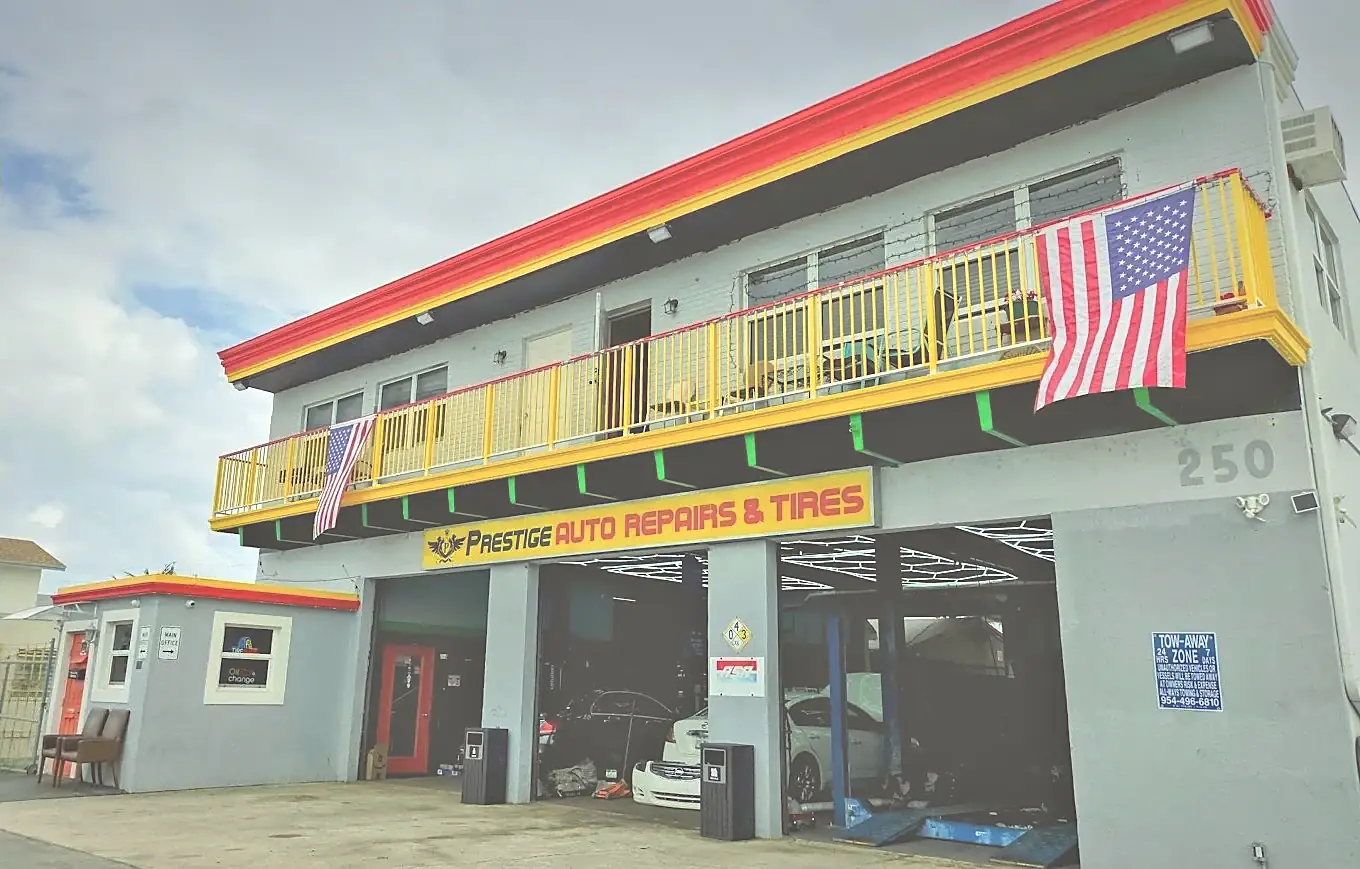
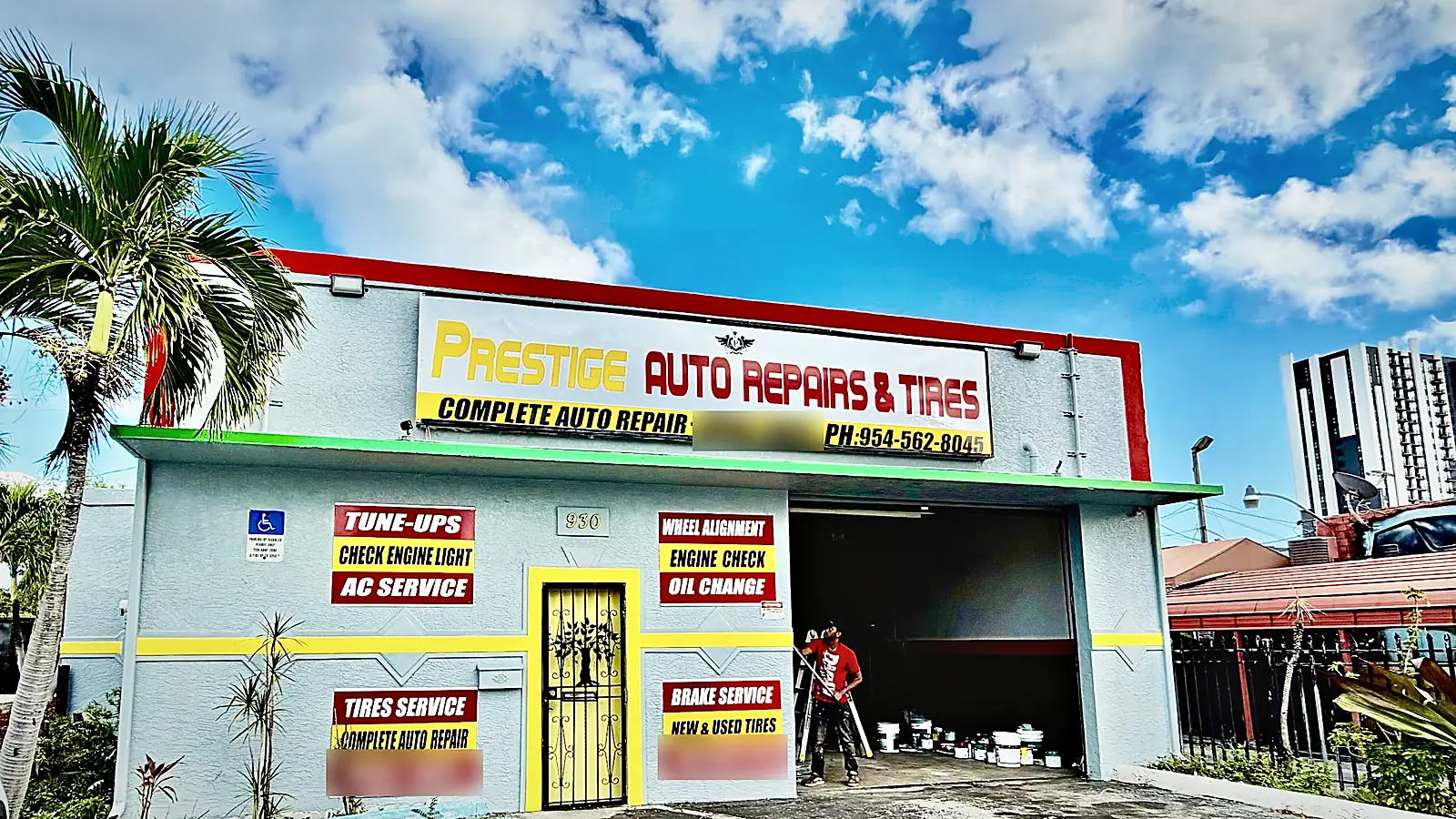
From Pompano Beach, Lighthouse Point and Deerfield Beach, our Oakland Park shop at 250 NE 44th St is about four miles south on Dixie Highway or Federal Highway, open 7 days, 8 AM to 7 PM, with a 24-hour key drop. The Pompano Beach and Lighthouse Point page and the Deerfield Beach page have directions and what we see on cars from each area. The Fort Lauderdale shop at 930 NE 4th Ave is open Monday to Saturday. Current offers are on our specials page.
Related repair services
- BMW oil leak repair in Fort Lauderdale
- Car A/C repair in Fort Lauderdale
- Coolant leak repair in Fort Lauderdale
- Coolant flush in Fort Lauderdale
- Water pump replacement in Fort Lauderdale
- A/C compressor replacement in Fort Lauderdale