
An independent shop can service your car without voiding the factory warranty, in Florida and in every other state, because the rule comes from federal law. The details matter, so this page explains what the law says in plain words, where its limits are, and what to keep in your glovebox file.
This page is general information from a repair shop. It is not legal advice. Your warranty booklet, lease or service contract sets the terms for your car, and an attorney or the Federal Trade Commission’s consumer pages can answer legal questions about a specific dispute.
What the Magnuson-Moss Warranty Act says
The Magnuson-Moss Warranty Act is a federal law passed in 1975 that covers written warranties on consumer products, including cars. One part of it deals with what are called tie-in sales. In plain words:
- A maker generally cannot require dealer service to keep the warranty in force. Routine maintenance and repairs can be done by an independent shop, or by you.
- A maker generally cannot require its own brand of parts. It can set a specification that a part or fluid must meet. It generally cannot insist on a brand name.
- The exception is when the maker pays. If the manufacturer provides the service or the part at no charge under the warranty, it can require you to use it. The law also allows a maker to ask the Federal Trade Commission for a waiver in narrow cases.
That is why a warranty booklet will usually say that maintenance must be performed, and will not say that it must be performed by the dealer.
Where the protection ends
The law protects your choice of shop. It does not protect poor work.
- Damage caused by improper work or parts. If the maker or dealer can show that a wrong fluid, a badly fitted part or a mistake during service caused a failure, it can deny coverage for that failure. The rest of the warranty continues.
- Skipped maintenance. A maker can deny a claim when the required service was not done. An engine that fails with no oil change on record is the usual example.
- Modifications. Tuning software, altered ride height or non-standard parts can lead to a denied claim when they are linked to the failure.
- Misuse and accident damage, which no factory warranty covers.
So the practical question is less “which building was the car in” and more “was the work done correctly, on time, and can I prove it”.
What to keep in your records
A complete record is what turns the law into something you can use at a service desk.
- A dated invoice for every visit, with the mileage and the VIN.
- The work performed, matched to the item in the maker’s maintenance schedule.
- Parts and fluids with their specifications, for example the oil approval the engine requires and the filter brand and part number.
- Inspection photos and scan reports where the shop provides them.
- Receipts for parts and fluids if you do any maintenance yourself, with a note of the date and mileage.
Our maintenance schedule tool shows typical service points by mileage, and your owner’s manual has the schedule for your exact model.
What still belongs at the dealer
| Situation | Where it goes | Why |
|---|---|---|
| A covered part fails under the factory warranty | Franchised dealer | The manufacturer pays its dealers for warranty repairs |
| Safety recall or service campaign | Franchised dealer | Recall work is authorized and paid for by the manufacturer |
| Prepaid or included maintenance plan from the maker | Dealer, for the visits the plan includes | You have already paid for those visits |
| Routine maintenance you pay for | Your choice of shop | Covered by the rule described above |
| Repairs after the warranty ends | Your choice of shop | No warranty terms apply |
We explain how the two kinds of shop compare on tools, parts and scheduling on our dealer vs independent European specialist page.
Leased cars
A lease adds a second set of rules. The factory warranty works the same way, but the lease contract usually requires that the car is maintained to the maker’s schedule and returned in a stated condition. Some leases ask for proof of maintenance at return. Read the maintenance and wear clauses, keep your invoices together, and get any answer from the leasing company in writing.
Extended warranties and service contracts
An extended warranty bought from a dealer, a used-car retailer or a third-party company is usually a service contract. It is a separate agreement with its own conditions: which shops may do the repair, whether the work must be authorized before it starts, and which maintenance records the administrator can ask for. Many plans allow repairs at a licensed independent shop. Read the contract, or bring it with you and we will go through the claim steps together. See extended warranty and MaxCare repair.
Florida notes
There is no separate Florida rule that changes the answer above. Florida does have its own Lemon Law for new vehicles with defects that the manufacturer cannot correct. That is a different subject from routine maintenance, and repair attempts under it go through the manufacturer’s authorized dealers.
South Florida does change the maintenance itself. Heat, humidity, short trips and stop-and-go traffic count as severe use in many maintenance schedules, which can shorten the interval for oil, brake fluid and filters. Following the correct interval is part of keeping the warranty file clean.
How Prestige handles a car under factory warranty
Drivers from Plantation and Davie reach either shop by Broward Boulevard or I-595. See our Plantation and Davie pages for routes and what we see most from each area.
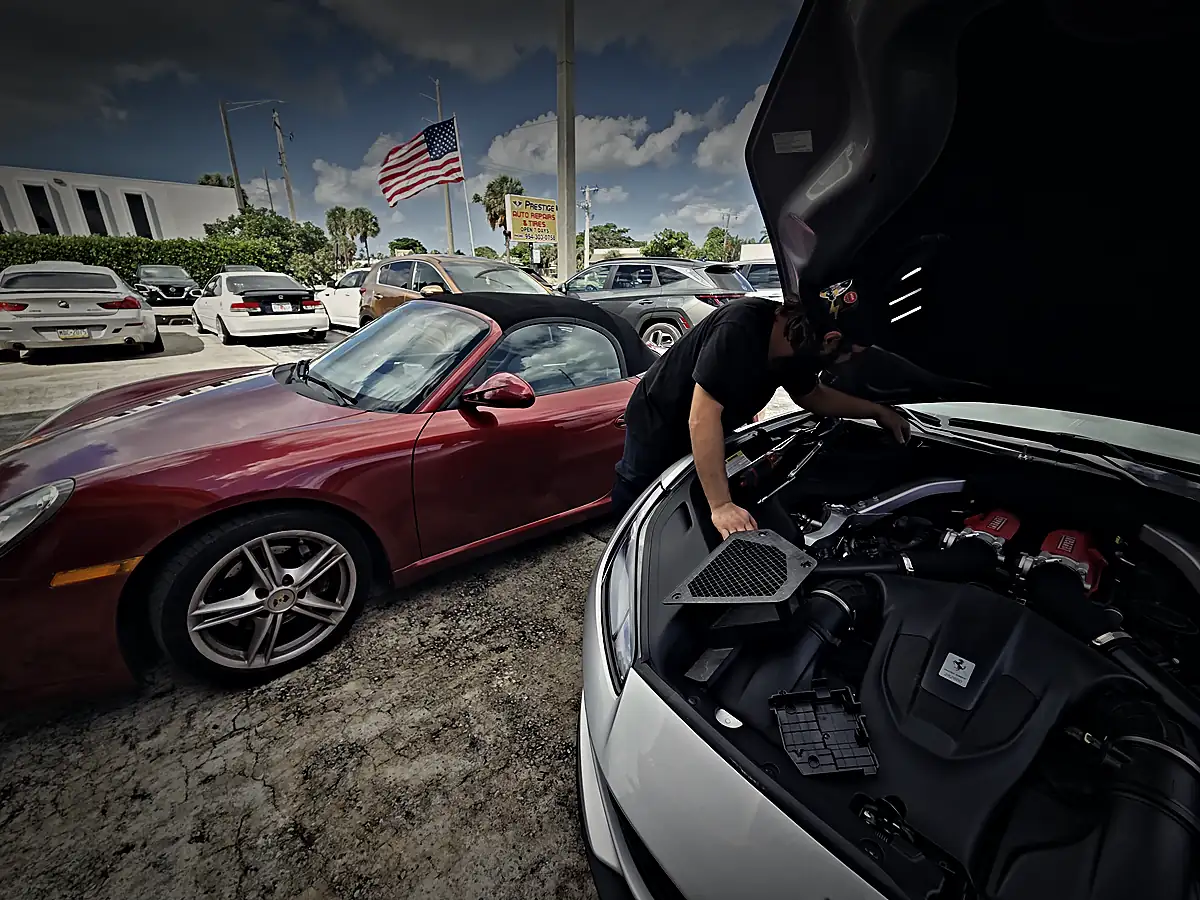
- We follow the maker’s schedule, using fluids and parts that meet the listed specification. Details are on our scheduled maintenance page.
- Every invoice is itemized, with the date, mileage, VIN, parts and fluid specifications.
- Photo inspections go in your file, so the condition of the car at each visit is on record.
- If a fault looks like a factory-warranty or recall item, we say so and point you to the dealer before you spend anything with us.
- Our own work carries a separate guarantee. See the Prestige repair warranty for the terms.
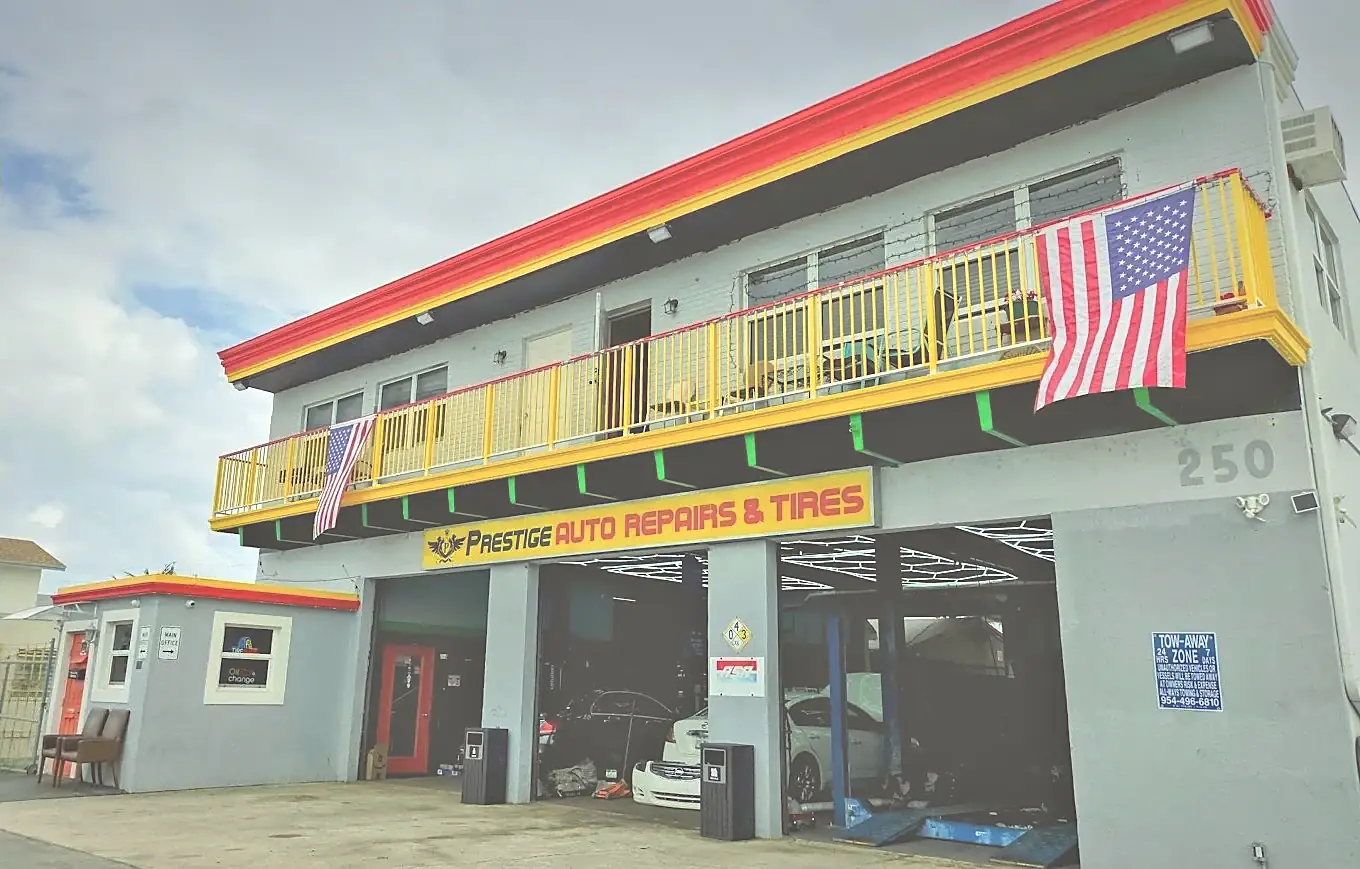
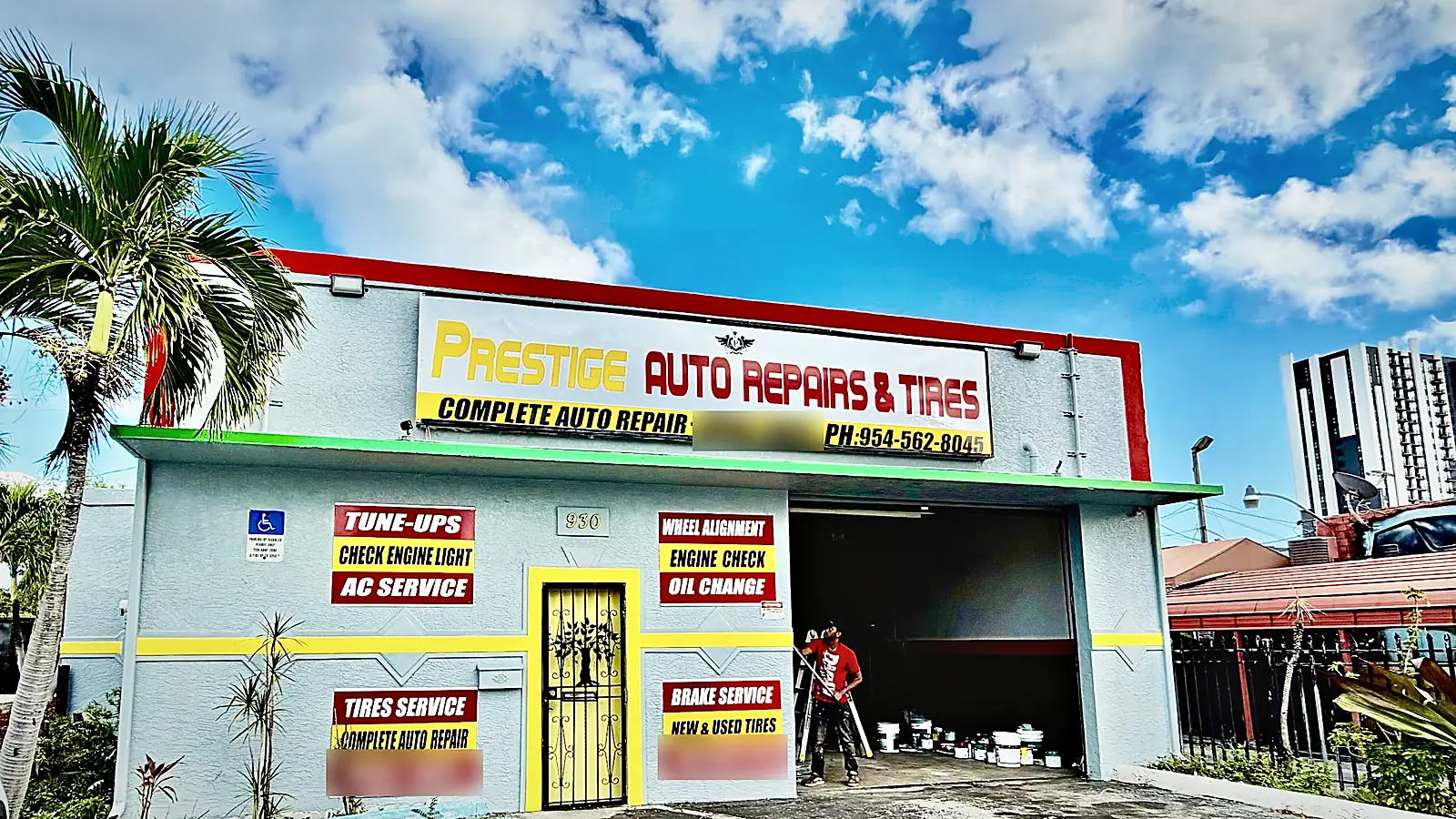
You can walk in at 250 NE 44th St in Oakland Park, open 7 days from 8 AM to 7 PM, phone (954) 303-0758, or at 930 NE 4th Ave in Fort Lauderdale, open Monday to Saturday from 8 AM to 7 PM and closed Sunday, phone (954) 562-8045. You can also request an estimate online.
Part of our maintenance guide: Scheduled car maintenance in Fort Lauderdale