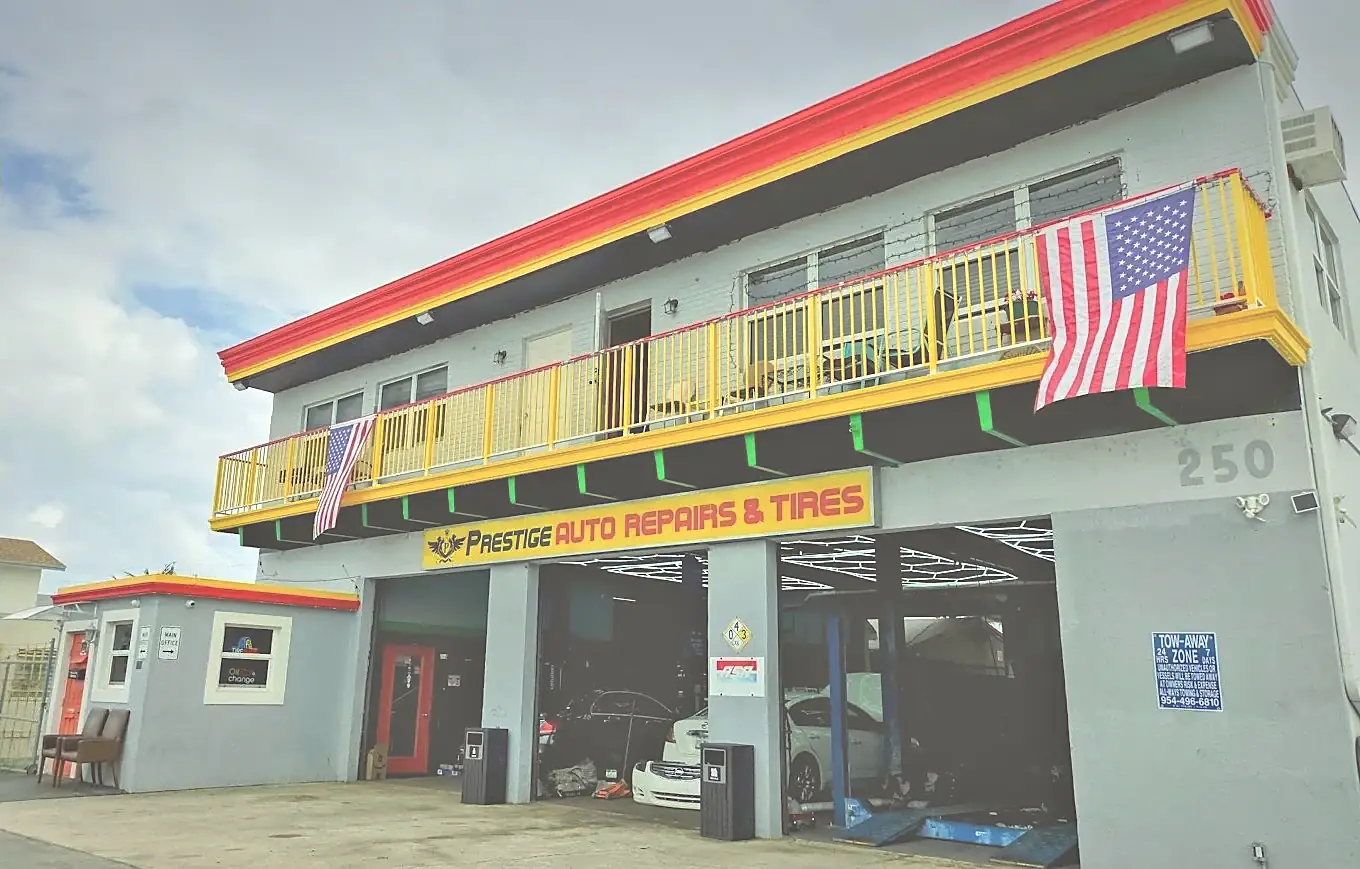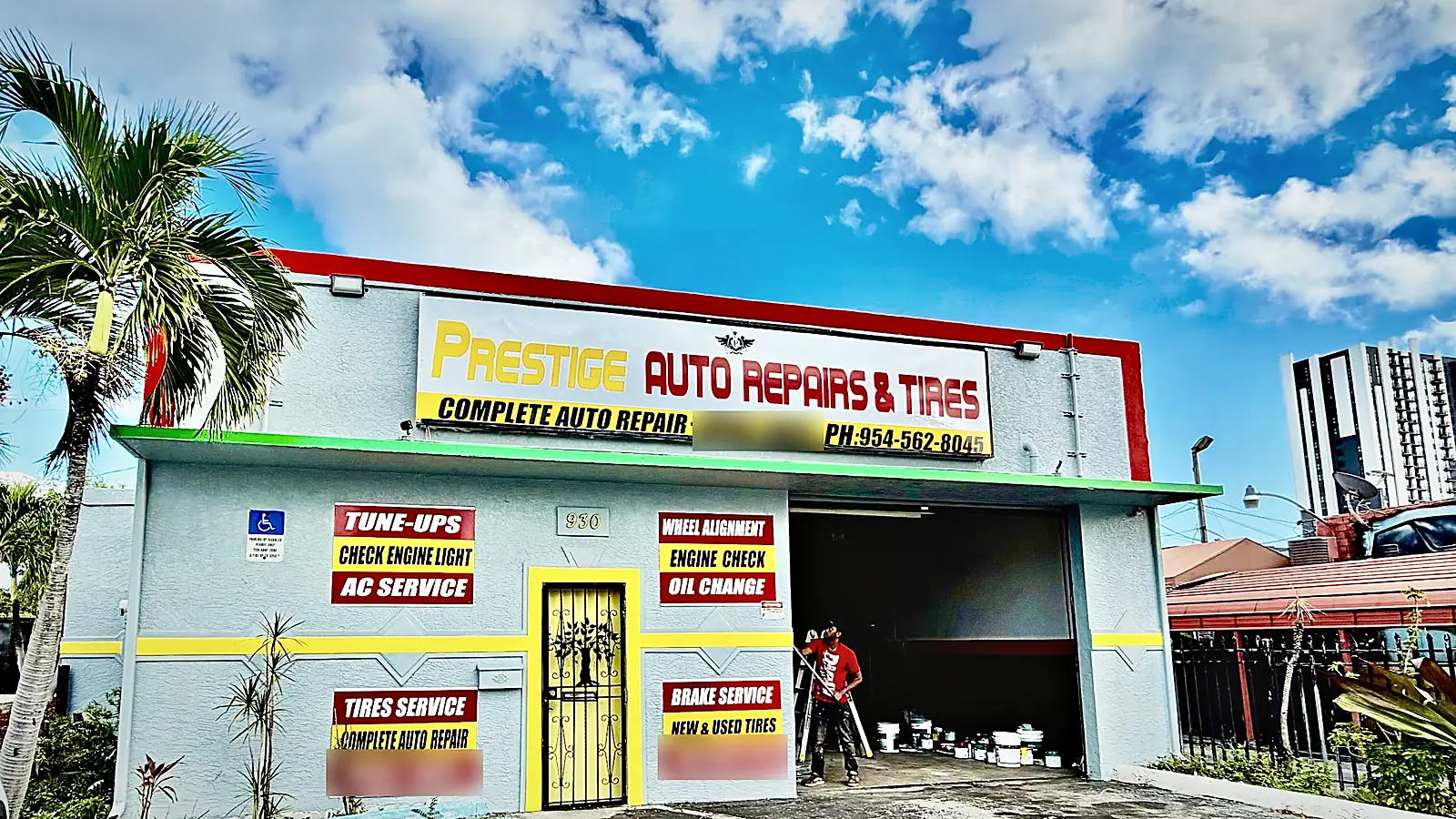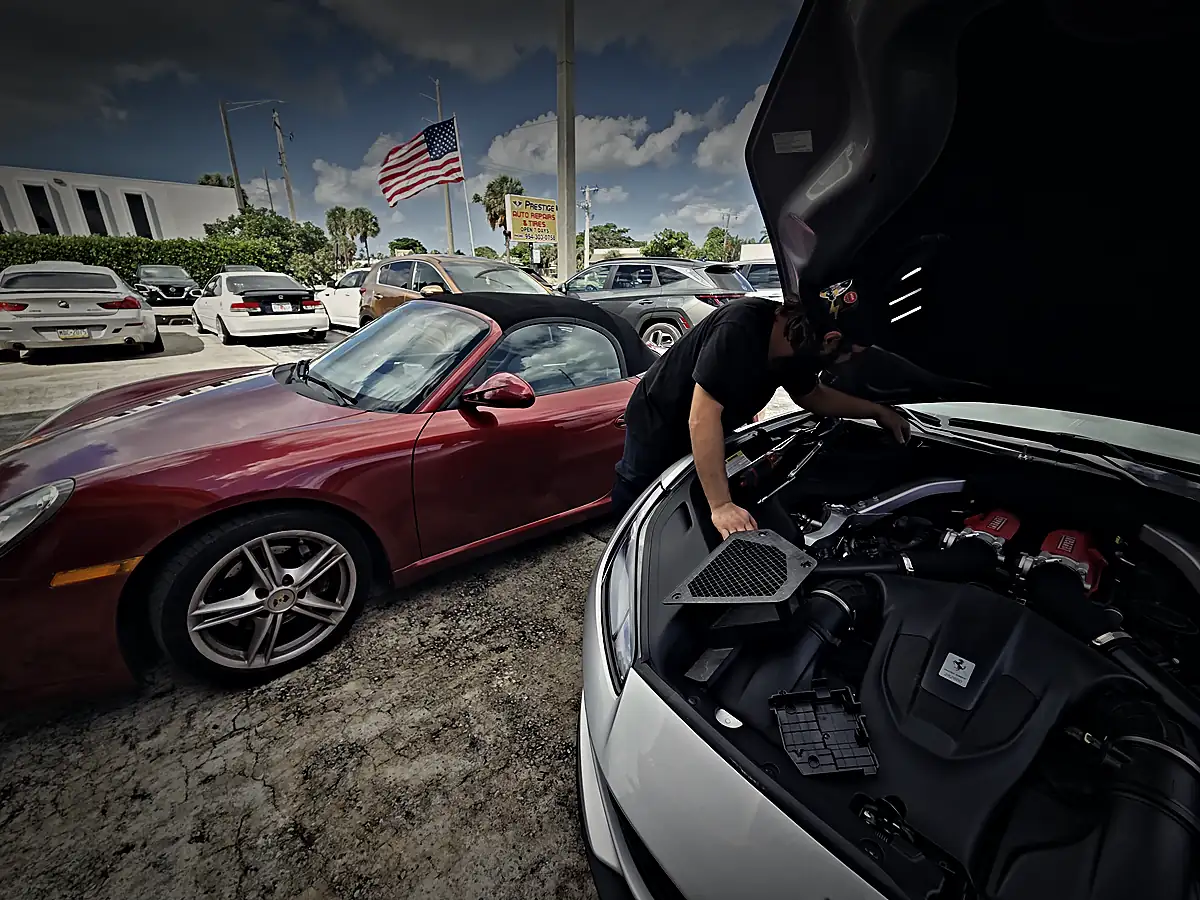
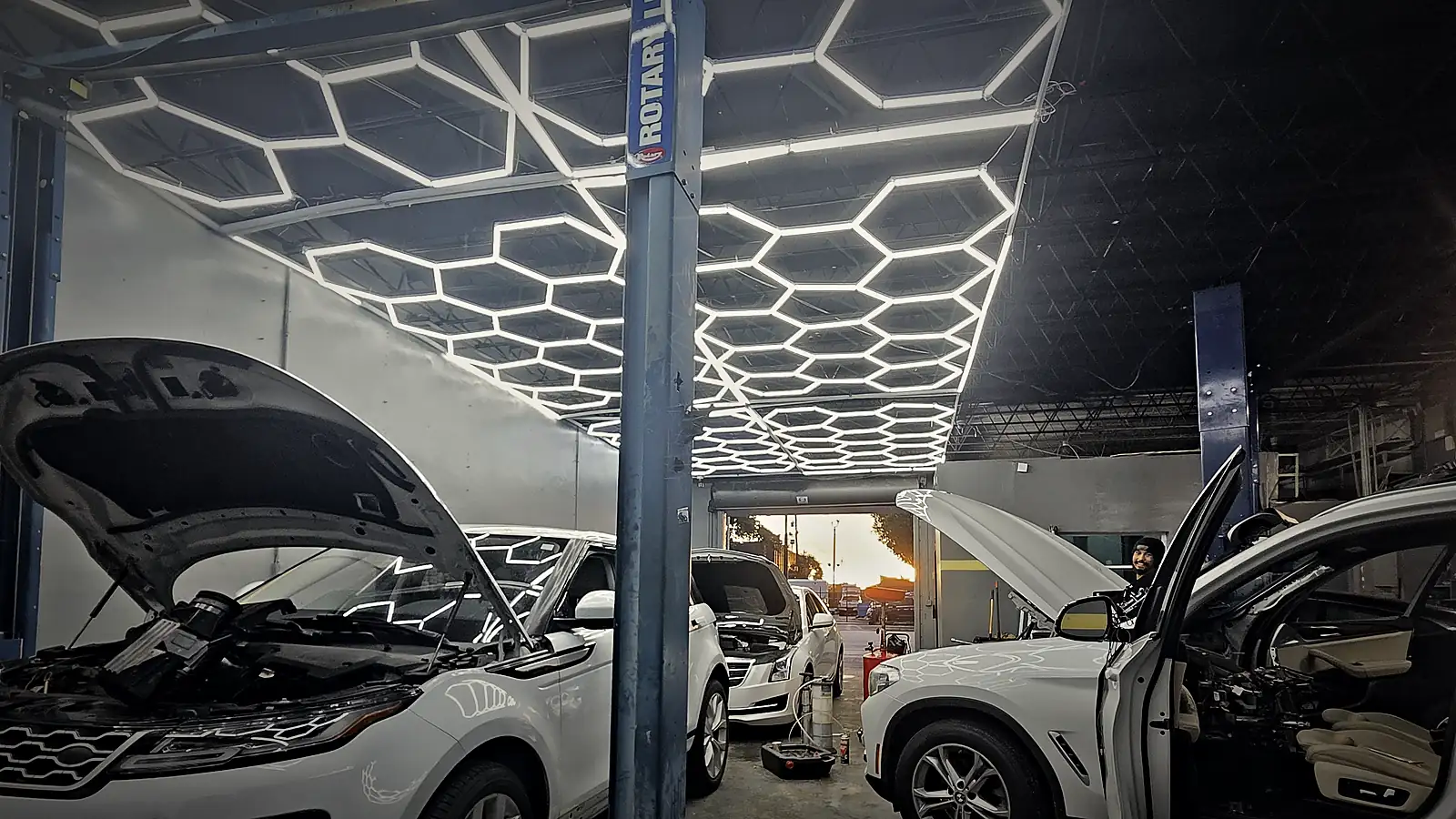
A Tesla body shop in Fort Lauderdale has to do two jobs: repair the metal and paint, and prove that the electronics and the systems under the floor still work as designed. Prestige Auto Repairs & Tires does the body and paint work in house at both of our Broward shops, and our technicians check the mechanical and electrical side in the same visit. We are an independent shop. We do not claim Tesla approval or certification, and this page is plain about which repairs we take on and which belong with Tesla.
Tesla body work we do in house
- Bumper repair and replacement, front and rear, including the brackets, absorbers and undertrays behind the cover
- Panel repair on doors, fenders, quarter panels, hoods and liftgates
- Dent repair, including paintless dent repair where the paint is intact
- Paint and refinishing, from a single blended panel to multi-coat colors
- Scratch, scuff and parking-lot damage
- Mirror, lamp, trim and wheel-arch liner replacement
- Wheel and tire damage after a curb or pothole strike
- Camera and sensor checks and calibration after the panels go back on
What stays with Tesla or its approved network
Some repairs are not ours to do, and we would rather say so before you book.
- High-voltage battery pack repair or replacement. This stays with the manufacturer.
- Structural repairs that Tesla restricts to its approved body shop network. Tesla limits certain structural parts and procedures to shops in that network. If the inspection shows damage to the body structure, the large underbody castings or the battery mounting points, we document it and tell you it needs that network.
- Warranty and recall work, which Tesla performs.
- Software updates and software-locked configuration, which come from Tesla.
If your car falls into one of these groups, you still leave with our photos and written findings, which are useful for the insurer and for the next shop.
Aluminum and mixed-material bodies
Tesla does not build every model the same way, and the repair method follows the material.
| Model | Body construction | What it means for a repair |
|---|---|---|
| Model S | Mostly aluminum body and structure | Aluminum does not pull back like steel. Panels are repaired with aluminum-specific tools or replaced |
| Model X | Mostly aluminum body and structure | The same rules as the Model S, plus the falcon-wing doors and their sensors |
| Model 3 | Steel and aluminum combined | Each panel is identified first, because the method and the fasteners change with the metal |
| Model Y | Steel and aluminum combined, with large aluminum castings in the underbody on many builds | Outer panels are repairable. Damage that reaches a casting is structural |
Aluminum has to be worked apart from steel, because steel particles left in an aluminum panel start corrosion under the paint. Where two different metals meet, we use the joining method the maker specifies, which is often rivets and adhesive instead of welding.
Matching Tesla paint
Tesla offers a short list of colors, and several of them are harder to match than they look.
- Identify the color and its layers. Solid and metallic colors use a base coat and a clear coat. Multi-coat colors add a mid layer that gives the depth.
- Spray test cards. The mid layer on a multi-coat color changes shade with every pass, so we test the number of passes on cards before the panel is painted.
- Compare in daylight against the panel next to the repair, from several angles.
- Blend into the neighboring panel where the color needs it, so there is no hard line at a panel gap.
- Cure, then polish to the texture of the paint around it.
Florida sun fades clear coat on horizontal panels first, so a car that has lived outdoors is matched to its paint as it is today, not only to the paint code.
Cameras and sensors after body work
A Tesla relies on cameras for Autopilot, automatic emergency braking, parking views and Sentry Mode. Depending on the build year, a car may also have ultrasonic parking sensors in the bumpers and a front radar, or it may rely on cameras alone.
| Component | Location | Disturbed by |
|---|---|---|
| Forward cameras | Housing at the top of the windshield | Front-end impacts that shift the housing; a windshield replaced elsewhere |
| Side repeater cameras | Front fenders | Fender repair or replacement |
| Pillar cameras | Door pillars | Side impacts and pillar trim work |
| Rear camera | Above the license plate | Trunk lid or liftgate repair |
| Ultrasonic sensors, where fitted | Front and rear bumper covers | Bumper repair; paint that is too thick over a sensor |
| Front radar, where fitted | Behind the front bumper | Front bumper and bracket work |
After the repair we confirm that every camera shows a clear image, check for stored alerts, run the camera calibration where it is needed and road test the car until the driver-assist features report as available. The result goes on your paperwork.
What we check after a hit
Body damage is the part you can see. On an electric car the checks below matter as much.
- Suspension. Control arms, links, knuckles, wheel bearings and, on cars with air suspension, the struts and lines. A bent arm can hide behind an undamaged wheel.
- Wheel alignment. We measure all four wheels and compare the readings to the specification. A pull, an off-center steering wheel or fast tire wear after a collision usually traces back to this.
- Wheels and tires. Cracked rims, bent lips and sidewall damage.
- Coolant lines and heat exchangers. The radiator, the A/C condenser and the coolant hoses for the battery and drive units sit behind the front bumper. We pressure check the system and look for seepage, because a slow leak can lead to a thermal fault weeks later.
- Underbody. The shields under the car, the battery pack housing and its edges, the jacking points and the subframes are inspected and photographed on the lift.
- High-voltage components and wiring for visible damage, following high-voltage safety procedures.
- Stored alerts. We read the car’s alerts before and after the repair.
For mechanical repairs found during the inspection, see our Tesla repair in Fort Lauderdale page.
Help with the insurance claim
We prepare the paperwork an insurer needs and keep you informed. The decision on coverage belongs to your insurer.
- Open the claim and write down the claim number.
- Tell the insurer you chose Prestige. Florida lets the owner pick the repair shop.
- We photograph the car and write an itemized estimate, listing parts, paint operations, calibration and the mechanical checks.
- Hidden damage is documented as a supplement when panels come off, and we wait for approval before repairing it.
- You receive the photos, the final invoice and the calibration and alignment records for your file.
The full claim process, for every make, is on our insurance claim repairs page, and the auto body shop in Fort Lauderdale page covers collision repair for other brands.
Visit either shop
Walk-ins are welcome, and you can send photos with an estimate request for a first look. Body repairs are covered by our 2-year / 24,000-mile warranty.
- Fort Lauderdale: 930 NE 4th Ave, Monday to Saturday, 8 AM to 7 PM, closed Sunday. Call (954) 562-8045.
- Oakland Park: 250 NE 44th St, open 7 days, 8 AM to 7 PM. Call (954) 303-0758.
We speak English and Spanish at both shops.
Part of our body, glass and claims guide: Auto body shop in Fort Lauderdale