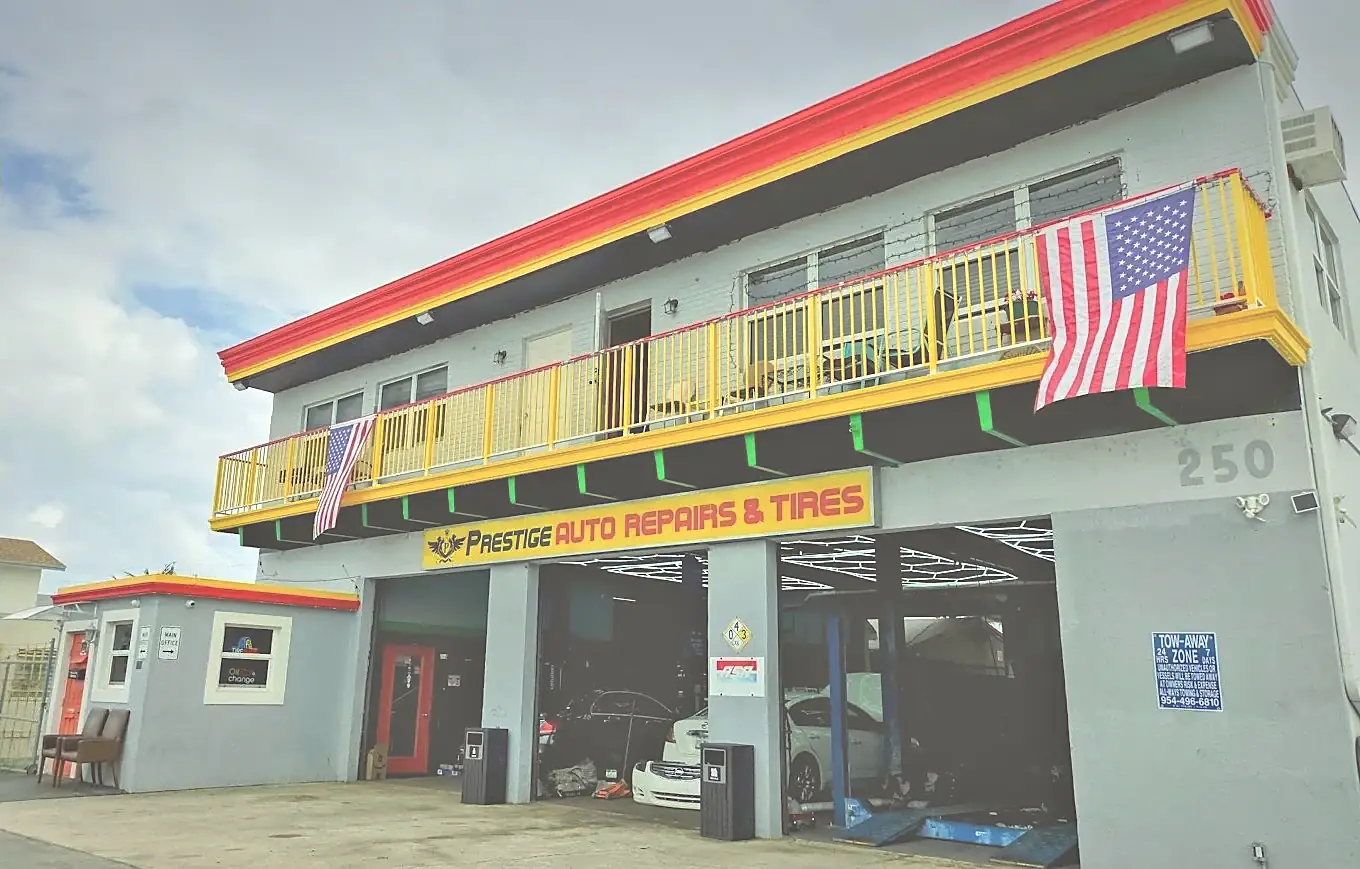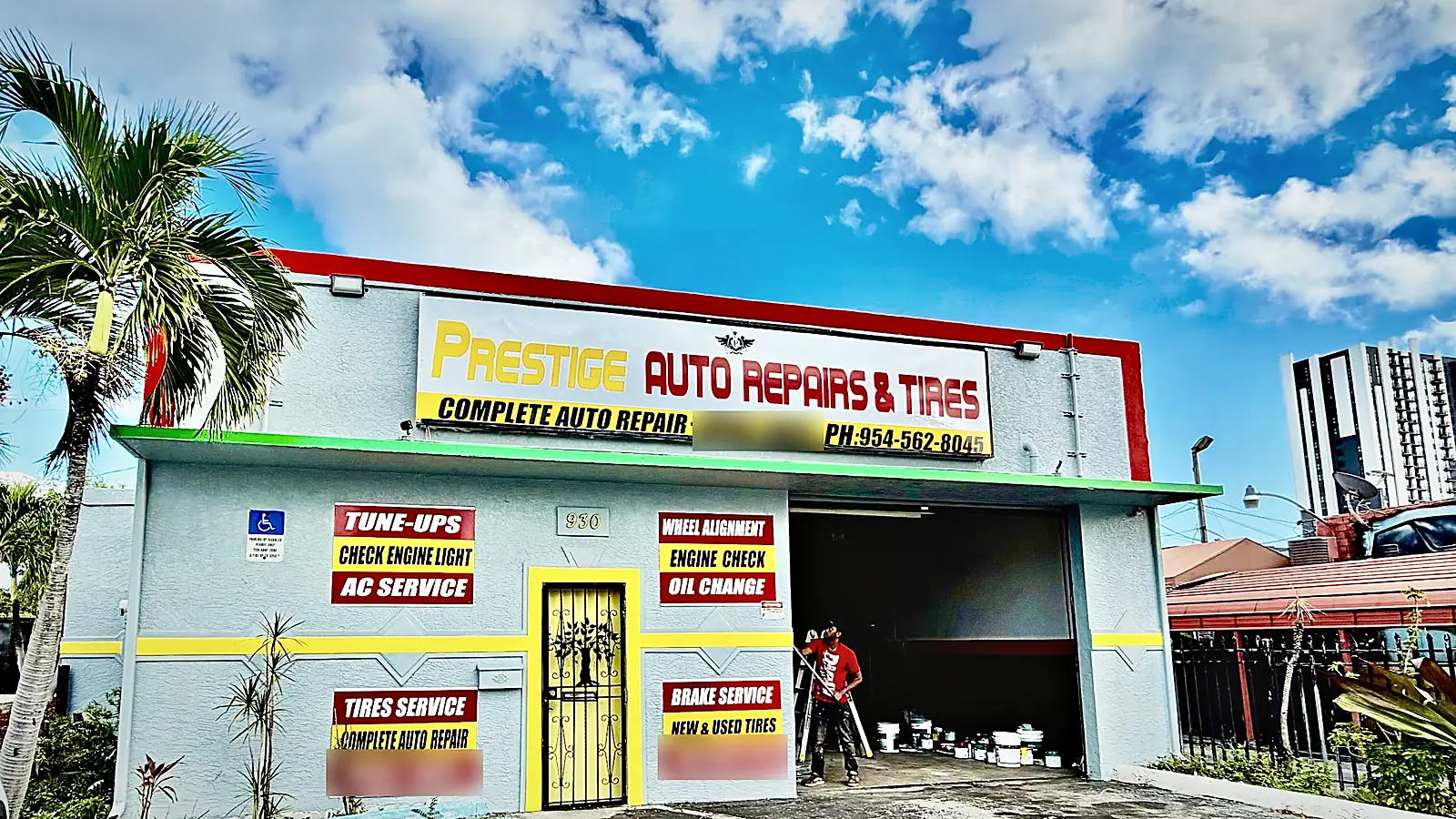
A hurricane-season car checklist is two short lists: the maintenance to finish before June 1, and the steps to follow if the car ever sits in water. Prestige Auto Repairs & Tires handles both at our Fort Lauderdale shop at 930 NE 4th Ave, the nearer of our two shops for Dania Beach and Hallandale Beach drivers, and at our Oakland Park shop. Before the season, have the tires, wipers, 12-volt battery, brakes, lights, A/C defog and body drains checked. After flooding, do not start the engine: photograph the waterline, call your insurer and have the car inspected before anyone turns the key.
The maintenance to finish before the season starts
The Atlantic hurricane season runs from June 1 to November 30 every year, so May is the month for this work. None of it is exotic. It is the ordinary maintenance that matters most when the rain is heavy and the car may sit unused for days.
| Item | Why it matters in the wet months | What we check |
|---|---|---|
| Tires | Tread channels water out from under the tire; worn tread rides up on standing water | Tread depth across each tire, age, sidewall damage, pressure, and the spare or inflator kit |
| Wiper blades and washers | Sun-baked rubber smears instead of clearing | Blade edge, arm tension, washer spray and fluid |
| 12-volt battery | A weak battery may not restart a car that sat for a week | Load test, terminals, charging voltage |
| Brakes | Wet roads lengthen stops, so worn pads leave less margin | Pad thickness, rotor condition, fluid, hoses |
| Exterior lights | Other drivers need to see you in a downpour | Headlights, brake lights, signals, hazards |
| A/C and defog | The A/C dries cabin air, which is what clears a fogged windshield | Vent temperature, blower, cabin filter |
| Sunroof, cowl and door drains | Blocked drains send rain into the cabin and onto wiring | Drain tubes cleared and tested with water |
| Fluids and belts | Stop-and-go evacuation traffic is hard on cooling systems | Coolant level and condition, hoses, belt, oil |
Heat is the reason the battery sits high on the list. AAA puts typical battery life at three to five years and reports the shortest life in the most southern parts of the country, so a battery that tested marginal last year is worth testing again. Details are on our battery replacement page, and tire condition is covered under tires and wheel alignment.
One visit covers the whole table. We photograph what we find and send a written estimate, and you decide what to do now and what can wait. For the non-mechanical side of preparing a car, such as where to park it and which photos to take for your records, read our hurricane and flood car guide.
Why low streets near the water change the list
Parts of Dania Beach and Hallandale Beach sit low, east of US-1 and along the canals and the Intracoastal. On those streets a hard rain at high tide can leave standing water where a car is parked, with no named storm involved. Two items matter more there than they do inland:
- Drains and door seals. A car parked in a few inches of water stays dry inside only if its seals and drain plugs are intact. We check the rubber plugs in the floor pan and the lower door seals during an underside inspection.
- Brake and underbody corrosion. Brackish water leaves salt on brake hardware, exhaust hangers and electrical grounds. If the car has stood in salt water even to the lower edge of the wheels, have the underside rinsed and inspected soon after.
If the car sat in water: what to do, in order
- Do not start the engine. AAA’s advice is to leave a flood-damaged car off until a qualified technician has inspected it. If water entered the intake, the engine can lock the moment it turns.
- Note how high the water reached and photograph the line on the body, the door sills, the carpet and the engine bay before it dries.
- Report it to your insurer. Flood damage falls under comprehensive coverage if your policy has it. Write down the claim number.
- Start drying the cabin. Open the doors and windows when the weather allows and lift out the floor mats. Consumer Reports notes that fast drying matters most after salt water, because salt keeps corroding metal and wiring.
- Treat an EV or hybrid with extra care. NHTSA advises keeping a flood-damaged vehicle with a lithium-ion battery out of the garage and at least 50 feet from buildings and other vehicles.
- Get the car to a shop without driving it. If it cannot be driven, call the shop to schedule pickup.
What we check before anyone turns the key
AAA lists three jobs for the technician before a flooded car is started: inspect every system that holds fluid for water, drain and refill what is contaminated, and inspect, clean and dry the electrical connections. Our flood-damaged car repair inspection follows that order.
- Engine oil and intake. Milky oil on the dipstick or a wet air filter means water got in. We clear the cylinders before the engine is turned.
- Transmission, differentials and transfer case. These breathe through small vents that sit low on the car, and water enters there.
- Brake fluid and fuel. Both are checked for water and replaced if contaminated.
- Wiring and modules. Many cars carry control modules under the seats and carpet. We unplug, inspect and dry connectors, then scan every module and print the fault codes.
- Interior. Carpet and padding hold water against the floor. We tell you what can be dried and what has to be replaced.
Problems that show up weeks later
A car that starts and drives after a flood is not necessarily finished with it. AAA warns that corrosion from flood water can cause faults weeks or even months afterward, often in parts that are hard to reach: door locks, window regulators, seat motors and the A/C components under the dash. If warning lights appear after the car seemed fine, mention the flood when you bring it in. It changes where we look first, and check engine light diagnostics on a car with water history starts at the connectors.
Flood repair and claim paperwork are services we offer
Flood-damage repair is regular work at both shops: engine and drivetrain service, module replacement and coding, interior drying or replacement, and in-house body and paint. For the claim, we prepare the documents an adjuster asks for, which are dated photos of each finding, fault-code printouts and a written line-item estimate, and we add a supplement if teardown finds more. How that works is on our insurance and warranty claims page. Repairs carry a 2-year / 24,000-mile warranty.
Which shop is closer
From Dania Beach, the Fort Lauderdale shop at 930 NE 4th Ave is about 6 to 8 miles north on US-1, past the airport. From Hallandale Beach, it is the same shop by I-95 or US-1. We have no location in either city. Fort Lauderdale is open Monday to Saturday, 8 AM to 7 PM, at (954) 562-8045. On Sunday, the Oakland Park shop at 250 NE 44th St is open 8 AM to 7 PM, with a 24-hour key drop, at (954) 303-0758. Walk-ins are welcome, or request an estimate and attach your photos.