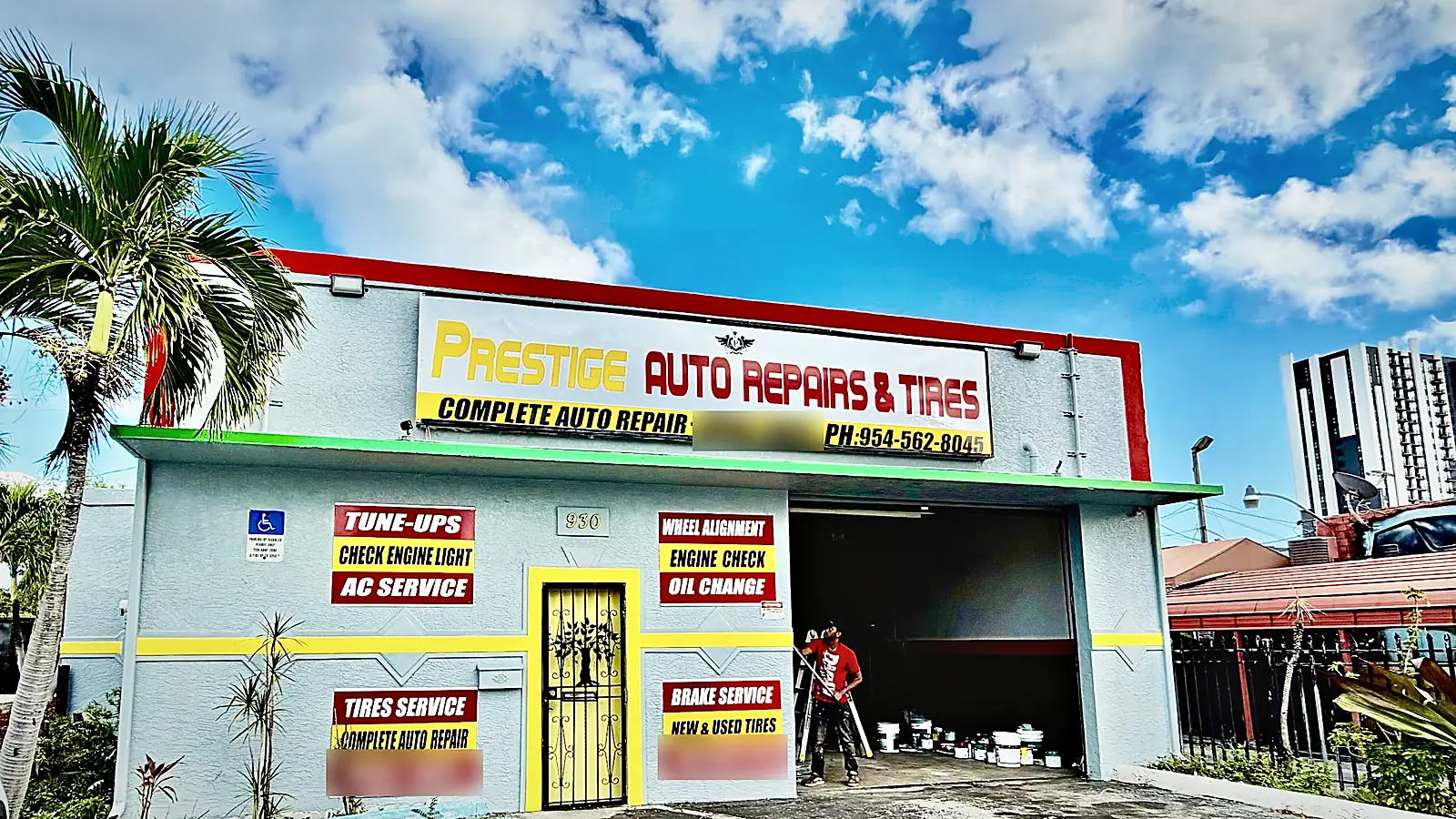
A brake squeal is usually a warning, and a brake grind usually means damage has started. A steady high-pitched squeal is most often the wear indicator telling you the pads are close to their limit; a deep grinding under the pedal means metal is rubbing the rotor. Prestige Auto Repairs & Tires inspects and repairs brakes on every make at our Fort Lauderdale shop at 930 NE 4th Ave, the nearer shop for Pembroke Pines and Miramar drivers, and at our Oakland Park shop. This guide sorts the common brake sounds by what causes them and how soon each needs attention.
Why highway commuters hear it first
A commute on I-95 or Florida’s Turnpike asks two different things of the brakes. Long stretches at speed are followed by hard stops when traffic stacks up, and every exit ramp ends in a firm stop from highway speed. The brakes take a lot of heat in short bursts, and then cool in humid air. Noises that never show up on a slow neighborhood drive appear at the end of a ramp or in stop-and-go traffic near the Golden Glades and I-595 interchanges, when the pads and rotors are at their hottest.
The sounds, sorted by cause
| What you hear | When | Most likely cause | How soon |
|---|---|---|---|
| Light squeal or scrape that fades | First few stops after the car sat | Surface rust on the rotors | Normal; no action |
| Steady high-pitched squeal | Every drive, with or without the pedal | Pad wear indicator touching the rotor | Inspect within days |
| Squeak at low speed with a light pedal | Parking lots, creeping in traffic | Brake dust, glazed pads, dry hardware | Inspect at your next visit |
| Deep grind or growl | Whenever you brake | Pad worn to its steel backing plate | Stop driving as soon as practical |
| Rhythmic scrape that follows wheel speed | Driving, pedal off | Stone behind the dust shield, bent shield, rust lip on the rotor | Inspect soon |
| Pulsing pedal or shaking wheel | Braking from highway speed | Uneven rotor thickness or runout | Inspect soon |
The squeal that is meant to annoy you
Most pads on domestic and Asian cars carry a small steel tab fixed to the backing plate. When the friction material wears down to about the replacement point, the tab touches the spinning rotor and makes a loud, continuous squeal. Manufacturer service bulletins describe it as a normal function that can sound with or without the brake applied, and that means the pads need to be replaced. Brake-system makers put the wear limit for disc pads at around two millimeters of material.
The grind that costs you a rotor
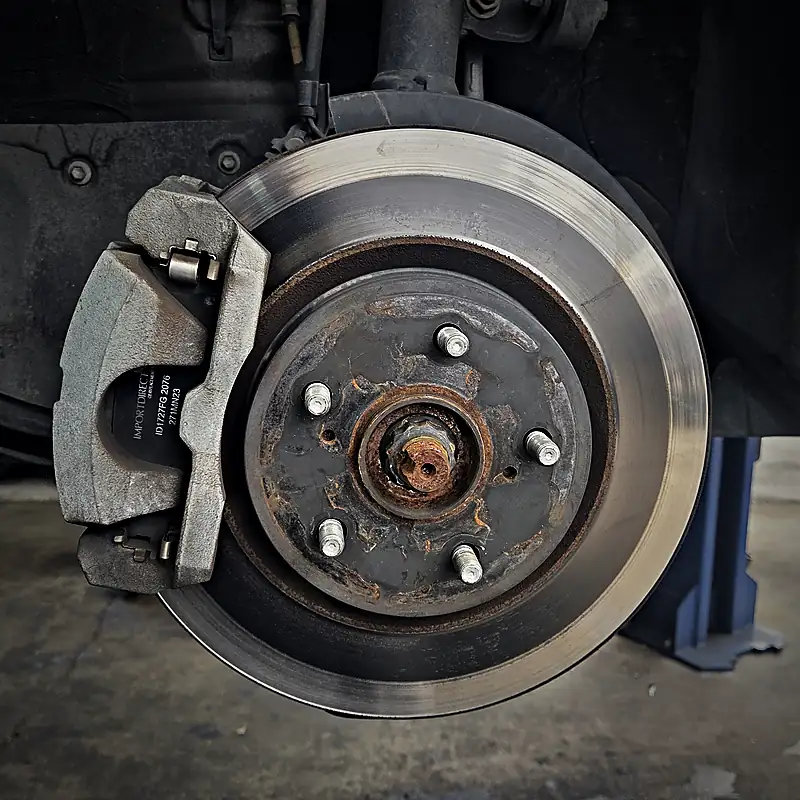
If the squeal is ignored, the pad wears through. The next sound is steel on iron: a low, rough grind you can often feel in the pedal. At that point the backing plate is cutting the rotor face. A job that would have been pads alone now includes rotors, and if it continues the caliper piston can over-extend. Grinding is the one brake sound where we tell people to keep the driving to the trip to the shop.
The morning squeal that means nothing
Rotors are bare cast iron. Leave a car overnight in Broward humidity and a thin orange film forms on the swept surface. The first few stops scrub it off, with a brief scrape or squeal. Manufacturer bulletins list rust on rotors after a vehicle sits as a known source of noise and vibration. It matters only when the car sits for weeks and the rust pits the surface.
Squeaks with plenty of pad left
New or half-worn pads can squeak too. The usual causes are brake dust packed between the pad and rotor, pads glazed by heat, or dry contact points where the pad ears sit in the caliper bracket. The cure is cleaning and lubricating the hardware and, if the pads are glazed, resurfacing or replacing them. This is common on cars that brake hard off the highway every day.
European cars: a light instead of a squeal
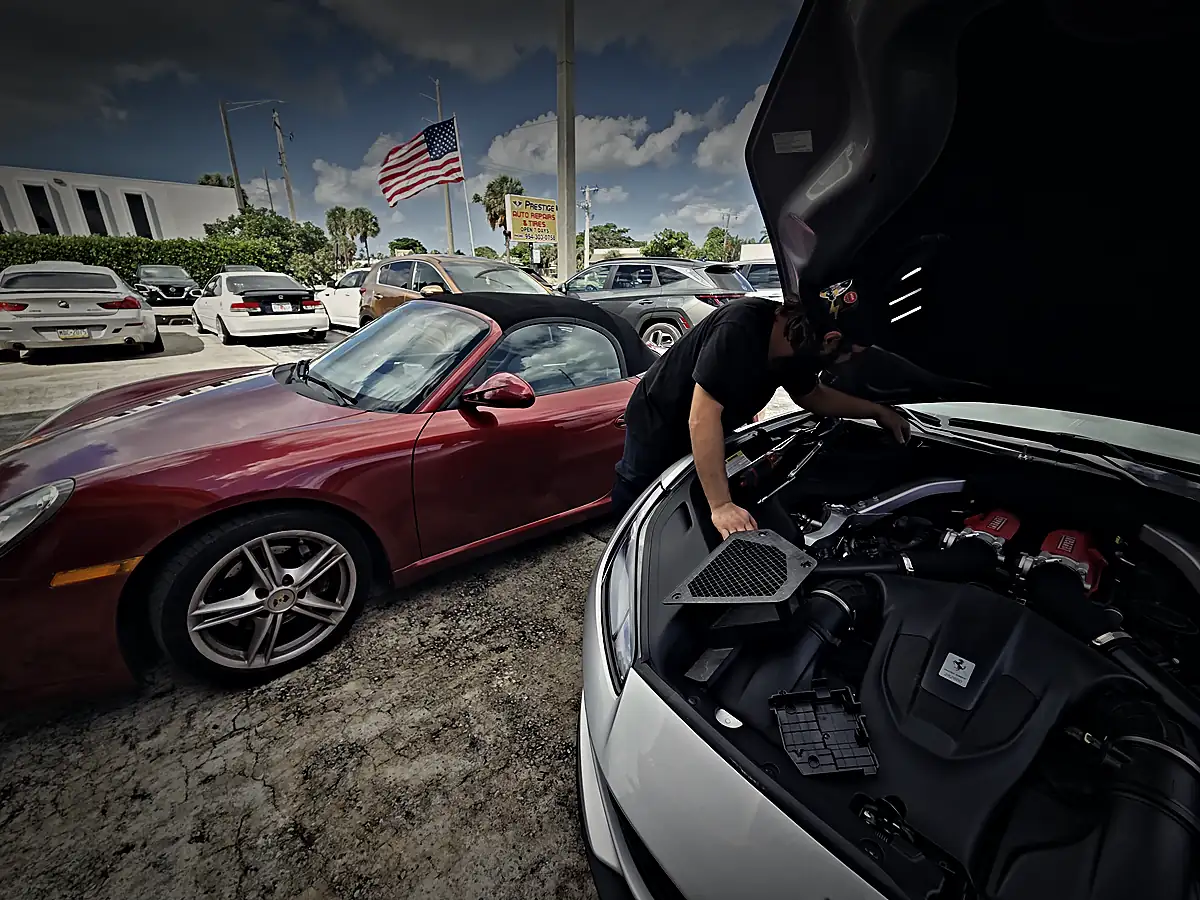
BMW, Mercedes-Benz, Audi, Porsche and Land Rover generally use an electronic wear sensor in place of a squealer tab. A small contact is set into the pad; when the pad wears to its limit the contact touches the rotor, the circuit changes and a warning appears on the dash. There may be no noise at all before the light. The sensor is a wear part and is replaced with the pads. If the light is on and you also hear grinding, the pads are past the sensor.
Hybrids and EVs: rust from too little use
Regenerative braking does most of the slowing on a hybrid or EV, so the friction brakes work less and stay damp longer. Tesla’s owner’s manual recommends pressing the brake pedal regularly to dry the pads and rotors and limit rust for exactly this reason. A scraping noise on a low-mileage EV is often a rusted rotor face or a pad stuck in its bracket. More on our EV and hybrid service page.
What a brake inspection measures
A noise is a symptom, so we measure before we recommend. During a brake inspection we:
- Measure inner and outer pad thickness at each wheel, in millimeters, and photograph it
- Measure rotor thickness against the minimum cast into the rotor, and check runout
- Check that the caliper slide pins move and the pad hardware is clean
- Look at the hoses, the fluid level and the fluid condition
- Spin each wheel to separate a brake noise from a wheel bearing hum
- Check the dust shields and look for stones or debris
You get the photos and a written estimate before any work, with each line marked as needed now or worth watching. If the inner pad is far more worn than the outer, read what causes uneven brake pad wear. For other sounds, our car noises guide sorts them by where and when you hear them.
Coming from Pembroke Pines or Miramar
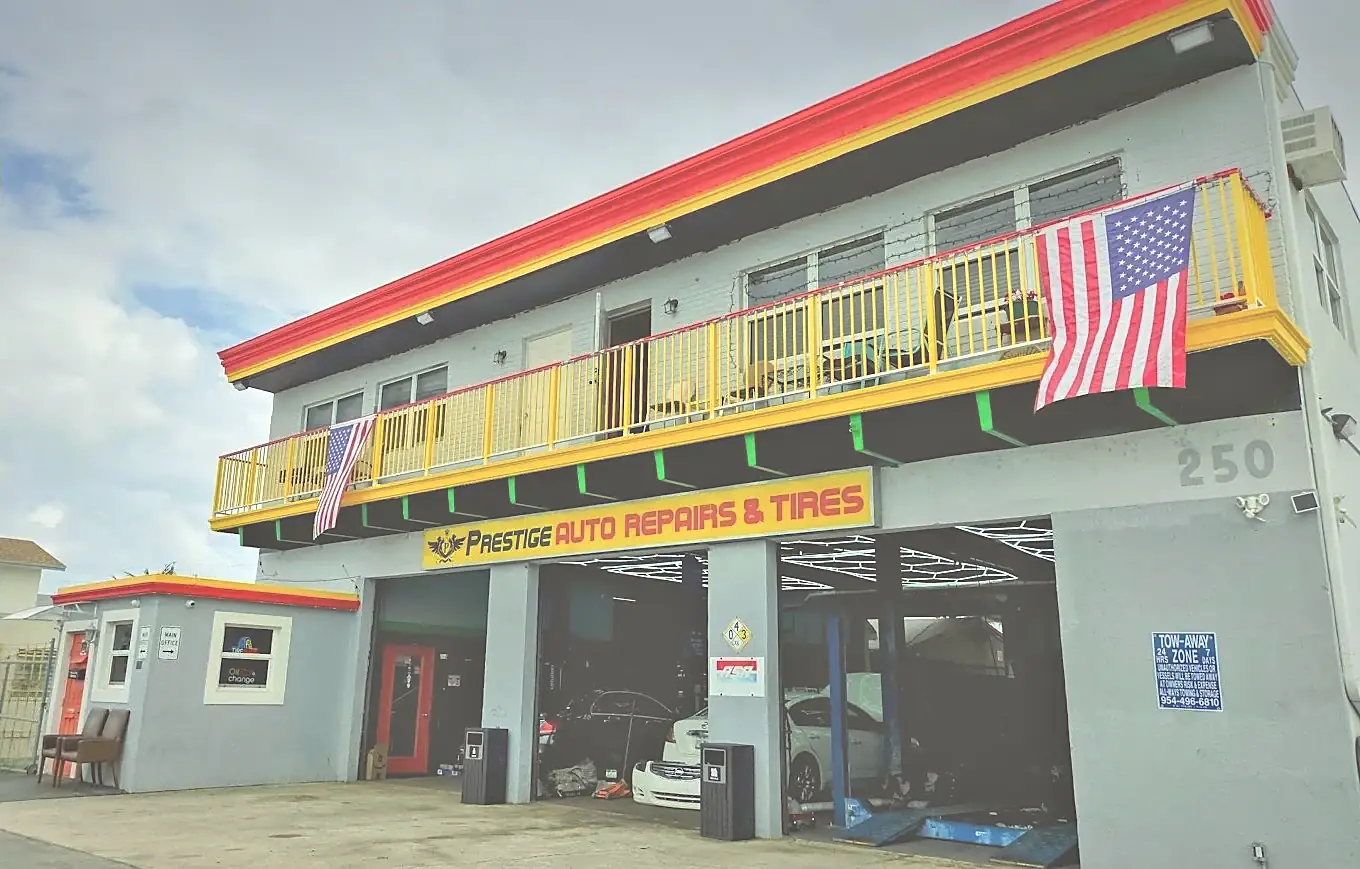
We have no shop in either city. From Pembroke Pines, the Fort Lauderdale shop is reached by Florida’s Turnpike or I-75, then I-595 and I-95. From Miramar, it is I-95 north from the east side, or I-75 and I-595 from the west. Fort Lauderdale, 930 NE 4th Ave, (954) 562-8045, is open Monday to Saturday, 8 AM to 7 PM. On Sunday the Oakland Park shop, 250 NE 44th St, (954) 303-0758, is open 8 AM to 7 PM and has a 24-hour key drop. If the brakes are grinding and you would rather not drive the car, call the shop to schedule pickup. Brake repairs carry a 2-year / 24,000-mile warranty, and current offers are on our specials page.
Related repair services
- Brake repair in Fort Lauderdale
- Suspension repair in Fort Lauderdale
- Tire shop in Fort Lauderdale
- Wheel bearing replacement in Fort Lauderdale
- Shocks and struts replacement in Fort Lauderdale
- Tpms sensor replacement in Fort Lauderdale
More car care guides on this topic
- Range Rover Air Suspension Warning: Causes and Fixes
- Tires in Fort Lauderdale: How to Choose Tires That Survive South Florida Heat and Rain
- What Causes Uneven Front Brake Pad Wear in Oakland Park, FL
- Why Does Your Car Keep Losing Alignment? The Problems an Alignment Alone May Not Fix
- Common Driving Problems a Wheel Alignment Can Solve in Oakland Park, FL
- What to Expect During a Professional Front Brake Pad Replacement Service Appointment